Reviewing and Testing the 3-ch Viofo A329T

And this is the final set of menu settings in the A329T (at least as of Sept 2025 - future firmware updates may or may not include changes).


Speed Unit.webp


You can also control which GPS functions are stamped along the bottom of the videos that are created by the camera:

GPS Stamp.webp

Some jurisdictions forbid having additional screens turned on for the driver, so this setting turns the screen off after a specified amount of time.
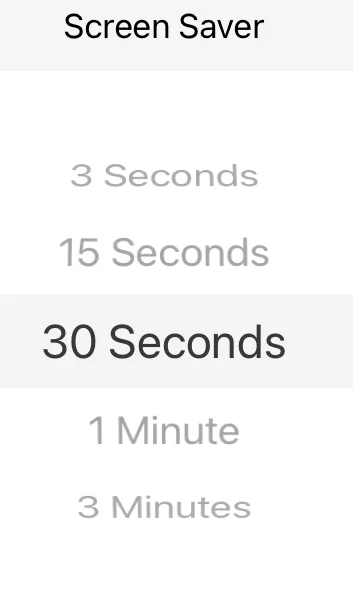
Screen Saver.webp

Especially helpful is a way to control the voice notifications from the camera. I've found the default "Medium" setting to be a bit too quiet, so I turned it up. Alternatively, I suppose I could turn down the radio volume, but where's the fun in that?
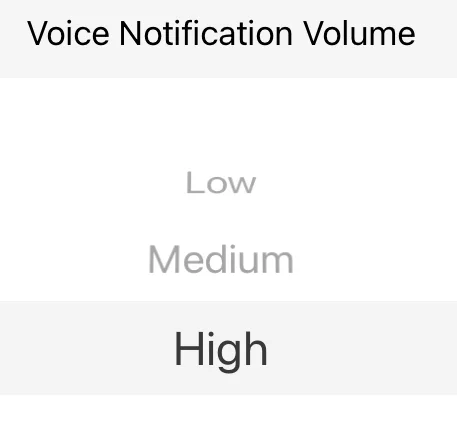
Voice Notification Volume.webp

It is also a good idea to reformat your SD card from time to time, this setting provides an on-screen reminder to help prevent issues with the memory card:
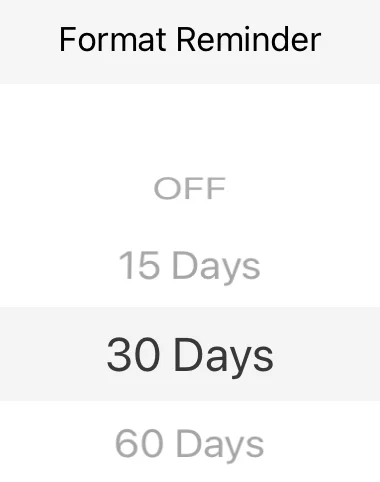
Format Reminder.webp

The Wi-Fi Channel allows you to set the speed at which wireless file transfer will happen between the camera and your phone or tablet.
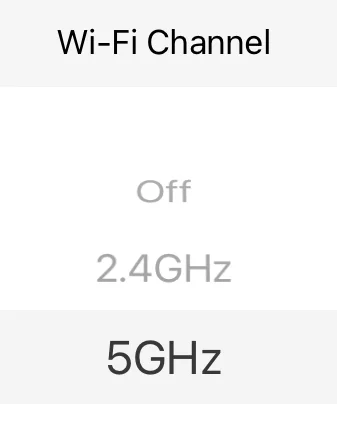
Wi-Fi Channel.webp

Toward the bottom of the main menu, there are two Stamps that you can create/edit. The first is a "Custom Text Stamp" which, as I learned from @TonyM, is a GREAT place to record the current firmware version for the camera (it eliminates variables if you are trying to solve a problem), and a second one for "Care License Number." Both allow free form entry of 11 characters.

Because they are largely the same, I've only presented the Custom Text Stamp window below.
Custom Text Stamp.webp


PFEW! That's quite a lot of options. Though the menu is a little overwhelming in terms of the number of options it presents, I do appreciate having the ability to adjust each of these items!
 
Last edited:
After playing around with different settings a bit more, it appears that the bitrate and filesizes for the MP4 files created by the Viofo A329T vary according to whether HDR is turned on or off in normal drive mode. Originally, I thought this was related to firmware versions, but I was wrong. Here is the data that I recorded:

A329 Drive Mode HDR Data Rates.webp
 
Last edited:
I started building a table because I was curious to see how long various size memory cards would last with the Viofo A329T. I was surprised to see how quickly a 128G card would get filled up and then have videos get overwritten while using the highest bitrate available from each of the 3 cameras (it took less than 3 hours). After a long trip, I had lost all of my parking mode videos and the videos from my drive there. Oops, minor miscalculation on my part... I very much appreciate the high bit rate that comes out of the A329T because it translates to lots of detail in the MP4 videos, but it tends to fill smaller memory cards pretty quickly.

When I drive to work (I often ride my bike) I have a 5-7 minute drive and then my car sits in the parking lot for 8-9 hours, so most of the SD card space is filled with parking mode videos. Thus, I need to know how long my memory card would last with parking mode files. This data comes from adding up the file sizes from a full 8 hours of videos that resulted from Low Bit Rate Parking Mode with either 2 channels or 3 channels recording.


A329T Parking Mode SD Card Consumption.webp


I'm thinking I might use a 256G or 512G card in the camera for parking mode (2-3 weeks worth) and then use an external SSD for normal drive mode. That would provide plenty of storage and I wouldn't have to worry about not finding some parking lot damage "in time" before that file gets overwritten.
 
Last edited:
I made some measurements of the Viofo HK4 hardwire kit to look at both the accuracy of its battery protection voltage settings and its overall power draw while in drive mode and in parking mode. I tend to think that power draw while in drive mode (with both Red and Yellow wires receiving 12v from the car's electrical system) is mostly irrelevant because the engine is running, so the car's electrical system is energized and charging. Power draw in parking mode (only the Red wire is receiving 12v from the car's electrical system) is much more relevant, since you are drawing battery power at this point. Every bit of power not used to power the camera reduces the available duration of parking recordings by drawing down either your car's main battery or your parking battery.

Here are the specific unit that I measured:

IMG_17024.webp


Here are the results:

Viofo Hardwire Kit.webp


It's a bit harder for me to measure the HK6 now, as it's already installed in my car. Perhaps I'll pick up another one so I can measure it...

Not surprisingly, the HK4 features slightly less power draw in parking mode vs drive mode, which is to be expected. If you are using the hardwire kit simply to power your camera when the car's ignition is turned on, power consumption figures are irrelevant. If, however, you are going to perform a 3-wire install to take advantage of parking mode recording, you need to be aware that there is a persistent power draw, even if the cameras are turned off.

Let's put some real-world implications behind the parking mode power consumption of the HK4 hardwire kit:
The HK4 consumes 0.079w/hr, which means it will take ~12.5 hours to consume a total of 1w of battery power. That means it will consume 13.27w of battery power for every WEEK that it is connected to your battery. That's about the same power draw as running a typical dashcam for about 2 hours. This is not a big deal if you drive fairly frequently (at least a few mins of driving each week). If your car sits for months without use, this power draw will add up, but the bigger question is why do you own a car if it sits around for months at a time...

It was nice to see just how consistent the hardwire kit is with its shut-off voltage. In the 12v range for cars, the accuracy is excellent, shutting down the camera when the voltage drops to 0.02v to 0.03v above the switch setting. For large trucks that use a 24v system, the consistency is equally impressive, shutting down the camera when the voltage dips to 0.11 to 0.12v above the switch setting. The shut-off function does not happen immediately. There appears to be a timer circuit of some sort in the regulator that shuts things down after about 1-2 mins when the input voltage crosses the measured threshold levels. This is excellent consistency and I like that it shuts things down just a pinch ABOVE the actual voltage setting. I have not yet "stress tested" the HK4 by placing a full load on the output that matches their specified current delivery to see where the voltage delivery is at that point. As with most products, the fun really starts at the edges of the design thresholds.

A final note about using hardwire kits (from any brand, really). Extending the 5v output wire that goes from the regulator to your dashcam is a bad idea. Longer wires have greater resistance and will exhibit greater voltage drop than shorter wires do. If you extend the wire on the 5v output side of the regulator, it is very likely that you'll experience problems with your camera. The most likely problem is frequent power cycling. If you absolutely need to extend wires to make things work in your car, the added length is best on the 12v input side for the regulator. The voltage regulator is somewhat less sensitive to longer cable runs on the input side. If you do extend the input wires, using a reasonably heavy wire will help minimize the voltage loss. I would recommend using 20g wire as a minimum, 18g wire would be better.
 
File this one under "Because I Can." I decided to do some stress testing on the HK4 hardwire kit to see how it performs. I have several decades worth of power supply design experience (mostly in the context of high-powered, Class-A audio amplifiers which feature large physical size, high current draw, and high heat generation) so I thought this would be an interesting and revealing exercise. Power supplies need to be able to deliver both voltage and current, according to their specification, without sagging in the process. Poorly designed power supplies will exhibit a decreasing level of voltage as current demands are ramped up, whereas robustly designed power supplies will be able to maintain their rated voltage output as current demands are increased. I had good expectations headed into this measurement exercise. Spoiler: I was not disappointed.

To perform this test, I used a bench top 30v 10A switched mode variable power supply (I was lucky to find it on 25% discount). I connected the Viofo HK4 hardwire kit to the power supply, connected a USB-C power meter, and a USB-C breakout board with wire leads soldered to the board's power supply pins. At the end of the chain was a series of Mills MRA-12 wire wound 12w power resistors left over from tube amp and speaker crossover construction I've done. I soldered them together in various parallel and series configurations to present suitable loads for the hardwire kit.

IMG_17105.webp


Here are the results:

HK4 Voltage and Current.webp


The HK4 hardwire kit delivers its lowest voltage level with no load attached. Once a load is connected, the output voltage INCREASED along with the current load (this was a bit of a surprise for me). This continued until the output current hit about 2.5A at which point the voltage and current output began to show some fluctuation. This is excellent performance under load, with the regulator exhibiting an increasing voltage at the end of the 2-meter long USB-C wire end! This is especially impressive, given that the last three measurements clearly exceed the regulators design specification (by as much as 25%). I didn't want to push things much higher as I was already exceeding its design spec. At the end of a few minutes worth of testing, the plastic shell of the regulator was clearly (but not alarmingly) above body temperature when I picked it up.

I have another HK6 hardwire kit on order (thank you to Mark at @CaptureYourAction) that I'll measure once it arrives. My original HK6 is installed in the car which complicates making detailed measurements.
 
Last edited:
Like the data I posted above for the HK4 hardwire kit, I made some measurements of the Viofo HK6 hardwire kit to look at both the accuracy of its battery protection voltage settings and its overall power draw while in drive mode and in parking mode.

Here is the specific unit that I measured:
IMG_17058.webp


And here are the results:
Viofo HK6 cutoff and power consumption.webp


All voltage measurements were made with my bench top power supply (looks like we are all using the same model 😉 ) and the HK6 hardwire kit connected directly to the A329T main camera (auxiliary cameras are still in the car) which was set to Low Bit Rate parking mode (don't forget to turn Geofencing off). I wasn’t paying attention to the red LED in the body of the KH6 regulator. I verified the voltage output of the PSU and in the 12v range its voltage output is accurate. Its output is 0.01v low in its lower range (below about 7-8v) and output is 0.01v high as it approaches 25–30v. I have a handheld DMM that I compared to a 6-digit calibrated bench top Agilent meter. On the DC scale, it is 100% accurate.

After measuring the HK4 (two posts above), I was a bit surprised to see that the HK6 hardwire kit cuts off just BELOW the voltage setting on the in-line regulator. Like its predecessor, the HK6 features slightly less power draw in parking mode vs drive mode, which is to be expected. If you are using the hardwire kit simply to power your camera when the car's ignition is turned on, power consumption figures are irrelevant. If, however, you are going to perform a 3-wire install to take advantage of parking mode recording, you need to be aware that there is a persistent power draw, even if the cameras are turned off.

The real-world implications behind the parking mode power consumption of the HK6 hardwire kit are as follows:
The HK6 consumes 0.098w/hr, which means it will take ~10.2 hours to consume a total of 1w of battery power. That means it will consume 16.17w of battery power for every WEEK that it is connected to your battery. That's about the same power draw as running a typical dashcam for about 2-3 hours. Again, this is not a big deal if you drive fairly frequently (at least a few mins of driving each week). Somewhere around here (I’ve lost track), I posted a power draw figure for the HK6 that measured in the 200uA range - this measurement is not correct. If I find that post again, I need to edit it.

The shut-off voltage was again very consistent. In the 12v range for cars, the accuracy is good, shutting down the camera when the voltage drops to 0.11v to 0.12v BELOW the switch setting. For large trucks that use a 24v system, the consistency is similarly impressive, shutting down the camera when the voltage dips to 0.12 to 0.13v below the switch setting. The shut-off function does not happen immediately. There appears to be a timer circuit of some sort in the regulator that shuts things down after about 1-2 mins when the input voltage crosses the measured threshold levels. This is excellent consistency.

I'll work on stress-testing the 5v 3A power supply next. If the HK6 behaves like the HK4, I expect its output voltage to hold up well under load.
 
Last edited:
Also wanted to add that I'm really LOVING the new Geofencing feature that showed up in the latest firmware! You can set three different GPS points that when you enter into a 50m radius of any of those points and turn off the car (for when you park in your driveway or garage), the camera shuts down instead of going in parking mode. Super awesome! No more needing to remember to turn things off when you get home...
 
Yeah, I looking forward to this too – great feature!
Though this is the first I’ve read that you can have three saved locations in the settings – brilliant! Thought I’d read in another post somewhere when the new beta feature was mentioned that it was just one location on the Viofo and it was being compared to the possibility of three on another brand (Vantrue?)….Maybe they’ve upped it..! 😀
 
Like the data I posted above for the HK4 hardwire kit, I made some measurements of the Viofo HK6 hardwire kit to look at both the accuracy of its battery protection voltage settings and its overall power draw while in drive mode and in parking mode.

Here is the specific unit that I measured:
View attachment 86236

And here are the results:
View attachment 86237

After measuring the HK4 (two posts above), I was a bit surprised to see that the HK6 hardwire kit cuts off just BELOW the voltage setting on the in-line regulator. Like its predecessor, the HK6 features slightly less power draw in parking mode vs drive mode, which is to be expected. If you are using the hardwire kit simply to power your camera when the car's ignition is turned on, power consumption figures are irrelevant. If, however, you are going to perform a 3-wire install to take advantage of parking mode recording, you need to be aware that there is a persistent power draw, even if the cameras are turned off.

The real-world implications behind the parking mode power consumption of the HK6 hardwire kit are as follows:
The HK6 consumes 0.098w/hr, which means it will take ~10.2 hours to consume a total of 1w of battery power. That means it will consume 16.17w of battery power for every WEEK that it is connected to your battery. That's about the same power draw as running a typical dashcam for about 2-3 hours. Again, this is not a big deal if you drive fairly frequently (at least a few mins of driving each week).

The shut-off voltage was again very consistent. In the 12v range for cars, the accuracy is good, shutting down the camera when the voltage drops to 0.11v to 0.12v BELOW the switch setting. For large trucks that use a 24v system, the consistency is similarly impressive, shutting down the camera when the voltage dips to 0.12 to 0.13v below the switch setting. The shut-off function does not happen immediately. There appears to be a timer circuit of some sort in the regulator that shuts things down after about 1-2 mins when the input voltage crosses the measured threshold levels. This is excellent consistency.

I'll work on stress-testing the 5v 3A power supply next. If the HK4 results are a good indication, I expect the HK6 output voltage to measure very well under load.
Good stuff.
Further confirms what @TonyM and myself seemed to find....As you say, very consistent...But there definitely is a noticeable disparity between the HK6 Cut-Off Selection and the actual voltage at which cut-off happens....Certainly 0.1V or more.
Personally, at this amount, I would have preferred if the disparity had been above the selected cut-off figure, much like you found with the HK4....Personally, I would always try to use a dedicated battery anyway, but for those who don't/can't it is certainly something to be aware of, especially if your car/battery is sensitive...

 
I'm in the process of trying to decipher the functionality of the "extra/4th" white wire in the HK6 hardwire kit that runs from the regulator to the USB-C connector that goes into the GPS unit on the A329T camera. The basic stuff (Red, Black, & Yellow wires) is easy, but there seems to be something more complex going on with the extra white wire. I am presuming this wire is used to communicate battery voltage level to the camera??

Here is the pinout as measured with my DMM:
HK6 Pinout.webp


Then, things got interesting: I connected White wire (USB-C pin A11) to my scope to see if anything else became evident. There seems to be a complex AC waveform on the "extra" white wire, despite my DMM indicating that no AC voltage is present. This is much more than I was expecting to see (or, there is a problem with my scope/probe...).

Here is what the waveform looks like with a 12.0v input to the HK6. Settings are 0.50mV/division on the Y axis and 2us/division on the X axis:
HK6 12v 50mv 2us.webp


Here is what the waveform looks like with a 24.0v input to the HK6. Settings are the same: 0.50mV/division on the Y axis and 2us/division on the X axis:
HK6 24v 50mv 2us.webp


The primary difference is highlighted by the yellow arrows. As the HK6 input voltage increases from 12.0v to 24.0v, the peaks of the waveform (highlighted with yellow arrows in the images above) clearly grow in magnitude. This is all that I can determine at this point...

The output waveform doesn't vary between parking mode and drive mode, it seems to change only as the input voltage to the HK6 regulator changes.
 
Last edited:
Also wanted to add that I'm really LOVING the new Geofencing feature that showed up in the latest firmware! You can set three different GPS points that when you enter into a 50m radius of any of those points and turn off the car (for when you park in your driveway or garage), the camera shuts down instead of going in parking mode. Super awesome! No more needing to remember to turn things off when you get home...
Is this with update Viofo_ a329s_v2.0_250928 ??
 
Is this with update Viofo_ a329s_v2.0_250928 ??

I'm using Viofo_A329T_V2.0_250926. Not sure if the geofencing is available in "S" version of the firmware or not?
 
I think it may be (on S beta) but this may explain why I’d picked up that there was only ‘one’ location available and yet you had stated there were three available locations in the geofence settings…..Perhaps they’re playing around with different options across the beta versions or upped the setting to three after the first implementation…?

Hopefully, they stick with the option of three locations in the final firmware versions….
 
Further up on this page, I did some stress testing on the HK4 hardwire kit. I finally found some time to put the newer HK6 hardwire kit through the same set of tests. After being impressed with how the HK4 performed, I had similarly high expectations for how the HK6 would fare.

Hardwire Measurement.webp


To perform this test, I used a bench top 30v 10A switched mode variable power supply. I connected the Viofo HK6 hardwire kit to the power supply, connected a USB-C power meter, and a USB-C breakout board with wire leads soldered to the board's power supply pins. At the end of the chain was a series of Mills MRA-12 wire wound 12w power resistors, just like before. The HK6 was wired for Drive Mode, both the Yellow and Red wires were connected to my bench top power supply. Here are the results:

HK6 Voltage and Current.webp


As expected, the no load voltage measured the lowest and as the load increased, so too did the output voltage. I pushed the HK6 beyond its 3.0A design specification, to 3.34A and voltage continued to increase! Color me impressed - this is one well designed power supply! At the end of my set of tests, the HK6 regulator was only mildly above body temperature.
 
Last edited:
Quick sidebar: it seems that a few of us are using the same bench power supply from NANKADF. Is anyone else finding the that the red and black boots that cover the alligator clips on the supplied test leads to be ENORMOUSLY slippery, like to the point where the clips are nearly impossible to use? I want to cut the clips off and replace them with a new set, but I can’t find a similarly sized set of aftermarket insulated clips…
 
I made a few night time captures this evening with the A329T. Overall detail level and exposure are excellent:

A329T main camera, HDR is on, Polarizer installed:
A329 Traffic Light.webp


Here is another capture while passing by a row of parked cars about 13 mph. The insert in the lower right corner is a 300 percent zoom/crop of the license plate from the car parked on the right hand side of the road, which is quite readable as "LZE 6163." I went through the video frame by frame and selected the image with the clearest plate capture. The interesting part is that the insert of the plate nearly exactly matches the timing overall full frame that is shown below. That's a pretty good distance for making a plate capture at night! In addition, the overall exposure for this scene is excellent.
A329 Full Frame Insert.webp


I have four cameras (two are 2.5k and two are 4k) installed in my car and the A329 was the only main camera that was able to produce a readable plate capture as I drove by. Pretty impressive!

Here is approximately the same scene as captured by the A329 Telephoto camera along with 200 percent zoom/crops on the plates, HDR enabled, Polarizer installed. These are both nice captures.
A329T 200p crop.webp


Here is another capture while I was sitting at a stop sign, HDR is on, Polarizer installed. The plate on the front of the car making the turn is not readable at all, it is too far away and too blurry (insert is a 400% zoom/crop).
A329 Left Turn Full Frame.webp


And the same scene as captured by the A329T telephoto lens along with an insert of a VERY clean 300 percent zoom/crop on the plate, HDR is on, Polarizer installed:
A329T Left Turn.webp


I've also been using a combination of a 512GB SD card for parking mode and a Sandisk Extreme 2TB SSD + the official Viofo 2.5M USB-C cable for drive mode videos for a few weeks without any issues. Given these capacities and my driving/parking habits at work, I'm looking at the following data storage capabilities:

Parking Mode with LBR and 2 channels recording (telephoto lens disabled) to a 512GB SD card: 17 days @ 8hrs/day
Drive mode at maximum resolution, 3 channels recording to a 2TB SSD: 168 days at 16mins drive time/day

Talk about set it and forget it! Given this storage capacity, I just might need to build a larger parking battery...
 
Last edited:
Thanks to @TonyM for pointing me toward a new and interesting feature in the new Viofo App when using the HK6: the HK6 uses bluetooth to report the battery voltage level even if the camera is not connected to the app via wifi. This is a pretty nifty feature for sure, but I'm finding a voltage mismatch between what the HK6 reports and what the BMS in my DIY LTO battery pack is reporting:

When the car's ignition system is off (battery not charging), I'm seeing that the HK6 reported voltage reads about 0.11v high:
Voltages Engine Off 11p.webp


And with the engine running (BMS actively charging my parking battery), it is still high by 0.11v:
HK6 Voltage Error - Battery Charging.webp


At some point, I had calibrated the BMS reported voltage to match my DMM, so I'm assuming the HK6 is a pinch off. I need to double check again with my meter tonight. I have the capability to measure the direct output of my LTO battery pack that feeds the HK6.

Just wondering if anyone else noticed this voltage mismatch?
 
Last edited:
Quick sidebar: it seems that a few of us are using the same bench power supply from NANKADF. Is anyone else finding the that the red and black boots that cover the alligator clips on the supplied test leads to be ENORMOUSLY slippery, like to the point where the clips are nearly impossible to use? I want to cut the clips off and replace them with a new set, but I can’t find a similarly sized set of aftermarket insulated clips…

I'm having the same issue with my NANKADF, but also with my two simple 12v testers (screwdriver-style probe with a ground wire clip and a LED indicating power) and the boots on the clips are also annoyingly slippery. I removed the one on the tester I use most often and am just careful not to let the clip touch anything other than my ground point when in use. My power supply is currently put away and I can't remember--does the clip/boot design permit temporarily pulling back the boots to make the connection and then pulling it back over the clip?
 
Thanks to @TonyM for pointing me toward a new and interesting feature in the new Viofo App when using the HK6: the HK6 uses bluetooth to report the battery voltage level even if the camera is not connected to the app via wifi. This is a pretty nifty feature for sure, but I'm finding a variable voltage mismatch between what the HK6 reports and what the BMS in my DIY LTO battery pack is reporting:

When the car's ignition system is off, I'm seeing that the HK6 reported voltage reads about 0.10v high:
View attachment 86713

And with the engine running (BMS actively charging my parking battery), it is still a bit high, but by only 0.06v:
View attachment 86714

At some point, I had calibrated the BMS reported voltage to match my DMM, so I'm assuming the HK6 is a pinch off. I need to double check again with my meter tonight. I have the capability to measure the direct output of my LTO battery pack that feeds the HK6.

Just wondering if anyone else noticed this voltage mismatch?
@EricSan @TonyM

This looks very interesting indeed!
I am using the battery in my vehicle, not a separate battery to power the dash cams.
I am still using the previous versions of FW for both Main Cam and android app, but I'm leaning more
and more toward upgrading both as so many reports are showing such positive results.

Can you please point to the method used to obtain this data? Or is it only available through a
separate supply battery? I have the A329S 3CH and HK6.

Thanks!
 
Back
Top