Wolfbox MegaFlow 200 & MegaFlow 400 Electric Air Dusters

Julian23

Well-Known Member
Joined
Nov 16, 2016
Messages
1,388
Reaction score
2,058
Country
Germany
Dash Cam
Several brands :)
Wolfbox is celebrating its 7th anniversary and offered me the opportunity to take a closer look at two of their electric air dusters.
The MegaFlow 200 and MegaFlow 400 are quite different in size and power. After using both, I found that each has its own strengths.

Since I already tested the Wolfbox MegaFlow 100 and Vantrue T800 last year, I also wanted to see how these two compare.
This time I will focus on the devices, their accessories, some use cases and of course a few measurements.

Wolfbox MegaFlow 400

The MegaFlow 400 is the more powerful model, mainly designed for outdoor cleaning and larger surfaces.
Wolfbox advertises a 453W brushless motor and 520g of thrust.

It has three operating modes and comes with different nozzles.

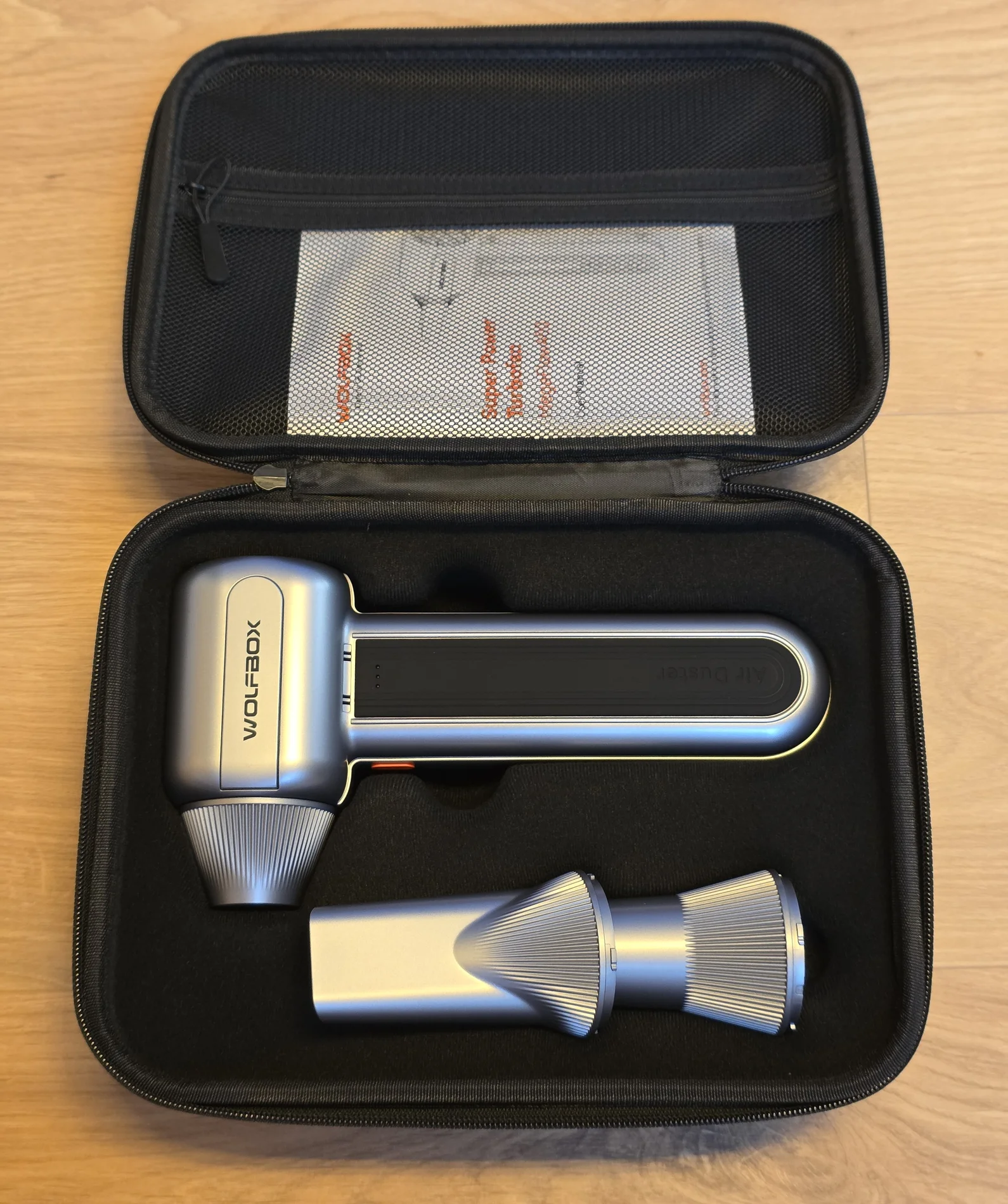
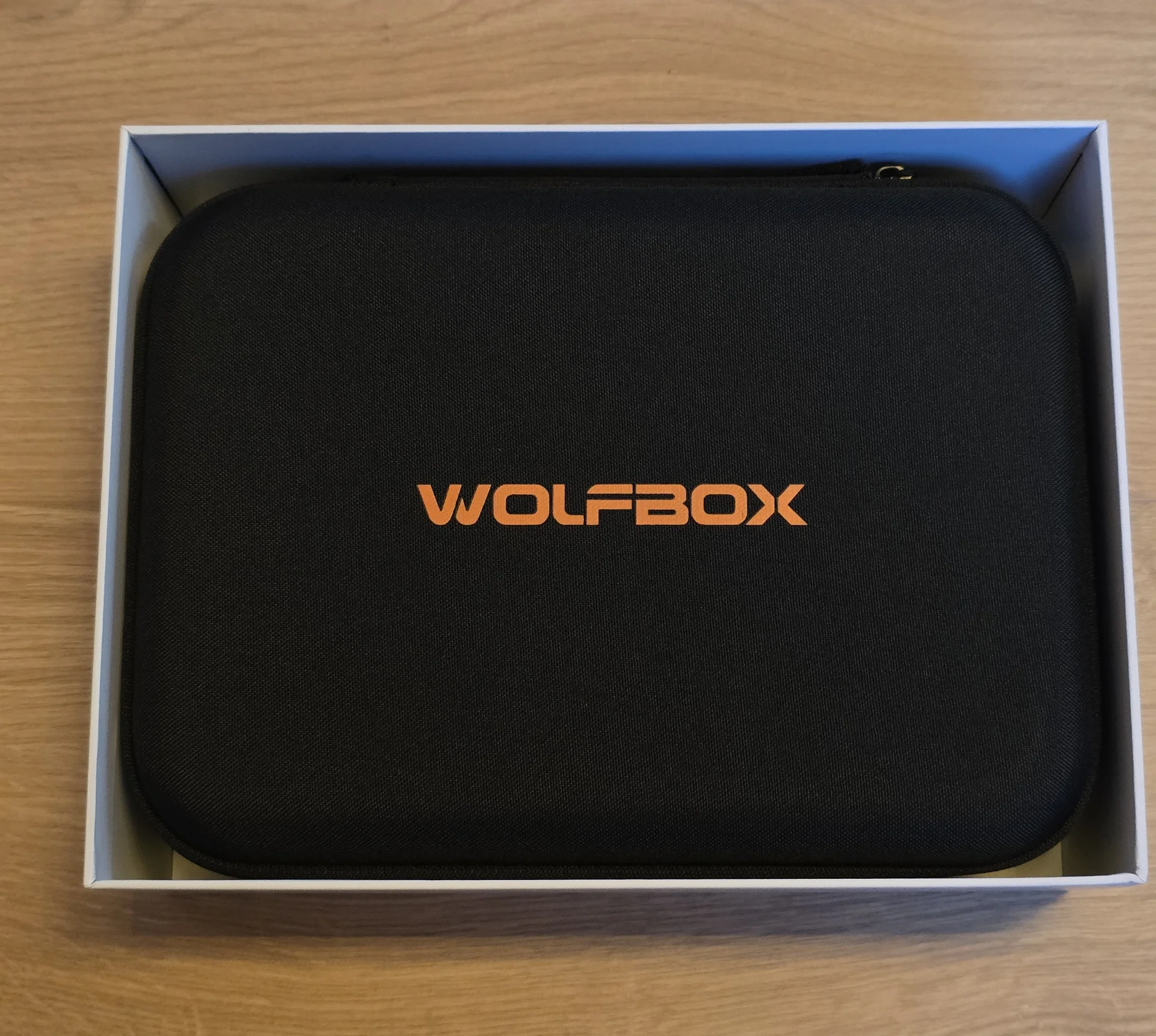
The carrying case:
1.webp


Inside the case:
2.webp

I really like the included case. Everything has its place and the device is well protected when not in use.

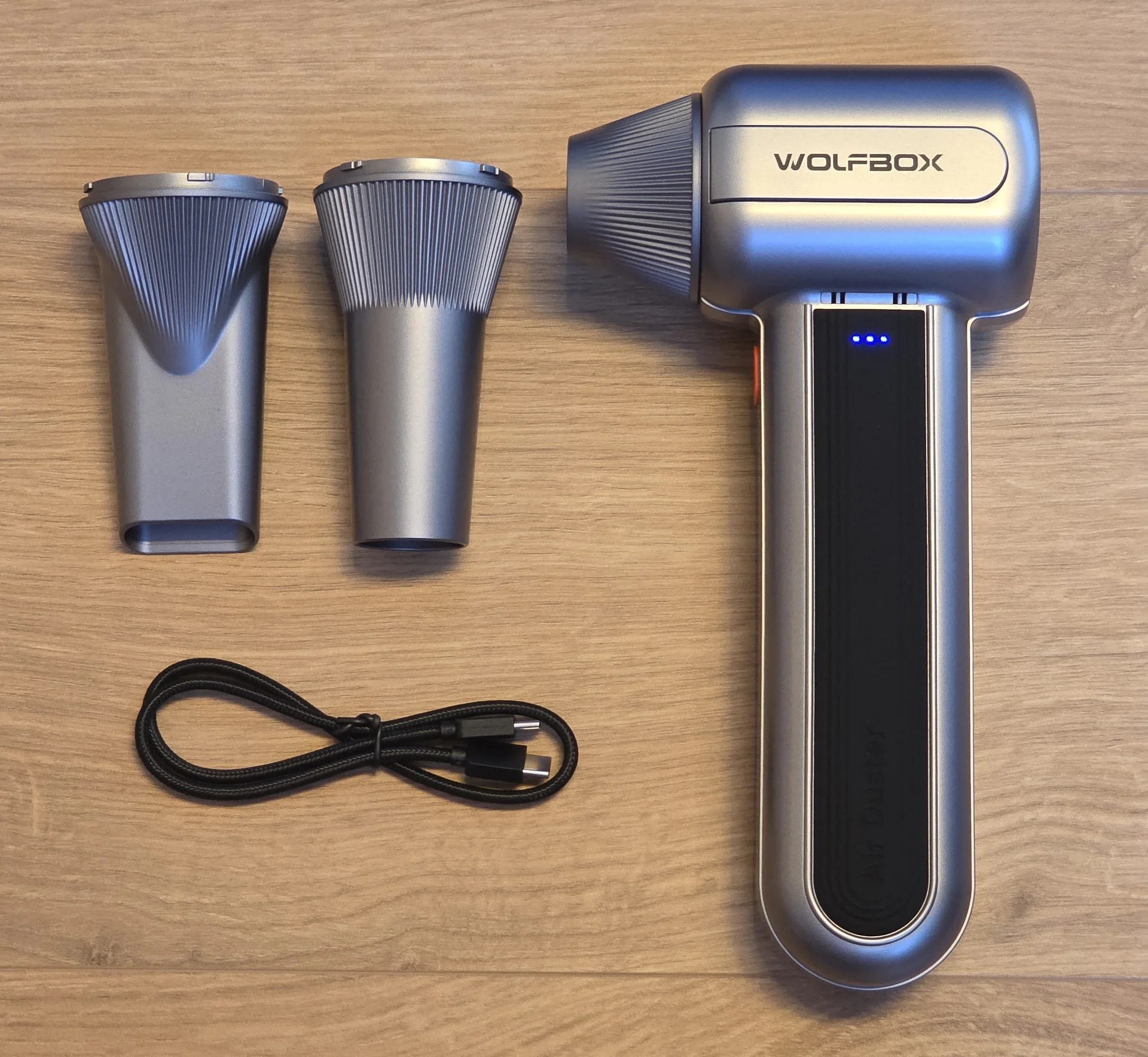
The MegaFlow 400 and accessories:
4.webp


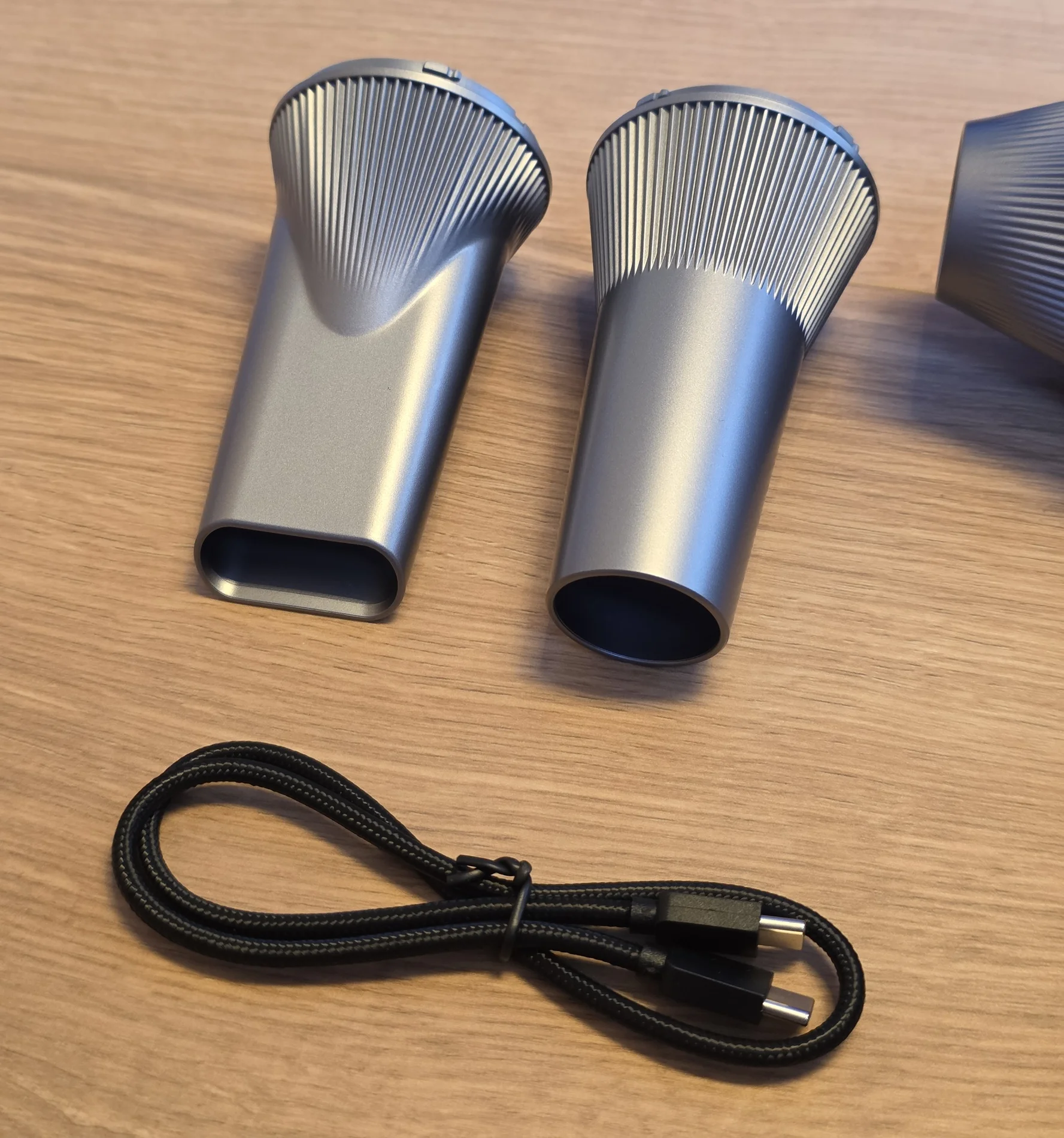
A closer look at the nozzles:
5.webp

The different nozzles allow you to change the airflow depending on what you want to clean. They are secured with a twist-lock mechanism.

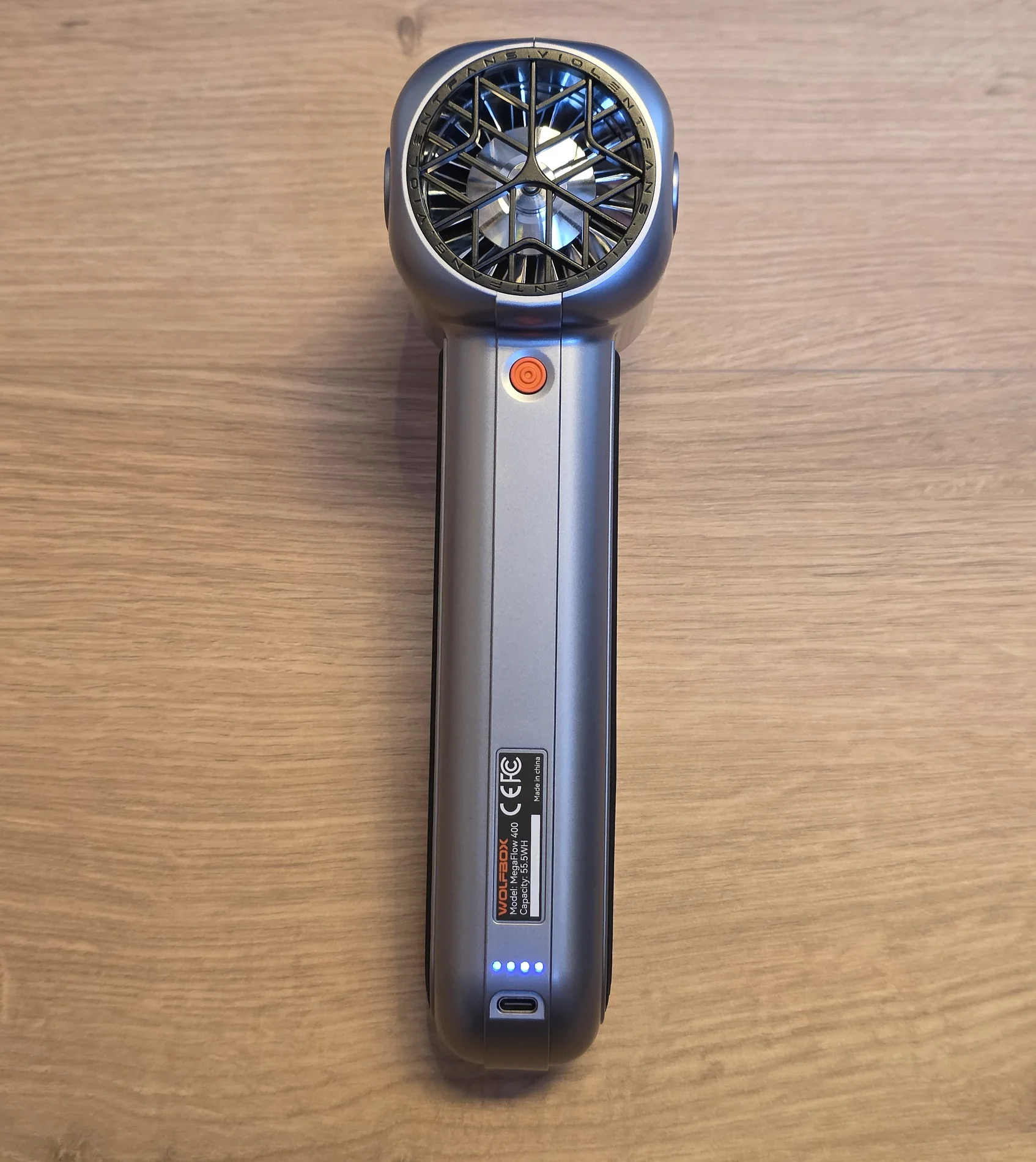
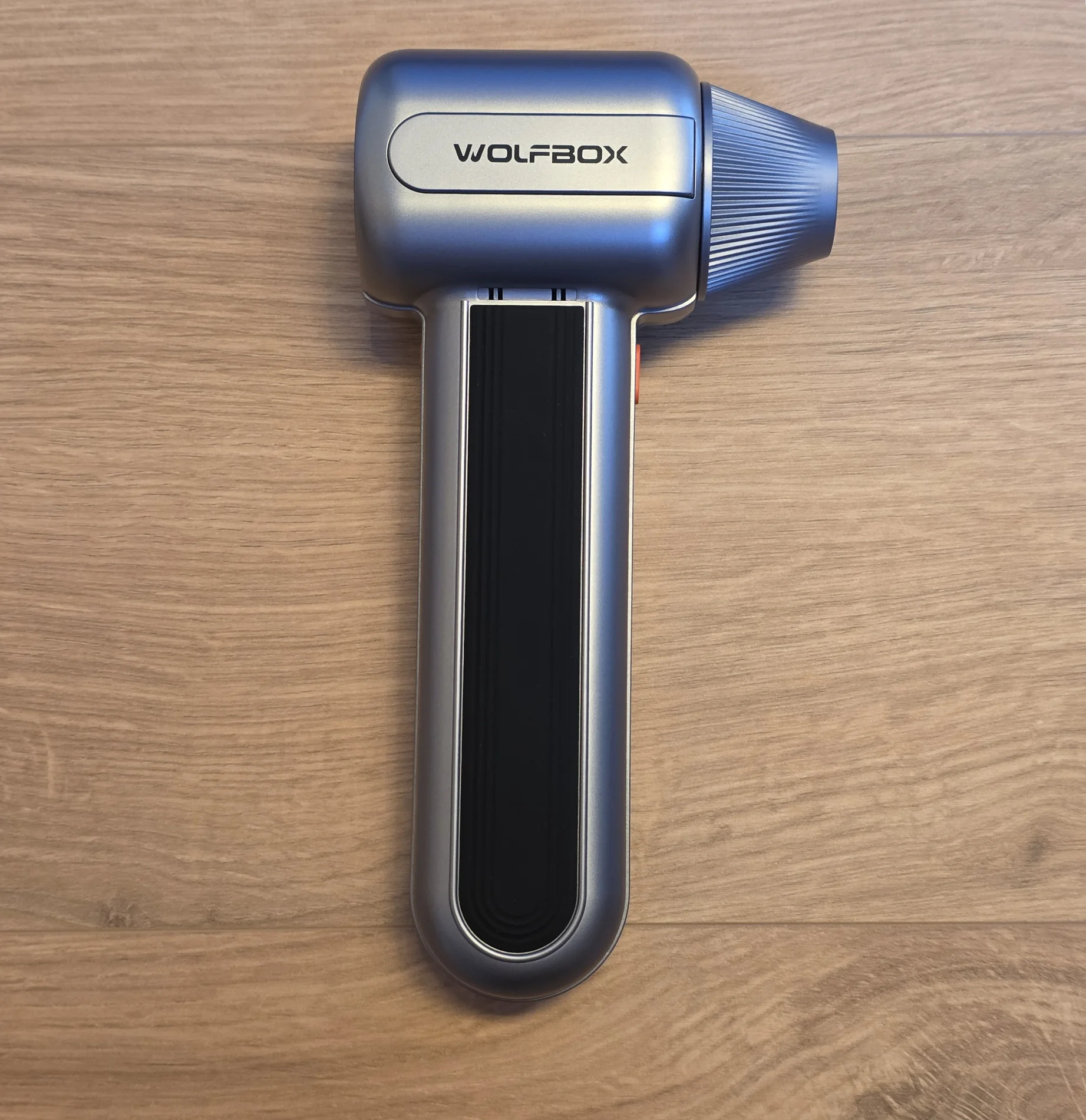
The device itself:
10.webp
6.webp

The MegaFlow 400 weighs 833g on my scale. It feels solid and is still easy enough to operate with one hand.
The rubberized sides give you a good grip, which definitely helps with the weight.

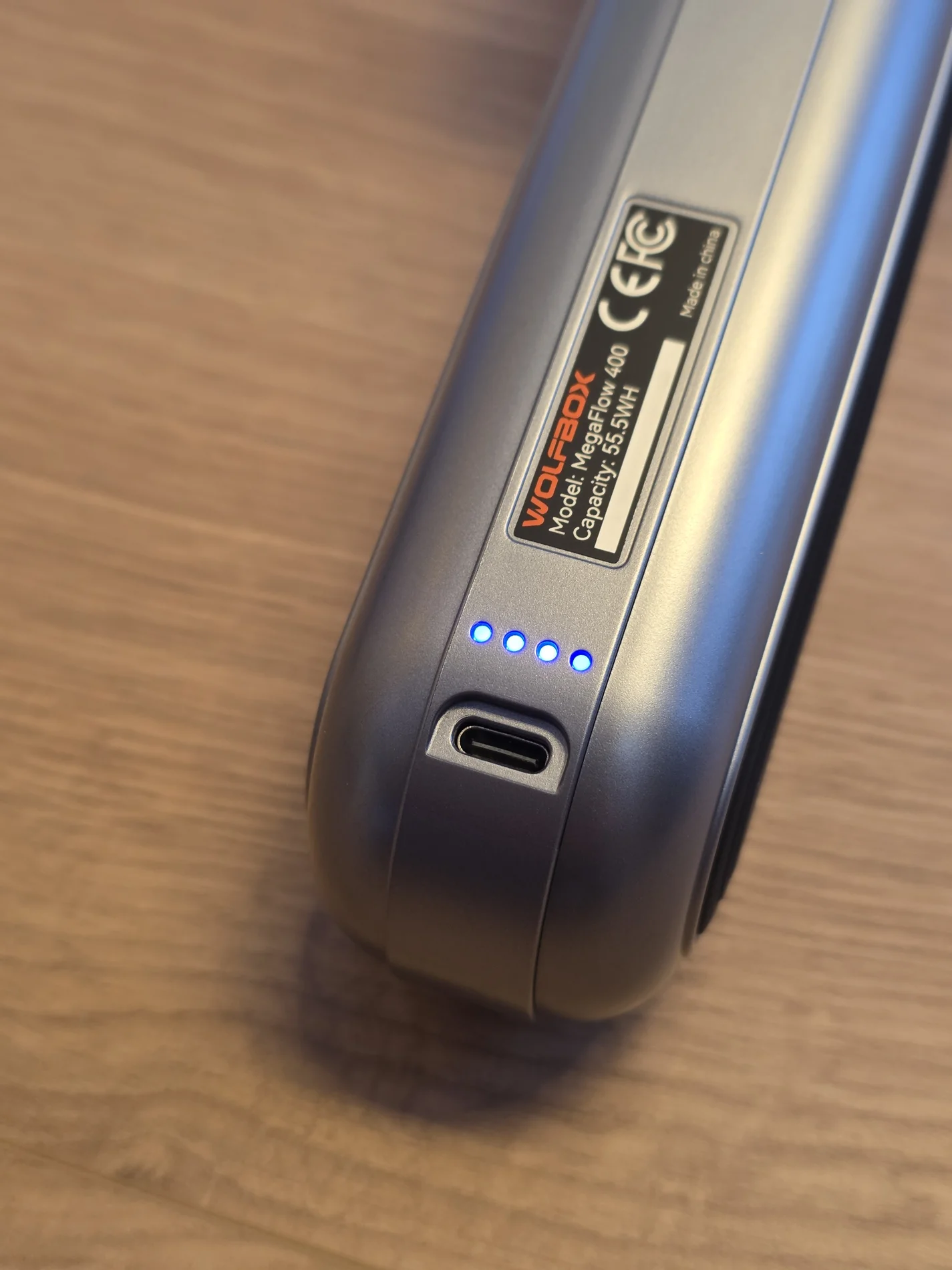
A closer look at the charging port and battery indicator:
7.webp


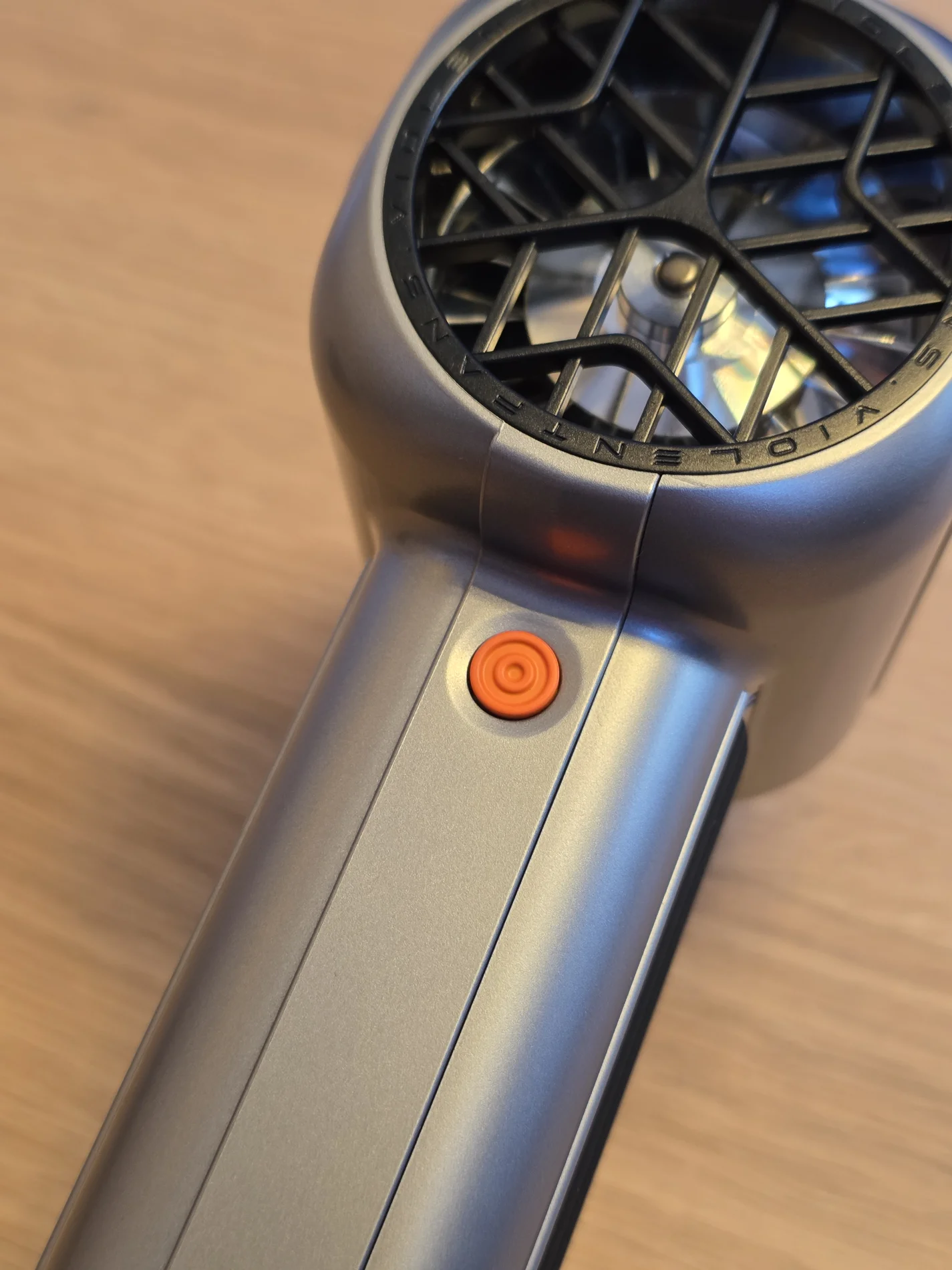
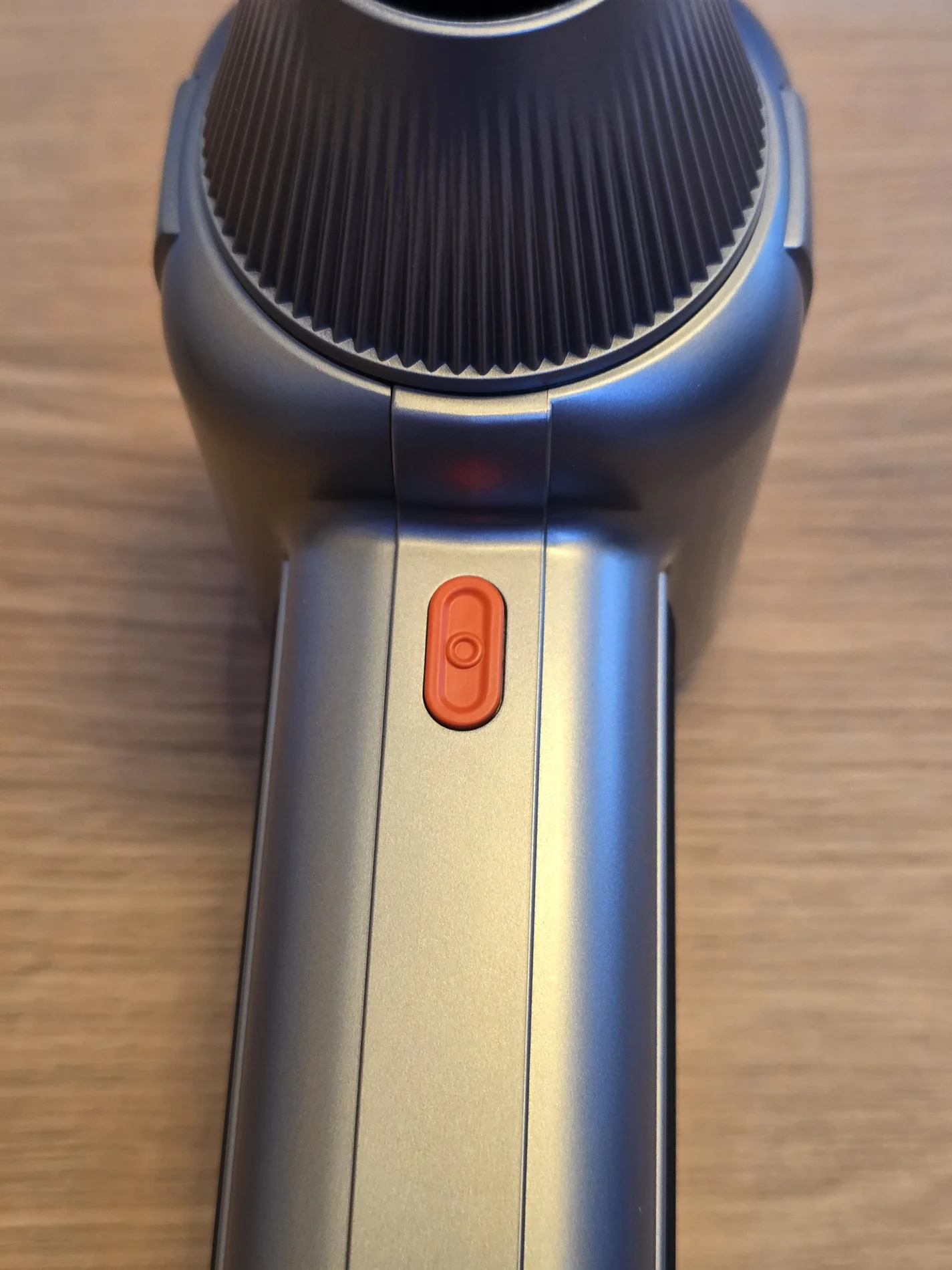
And the impeller with the power button and mode switch below:
8.webp


The button on the front activates the blower. On low and medium power, one press is enough. On Turbo, you have to keep the button pressed.
This can get a bit tiring after a while, especially with the weight of the MegaFlow 400.
9.webp


Where Is It Useful?

For me, the MegaFlow 400 makes the most sense for outdoor cleaning and larger surfaces. Especially around the car it's very useful.
With this much power, it is great for removing loose leaves, dust and dirt from areas that are difficult to reach.

Some examples:
  • Removing leaves and dust from the windshield area, grilles and other gaps
  • Blowing dust and debris out of the garage
  • Cleaning tools and equipment
  • Removing loose dust from the paint and other hard to reach areas
  • Drying the car after washing
  • Blowing water out of mirrors, emblems, door handles and panel gaps
I also tested it for drying the paint after washing, and it worked extremely well. Especially on a coated or sealed surface where the water beads up easily.
On Turbo, the battery lasted roughly 6 minutes when I used it to dry the car. So the runtime is something to consider if you want to use it at maximum power for longer periods.
Anyone who regularly washes their car knows how annoying it is when water keeps dripping out of the mirrors or trim afterwards. The MegaFlow 400 has more than enough power to get it out.
I actually wanted to record a video of this, but I haven't had much time lately and the weather has been terrible for weeks. Hopefully I can add one later.

For removing leaves and other debris, it also depends on the surface.
On hard surfaces like concrete or pavement, it works well. But I wouldn't expect it to replace a proper leaf blower, especially when dealing with wet leaves or leaves stuck in grass.
It has plenty of air speed, but not the same air volume as a much larger leaf blower.

However, I would not choose it specifically for the car interior. It is quite large for getting into tight areas, and you don't really need this much power to remove some dust from the interior.
That's where the smaller MegaFlow 200 comes in.

More in the next post.
 
Wolfbox MegaFlow 200

The MegaFlow 200 is quite a bit smaller than the MegaFlow 400.
It is also the one I would choose for cleaning the interior of a car.
I received the MegaFlow 200 and its accessories separately, but my setup is comparable to the Enduro Pack with the carrying case and replaceable battery.

The case:

20.webp


Opening it up:

21.webp


22.webp

The case is quite compact and makes it easy to keep the device and accessories together.

28.webp
27.webp

The MegaFlow 200 with its accessories and removable battery:

23.webp


Design and Battery

The MegaFlow 200 weighs 399g on my scale.
It is considerably lighter and easier to handle than the MegaFlow 400. Especially when cleaning tight areas.

A few closer pictures:

24.webp
25.webp

The button on the front activates the blower. On low and medium power, one press is enough. On Turbo, you have to keep the button pressed, similar to the MegaFlow 400.
The silver button on the side of the rubberized grip is to remove the battery.

The impeller and the power button below:

26.webp


One of the biggest advantages of the MegaFlow 200 is the removable battery.
Instead of having to stop and recharge the entire device, you can simply swap the battery and continue working.
The batteries can be charged via USB-C.
It's a neat feature. Especially for longer cleaning sessions or when you forget to charge the battery beforehand.

Where Is It Useful?

For me, the MegaFlow 200 is almost perfect for cleaning the car interior.
It is small enough to reach most areas and has more than enough power to remove loose dust and dirt.
Some examples:
  • Air vents
  • Dashboard
  • Center console
  • Buttons and switches
  • Seat rails
  • Tight gaps between interior panels
  • The Head-Up Display that is often hard to reach
  • Other sensitive surfaces where I prefer not to use a cloth
Especially around the HUD, I prefer using air instead of wiping over sensitive surfaces where the coating can be damaged.

The MegaFlow 200 is small enough to get into places where the larger MegaFlow 400 would be quite annoying to use.
And even though it is much smaller, it still has plenty of power.

It is also useful for cleaning keyboards, PCs and other electronics.
Of course, an air duster will not replace a vacuum cleaner. It blows the dust away instead of collecting it.
And that's probably the biggest downside when using one indoors. You might just move the dust somewhere else.
But for quickly removing dust from air vents or hard to reach areas, it works extremely well.

In the next post, I will compare both Wolfbox models and show some measurements.
 
Last edited:
I always wanted one of these handy, in the case someone should say Blow me.
 
MegaFlow 200 vs MegaFlow 400 Measurements

Now for the interesting part.
I already measured the Wolfbox MegaFlow 100 and Vantrue T800 last year, so I used the same method again.

Both Wolfbox devices were fully charged. I also used the same scale and sound level meter as before.
To measure the thrust, I let the air dusters blow directly onto the scale below it.
I tested the different nozzles and found that the standard nozzle gave me the highest reading on both devices.
Without a nozzle, the measured thrust was lower, while other nozzles reduced the air pressure as well.

All results below are from the highest power setting.

Measured Thrust
  • Wolfbox MegaFlow 100: 205g
  • Wolfbox MegaFlow 200: 259g
  • Wolfbox MegaFlow 400: 555g
  • Vantrue T800: 532g

The MegaFlow 200 produces around 25% more thrust than the older MegaFlow 100.
Not bad considering its small size.

The MegaFlow 400 is in a completely different league. With 555g, it produces more than twice the thrust of the MegaFlow 200.
Wolfbox advertises 520g for the MegaFlow 400, so my unit actually exceeded that which is surprising.

It also slightly beats the 532g I measured with the Vantrue T800 last year.
The difference is not huge, but still interesting.

Noise Measurements

I also measured the noise level.
Same as in my previous test:
At 50cm distance behind the air duster, measured indoors with the same sound level meter, fully charged at maximum power.
Max Hold was enabled for the sound level meter.

Results in dB(A):
  • Wolfbox MegaFlow 100: 89.3dB(A)
  • Wolfbox MegaFlow 200: 86.0dB(A)
  • Wolfbox MegaFlow 400: 89.5dB(A)
  • Vantrue T800: 91.3dB(A)

The MegaFlow 200 produces more thrust than the MegaFlow 100 while being noticeably quieter in my measurements.
The MegaFlow 400 is also slightly quieter than the Vantrue T800, despite producing a little more thrust.

Of course, these are measurements under my own test conditions and not laboratory results. There will be some tolerances but I measured them as similar as possible.
Still, they give a good idea of how the different models compare.

Size Comparison

Both carrying cases:
30.webp


Side by side:

31.webp


The two devices:
32.webp


33.webp


Measured weight:
  • Wolfbox MegaFlow 200: 399g (with battery)
  • Wolfbox MegaFlow 400: 833g

The MegaFlow 400 has more than twice the measured thrust, but it is also more than twice as heavy.
You definitely notice the difference when holding them.

Which One To Choose?

It really depends on what you want to use it for.

Wolfbox MegaFlow 200:
  • Car interior cleaning
  • Air vents and tight spaces
  • Dashboard and HUD area
  • PCs, keyboards and electronics
  • Quick cleaning jobs
  • Removable battery for longer use

The MegaFlow 200 is much easier to handle in tight areas and has enough power for most smaller cleaning jobs.
However, I wouldn't choose it for drying an entire car. That's where the extra power of the MegaFlow 400 makes a big difference.

Wolfbox MegaFlow 400:
  • Drying the car after washing
  • Blowing water out of mirrors, trim and panel gaps
  • Removing loose leaves and debris
  • Cleaning larger surfaces
  • Garage and outdoor use
  • Jobs where maximum airflow matters
The MegaFlow 400 is the clear winner when it comes to raw performance.
However, there are a few things to consider.
It is quite a bit heavier, and on Turbo you have to keep the button pressed. This can become tiring after a while.
Battery runtime on Turbo is also limited to roughly 6 minutes in my experience.

And despite its power, it won't replace a proper leaf blower for large outdoor areas, especially when dealing with wet leaves or grass.
For smaller cleaning jobs on hard surfaces, around the car or in the garage, it works very well.

Final Thoughts

After testing both, I wouldn't say that one is simply better than the other.
They are made for different tasks.

For the car interior, I prefer the MegaFlow 200. It is small, light and powerful enough to remove dust from air vents, buttons and other hard to reach areas.
Even for removing dust from a PC it is more than enough.
The replaceable battery is another advantage.

For drying the car and other outdoor usage, I would choose the MegaFlow 400.
The 555g of measured thrust is impressive. I already tested it for drying the paint after washing and it worked extremely well, especially on a sealed surface.
Unfortunately, I haven't been able to record a proper video yet because of the weather and lack of time.
Both do their jobs very well.

And it's nice to see that the measured performance actually matches, or even exceeds, some of the manufacturer's claims.

Thanks to Wolfbox for providing both devices for testing!
 
It's good to see Wolfbox include a carry case with these. I am using a repurposed gadget case without a foam insert for my T800.

I agree it's nice to be able to blow out water from panel gaps, behind the mirrors etc.
 
It's good to see Wolfbox include a carry case with these. I am using a repurposed gadget case without a foam insert for my T800.
It's much easier and cleaner to store it in a provided case.
I wish everyone supplied one.

Your solution sounds better than just throwing it into a drawer.
 
I like the set of attachments and accessories that comes with each! These kinds of devices are definitely useful for removing water from mirrors and grille nooks and crannies after a wash! The carry case is a nice touch, too!
 
Last edited:
@Julian23

Although companies love to advertise these items as electronics safe, they are in fact not safe for electronics. These devices are not ESD rated (Electro StatiC Discharge). Blowing out electronics could in fact introduce static and lead damage to circuitry. That's why canned air is used instead.
 
Although companies love to advertise these items as electronics safe, they are in fact not safe for electronics. These devices are not ESD rated (Electro StatiC Discharge). Blowing out electronics could in fact introduce static and lead damage to circuitry. That's why canned air is used instead.
Sure, ESD is a thing, but I think the risk is being overstated here.
For cleaning a normal PC or keyboard, I don't see much of an issue. Turn the PC off, hold the fans in place and don't blast sensitive components from a few millimeters away.
Canned air isn't automatically ESD-safe either.
 
Sure, ESD is a thing, but I think the risk is being overstated here.
For cleaning a normal PC or keyboard, I don't see much of an issue. Turn the PC off, hold the fans in place and don't blast sensitive components from a few millimeters away.
Canned air isn't automatically ESD-safe either.

Compressed air won't introduce static when blowing out the internals of a computer. Devices not ESD safe can generate a static charge due to the electric charge needed to power the device.

You can blow out a keyboard but you should never use it to blow out the internals of a desktop or dust from the exhausts of a laptop.
 
Back
Top