well it depend.
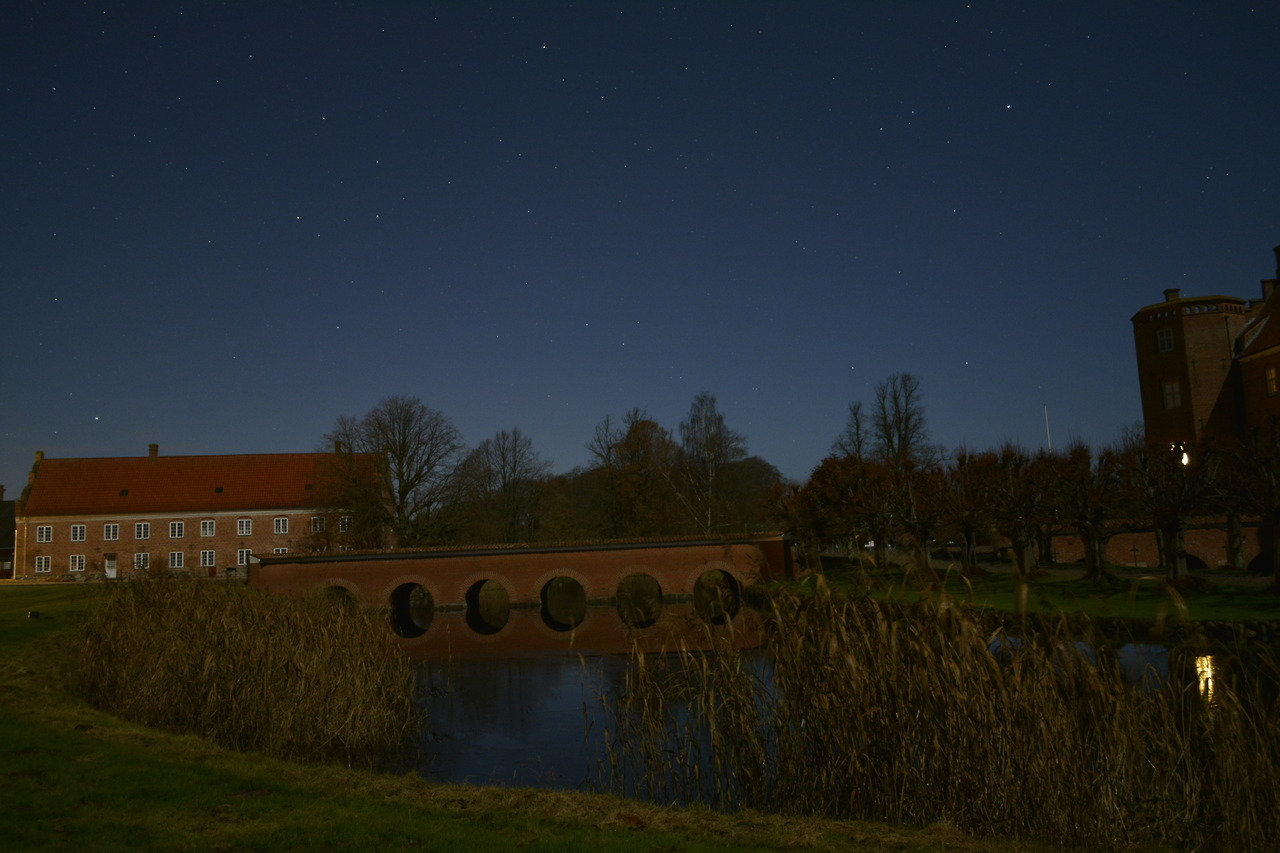
If we talk static things then using any camera you can just tweak the exposure time ASO, and get nice pictures, i like myself to take pictures at night with my Nikon DSLr camera.
A little moonlight do not hurt here.
But moving stuff have its limits CUZ then you cant go lower than your frame rate so to capture 30 FPS video you need at least 1:30 second to expose every frame, and that is very short VS 10-20 seconds exposure you can use in low light photography
So you do not capture much light, and so to get brighter footage you need a more light sensitive sensor, this is achieved with technology but mainly the size of the pixel on the sensor itself.
The Sony starvis 2 sensoprs have 3-4 micron pixels, though still very small VS the 12 - 18 micron pixels in thermal cameras.
Another modern trick used often in phone cameras are to bin pixels, this often bin 4 pixels into one virtual pixel, so for instance my phone shoot 64 Mpix photos in the daylight, but at night it bin 4 in 1 and so i only get 12 megapixel night photos.
But there are no dashcam i know of that use pixel binning, in the phones the pixels are also very small in order to fit so many on a relative small place, so binning to create a larger more sensitive pixel is the way to go.
Dahscams still use fairly small sensors, unlike DSLr cameras and other stuff which can be huge sensors, but often the light sensitivity is equal or lower CUZ they cram in a hell of a lot pixels so the phone junkies can do their pixel race.
you can do nice time lapse " recordings" that look like video when played back, but each frame are still many senconds long in exposure, so only fairly slow things can be filmed or very distant things like stars.
Like this 12 hour long take.