Ultimate Dash Cam Battery Pack Comparison

the only thing i thought was weird so far is the IVOLT Xtra from Thinkware stating it was fully charged on the app yet was still charging as though it needed to be charged.
That is quite normal for LiFePO4 batteries, it needs some time to learn its actual capacity, and probably to balance itself too, which will change the capacity a little.

In isolation the charging time bar chart can be a bit misleading because the IROAD batteries have higher capacities than the others.
We need a chart of charge time/hour of parking recording time?
 
It appears on that video that the %charged on the app doesn't match with reality, which it won't until the battery learns what its capacity is, and for that it needs a small number of full charge/discharge cycles.

You got more power into it than it thought it had capacity for. Possibly the battery hasn't balanced its cells yet, ideally for a new battery, you would leave these batteries charging for a couple of days before doing a capacity test, so that they can properly balance their cells, and probably find a little extra capacity, and then calibrate their %charged meters to their actual capacity. Not asking you to do it all again, just commenting for future tests people might do.
For all these batteries, we can estimate the actual charging current of the battery cells by multiplying the value indicated on the power supply by 0.92 (assuming that the overall charging efficiency is about ±92%, including the efficiency of the internal charge controller and losses in the wires and connectors).
So, the 8.2A indicated on the power supply corresponds to about 7.5A flowing into battery, or about 1C for 75000mAh batteries.
 
Viofo battery pack testing
Do you have a load connected to the battery pack while performing the timed charge cycle?

When the customer starts the engine on a completely discharged pack it will also boot up the camera, and start recording.
This is an additional 7W-10W load, (2CH or 3CH).
This additional load will increase the charge time.
That’s why I connect a 6.8W light bulb to simulate a 2CH dash cam to perform my timed charge cycles.
For BP100 single pack I get 72 minutes for a full charge, (hardwire).
For BP100 dual pack I get 160 minutes for a full charge, (hardwire).

64 Minutes .webp


Do you have a load connected to the battery pack while performing the timed charge cycle?

When the customer starts the engine on a completely discharged pack it will also boot up the camera, and start recording.
This is an additional 7W-10W load, (2CH or 3CH).
This additional load will increase the charge time.
That’s why I connect a 6.8W light bulb to simulate a 2CH dash cam to perform my timed charge cycles.
For BP100 single pack I get 72 minutes for a full charge, (hardwire).
For BP100 dual pack I get 160 minutes for a full charge, (hardwire).

View attachment 82756

You can see in the video there is clearly no load hooked up to any battery packs.
 
Here is the IROAD powerpack pro 12
Yes higher capacity but still customers need to have realistic charge times. .......

This is my favorite (chartering-wise) and here is why:

The IROAD pro 12 has a good long soft start and a two-stage charging algorithm.
In addition, this is a 12000mAh (153Wh) battery! and the actual maximum charging current of 8.3A x 0.92 = 7.6A is about the same as all the others but corresponds to 7.6 / 12 = 0.63C - a much better C-rate for battery longevity!

This is a big advantage of a large capacity! along with the longer parking time!

1.5 hours "for a full charge" compared to 1 hour "for a full charge" of other batteries should not mislead us.

The “full charge" depends on the capacity of the battery and should be avoided.
A more appropriate unit of measurement would be Wh/h or (Ah/h, if applied to a batteries with the same nominal voltage/chemistry and all these batteries are LFP, 3.2V nominal per cells, 12.8V nominal for the battery pack).

So, in 1 hour the 12000mAh IROAD pro 12 stores about the same amount of energy (around 97Wh) as other 7500mAh batteries, but with a much gentler current rate of 0.63C for longer life!!

If the IROAD pro 12 can be charged at 1C current like the others, it will charge to full in an hour but 1.6 times faster energy-wise than other batteries. That's 102 Wh of stored energy in just 40 minutes, just like @Nigel wanted.
This is what IRODE might consider as an option.
 
Last edited:
If the IROAD pro 12 can be charged at 1C current like the others, it will charge to full in an hour but 1.6 times faster energy-wise than other batteries. That's 102 Wh of stored energy in just 40 minutes, just like @Nigel wanted.
This is what IRODE might consider as an option.
This would be a very good reason to buy a bigger battery, but we can now see that we don't get faster charging with the larger battery in this case. Until we find a larger battery that will charge faster, the only option for those of use who make short journeys is to put two of them in parallel... for twice the charge rate, but still the same time to charge to full...

Should SDS test for issues when connecting batteries in parallel to get faster charge rates?

A more appropriate unit of measurement would be watt per hour, i.e. Wh
I think that should actually be Wh/h (watt hours per hour), since a watt hour is an amount of energy and the rate would be that per hour...
 
Not to add any more work to @SafeDriveSolutions’ plate, but what do you think of the benefit of plotting and sharing charge speed curves?

I’ve been doing similar measurements showing how long it takes to get to 100%, but given the rapid charge speeds most of the time and then a tapering off as the battery gets full, if a battery charges to 80-90% quicker than other batteries but spends more time winding down, they could effectively be “better” in terms of usable charge per hour while also looking worse in tests that rank them based on how long they take to get to 100%.

As for the discussion about avoiding charging them to 100% for the sake of longevity, that may be technically true, but completely impractical in the real world. How many people are gonna be actively monitoring their battery capacity every day and then decide to stop running errands or cut their commute home short just because they don’t want to fully charge the battery?

In reality people are gonna drive however they’re going to drive and the battery is gonna get charged up accordingly. I can’t see people changing their driving behavior in the hopes of optimizing dashcam battery longevity.
 
Not to add any more work to @SafeDriveSolutions’ plate, but what do you think of the benefit of plotting and sharing charge speed curves?

I’ve been doing similar measurements showing how long it takes to get to 100%, but given the rapid charge speeds most of the time and then a tapering off as the battery gets full, if a battery charges to 80-90% quicker than other batteries but spends more time winding down, they could effectively be “better” in terms of usable charge per hour while also looking worse in tests that rank them based on how long they take to get to 100%.

As for the discussion about avoiding charging them to 100% for the sake of longevity, that may be technically true, but completely impractical in the real world. How many people are gonna be actively monitoring their battery capacity every day and then decide to stop running errands or cut their commute home short just because they don’t want to fully charge the battery?

In reality people are gonna drive however they’re going to drive and the battery is gonna get charged up accordingly. I can’t see people changing their driving behavior in the hopes of optimizing dashcam battery longevity.

Samsung Phones have a feature built in feature where you can cease charging at 80 percent. Look under Battery Protection. The phone stops accepting a charge once it reaches the shutoff capacity.

Battery packs could implement the same software technology to cease charging at 80% to limit the number of cycles, discharges, and extend the life of the battery pack. Leave it as a software option for people that may want it and to turn off for those that don't.

Battery packs are a very expensive investment so people that don't need 100% charge likely be more than willing to limit capacity if that meant 25-30% longer shelf life.
 
Samsung Phones have a feature built in feature where you can cease charging at 80 percent. Look under Battery Protection. The phone stops accepting a charge once it reaches the shutoff capacity.

Battery packs could implement the same software technology to cease charging at 80% to limit the number of cycles, discharges, and extend the life of the battery pack. Leave it as a software option for people that may want it and to turn off for those that don't.

Battery packs are a very expensive investment so people that don't need 100% charge likely be more than willing to limit capacity if that meant 25-30% longer shelf life.

Personally I’d never use that. I bought dashcam batteries to give me as much recording time as possible. I’m trying to protect my car, not my battery packs. I’ve got some batteries that I’ve been running for well over 5 years and while I haven’t done any degradation tests to see their capacity to date, if there’s ever an issue, I’ll just replace the battery. Yes they’re a couple hundred dollars each, sure, but they offer tens of thousands of dollars worth of protection in case something happens to your car while you’re gone.
 
Not to add any more work to @SafeDriveSolutions’ plate, but what do you think of the benefit of plotting and sharing charge speed curves?

I’ve been doing similar measurements showing how long it takes to get to 100%, but given the rapid charge speeds most of the time and then a tapering off as the battery gets full, if a battery charges to 80-90% quicker than other batteries but spends more time winding down, they could effectively be “better” in terms of usable charge per hour while also looking worse in tests that rank them based on how long they take to get to 100%.
Some of the batteries in SDS's videos are increasing in charge speed as the test progresses, (the watts increases as the test progresses, and watts is the amount of energy going in to the battery), others have constant watts, so are relatively faster at the start, which is more useful for people who don't drive all day. It is not a big difference, but it is there.

As for the discussion about avoiding charging them to 100% for the sake of longevity, that may be technically true, but completely impractical in the real world. How many people are gonna be actively monitoring their battery capacity every day and then decide to stop running errands or cut their commute home short just because they don’t want to fully charge the battery?

In reality people are gonna drive however they’re going to drive and the battery is gonna get charged up accordingly. I can’t see people changing their driving behavior in the hopes of optimizing dashcam battery longevity.
With LiFePO4, the 80% thing is irrelevant anyway, that is a lipo thing and also relevant to Li ion. Slowing down at 80% doesn't help lifespan, for LiFePO4, it is the maximum charge voltage and minimum discharge voltage that makes the difference, and they are controlled by the battery pack, so for a long lifespan, I would choose one where the charge voltage (which can probably be seen on the battery 12V output) doesn't get too high, those will be the ones that take longer to ramp down at the end in the above videos so get worse times although for the main part of the test, they may be fastest. It would be nice to be able to see the output voltage at maximum discharge and maximum charge.
 
Personally I’d never use that. I bought dashcam batteries to give me as much recording time as possible. I’m trying to protect my car, not my battery packs. I’ve got some batteries that I’ve been running for well over 5 years and while I haven’t done any degradation tests to see their capacity to date, if there’s ever an issue, I’ll just replace the battery. Yes they’re a couple hundred dollars each, sure, but they offer tens of thousands of dollars worth of protection in case something happens to your car while you’re gone.
Losing a bit of capacity from these doesn't really matter to most people, because most people don't drive enough to fill them!
For most people, the important figure is how much power you can get into them in 2x 20 minute drives per day, and how reliable are they.
We do see quite a few failures, I've never heard of anyone throwing one out because it had lost capacity though.
 
Personally I’d never use that. I bought dashcam batteries to give me as much recording time as possible. I’m trying to protect my car, not my battery packs. I’ve got some batteries that I’ve been running for well over 5 years and while I haven’t done any degradation tests to see their capacity to date, if there’s ever an issue, I’ll just replace the battery. Yes they’re a couple hundred dollars each, sure, but they offer tens of thousands of dollars worth of protection in case something happens to your car while you’re gone.

It depends on driving habits. If you are working 8 hour job, 1 camera can easily run off a battery pack in parking mode at 80% charge without issue. Having a Battery Save and Long Term Parking Setting (100 Percent Charge) for when a car is parked long term would be useful. You forget, we are hobbyists but many average consumers don't want to spend X amount every 2 years on a battery pack. Sure, you are talking a car accident is very expensive relative to the cost of a Camera + Battery pack, but your average consumer often doesn't have that same process. Consumers look for value and longevity. Constantly charging to 100% and discharging is rough on lipo battteries.

Heat is an electronics killer. Seattle Washington is not a Desert climate or a Hot Humid environment. So yes, the lipo batteries inside your pack aren't running nearly as hot, which helps prolong shelf life, too. Heat can cause batteries to expand and fail, too.

I hardwire my cameras and I am more than willing to replace my car battery a year or so early from the loss attributed to running a parasitic drain (dashcam). As a dashcam enthusiast, its a small price to pay. See above though. We've got to think like consumers.
 
all these batteries are LFP, 3.2V nominal per cells
I'm getting confused.
Does it matter if the packs have 16 cells, or 8 cells?
The older EGEN packs have 16.
The "newer" packs have 8.
I want to open the Viofo pack, and take photos like I did for the PC8, 70mai, and BlackVue, but I can't figure out how.
Also the Wh capacity changed from the 1st to 2nd prototype.
 

Attachments

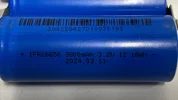
  • IFR26650 3800mAh 3.2V 12.16Wh - 70mai .webp
    IFR26650 3800mAh 3.2V 12.16Wh - 70mai .webp
    117.8 KB · Views: 166
  • 70mai .webp
    70mai .webp
    303.1 KB · Views: 178
  • PowerCell 8 and BlackVue B-130X - EGEN .webp
    PowerCell 8 and BlackVue B-130X - EGEN .webp
    40.4 KB · Views: 179
  • IROAD .webp
    IROAD .webp
    48.6 KB · Views: 177
Does it matter if the packs have 16 cells, or 8 cells?
You need 4 cells in series, 3.2 volts * 4 = 12.8 volts, they are 12.8 volt batteries.

You can have 8 cells by having 2 groups of 4, connecting the 2 groups in parallel, which doubles the capacity, or 12 cells, or 16 cells by having 4 groups of 4, so quadruple the capacity.

16 cells will give the same result as 8 cells that are each twice the size.

Does it matter? Yes, big cells are fat, it makes your battery a different shape!

You can also use the same size cells, but then you would get half the capacity from 8 compared to 16.

Also, some cells that are the same size have different capacities, but that is normally a small difference.
 
A 30 amp 240 volt circuit will provide 30 * 240 = 7200 watts, convert that to 14 volts and you have 7200 / 14 = 514 amps available, and probably some molten cable if you try to use it all!
Why divide by 14 for us non-experts out there?
 
I'm getting confused.
Does it matter if the packs have 16 cells, or 8 cells?
The older EGEN packs have 16.
The "newer" packs have 8.

I want to open the Viofo pack, and take photos like I did for the PC8, 70mai, and BlackVue, but I can't figure out how.
Also the Wh capacity changed from the 1st to 2nd prototype.

The simple answer is cell capacity and pack configuration. Is the cell capacity the same for each cell, between the new and old EGEN?

A benefit of using fewer cells, and this depends on how the pack is assembled, is that the fewer the packs, the fewer the tack-welded nickel straps. Therefore, there is a lower chance of loss across the entire pack. Using a high-quality nickel strap reduces total loss due to lower electrical resistance.
 
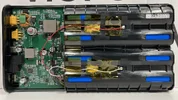
I ripped apart a powerpack pro 12 on Christmas Day. This is the cells inside
IMG_3054.webp
 
Why divide by 14 for us non-experts out there?
Because that is the voltage being used by SDS to charge the powerbanks, actually he was using 13.8 volts, but I would need a calculator to work that out accurately, and I doubt the result is a whole number, I was only trying to make the point that there was plenty of power available in any wall socket and a 30A one was not necessary!
 
Back
Top