JS3 3 Jump Starter Review

Hack_man

Well-Known Member
Joined
Jun 13, 2024
Messages
897
Reaction score
396
Location
MA
Country
United States
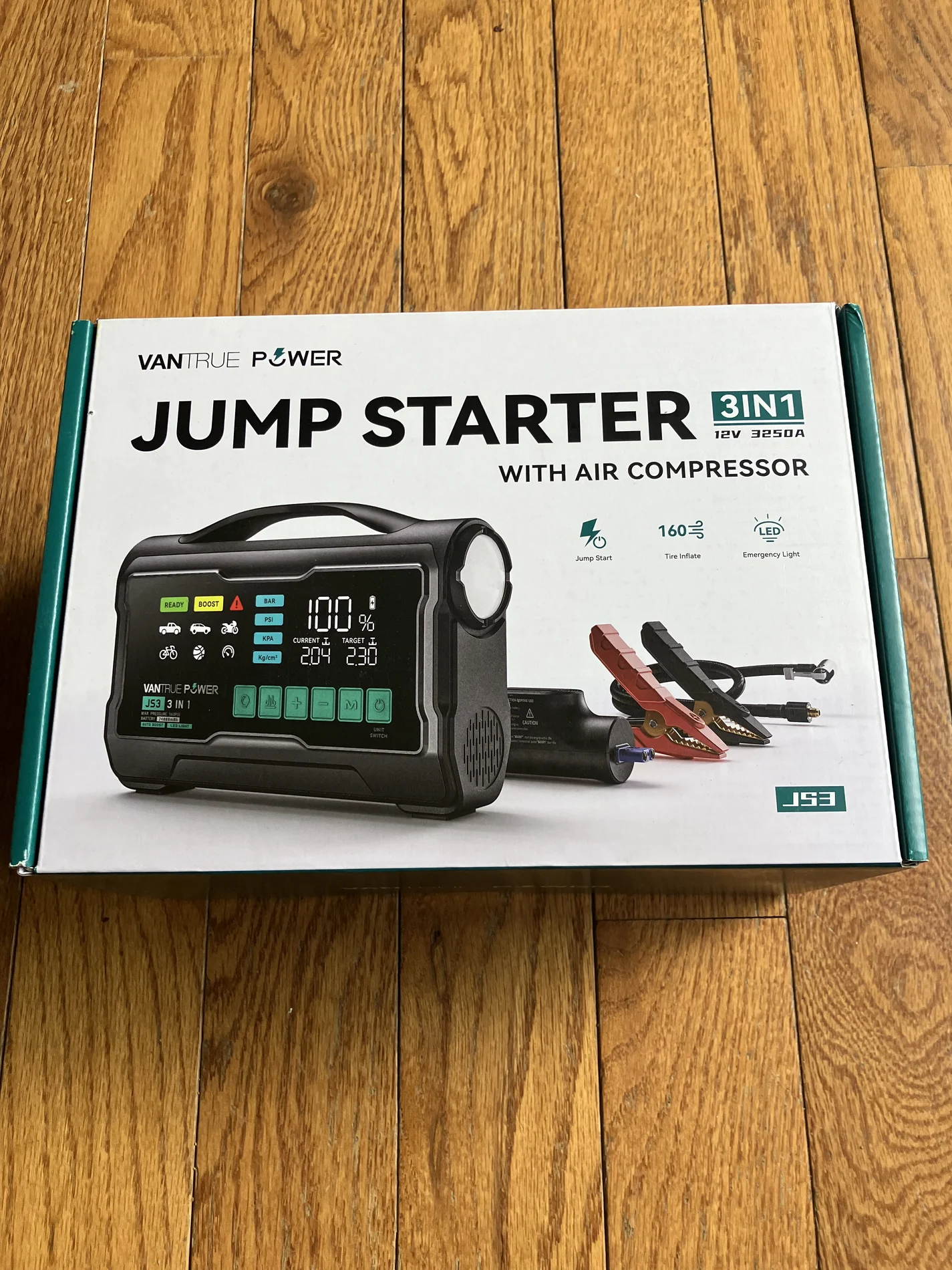
Vantrue sent me for review a JS3 Jump starter which inflates tires, jump starts a car battery and provides roadside safety lighting.
The tire inflator is extremely portable since it's self powered.
You can also charge mobile devices with a USB output port.


IMG_3228.webp
IMG_3233.webp


The button functions from Left to Right:

Light Beam On/Off, Air Compressor On/Off, +/- Air Pressure, Air Compressor PSI ranges, Unit Power
94% shows the charge level of the unit.
The unit is set for filling an SUV to 36 PSI (the SUV range is locked to 26-50 PSI)

IMG_3248.webp


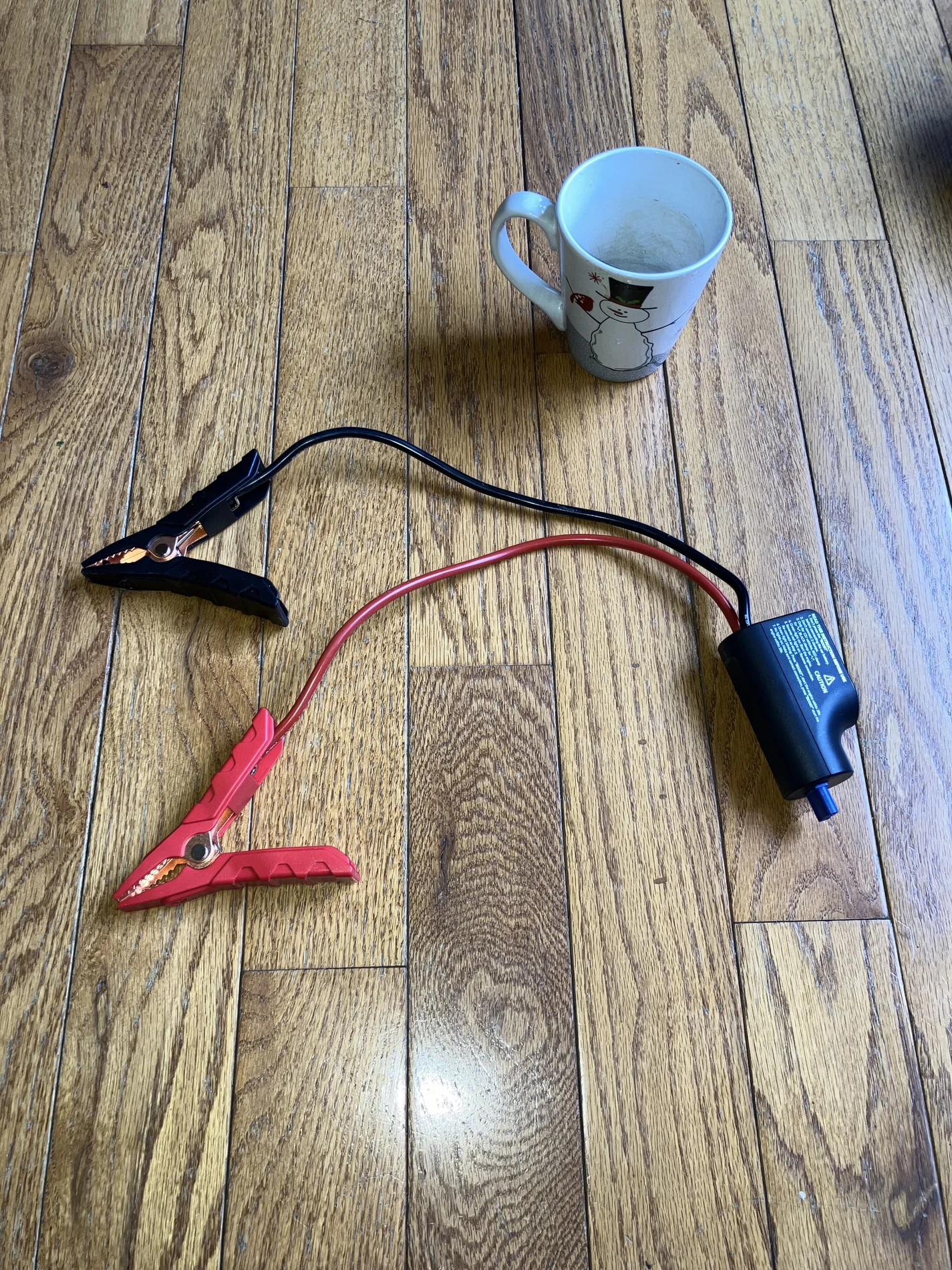
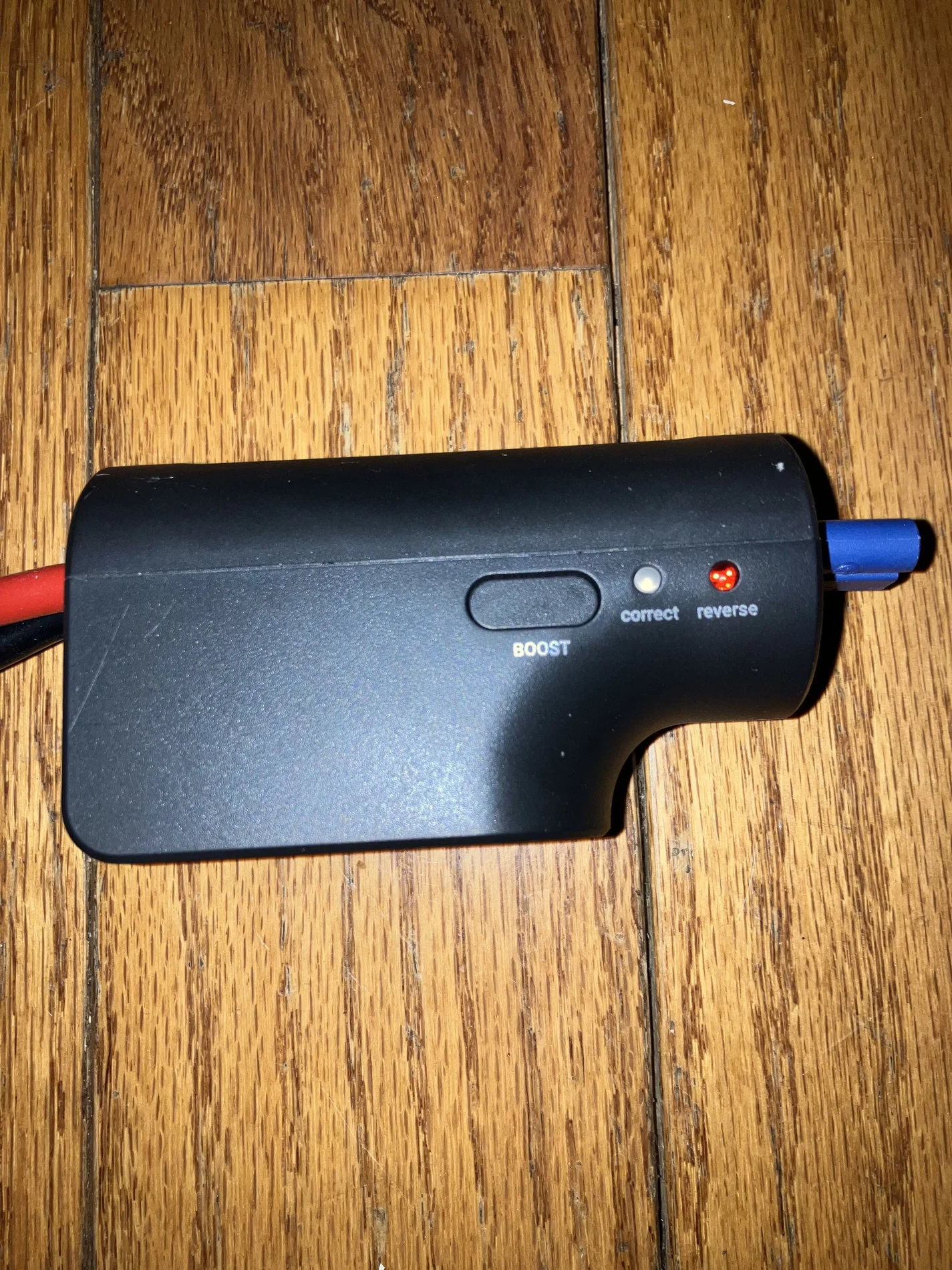
Below is the cable used to jump start the car. It has two LED's (Green and Red) and a BOOST button
After you hook it up to the car:
A solid Green LED means the car should start normally, no boost needed
A flashing Green LED means the car's battery is low, you need to press the "Boost" button and then start the car
A Red LED means the cables are reversed.
IMG_3234.webp
IMG_3245.webp


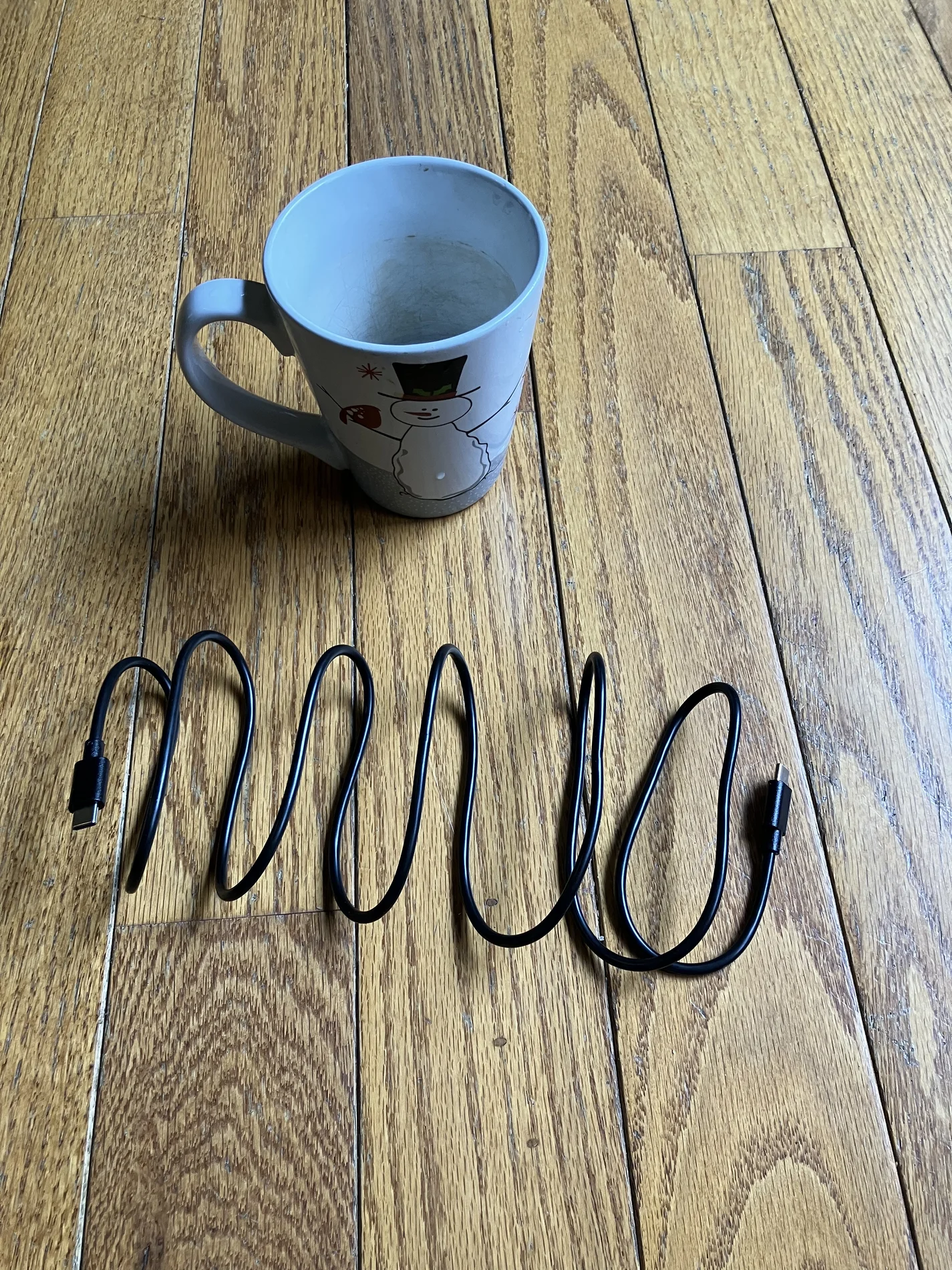
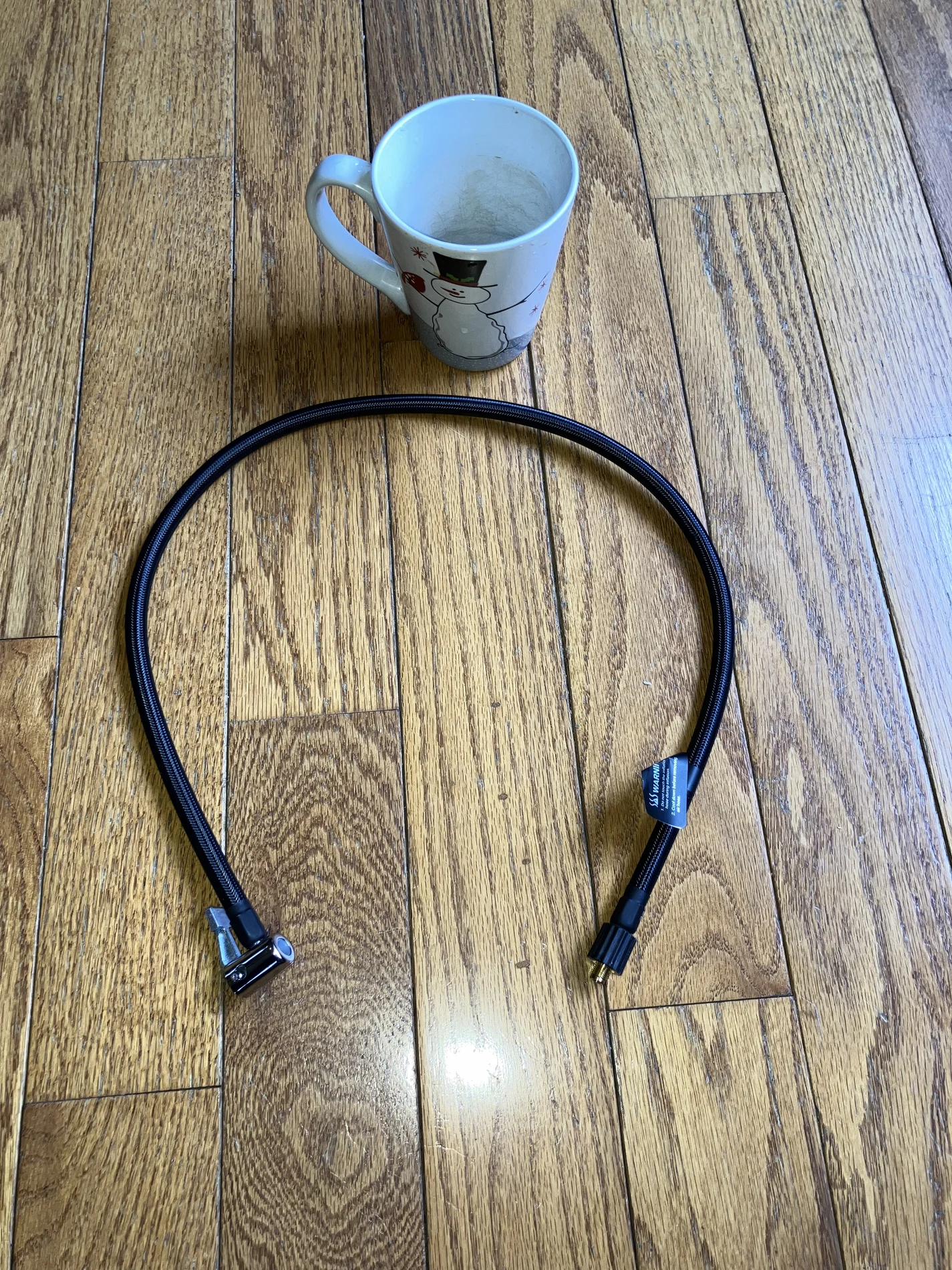
The air hose is nice and short, since the unit is so portable Included is a USBC cable to charge the unit
IMG_3235.webp
IMG_3239.webp


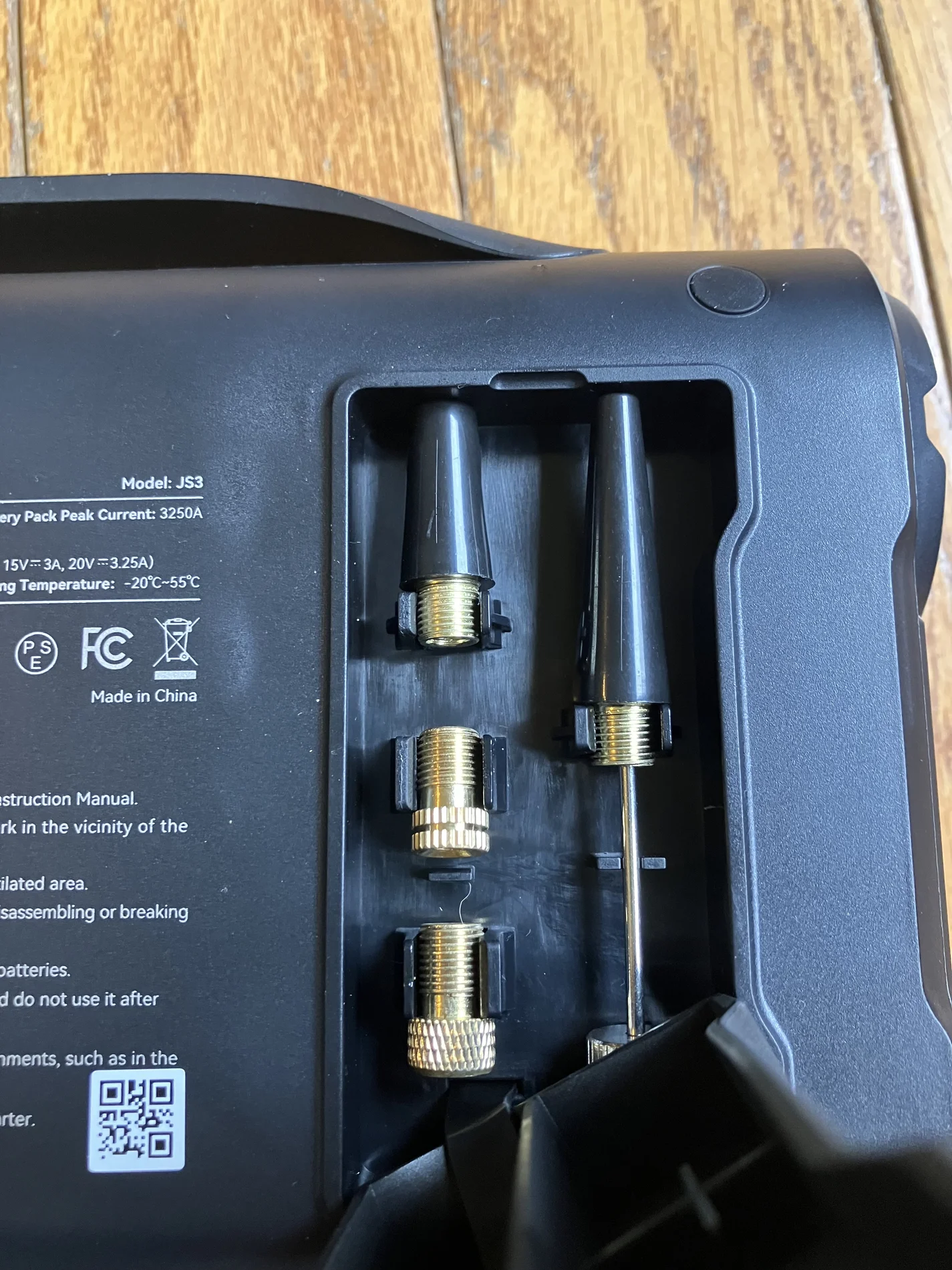
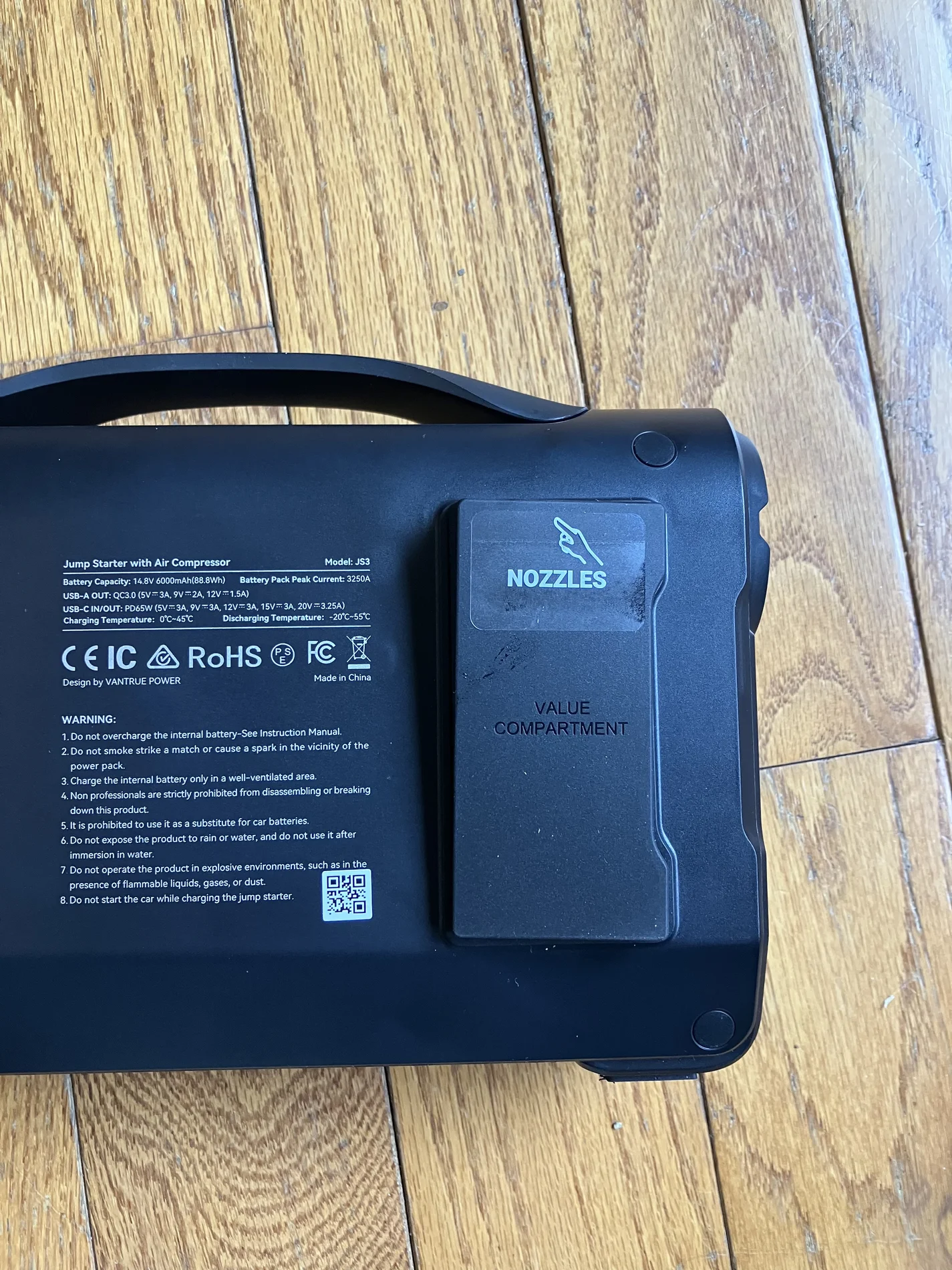
The back of the unit has a nice storage compartment for five assorted air nozzles
IMG_3241.webp
IMG_3243.webp


More pictures and testing to come....
 

Attachments

  • IMG_3246.webp
    IMG_3246.webp
    535.1 KB · Views: 18
I tested the JS3 on my full size Pickup Truck tire.
Many portable compressors specifically say not to use it on truck tires but I did not see this disclaimer for the JS3.
Large tires take longer and are more stressful on the compressor due to the high volume of air.
I ran my tire down to 30 PSI from its normal 36 PSI and it took 1 minute 15 seconds to fill which I thought was pretty good for a large truck tire.
The JS3 did not flinch, and was cool to the touch after filling.
One thing I noticed is the Mode for filling various types of vehicles (SUV, Car, Bike, Motorcycle, Ball, Custom) always defaults back to "Custom" when it powers back on so it makes sense to use that setting for your common needs. The UNITS (PSI,BAR, KPA, Kg/cm^2) does remember your preference.
I was also happy to see the PSI reading on the JS3 closely matched readings I took using my Jaco digital tire gauge.
I tested at 30 and 36 PSI and they agreed within about 1 PSI.

Here is a quick 2 minute video showing the tire getting filled.

 
Last edited:
Here is a quick 2 minute video showing the tire getting filled.

Its a noisy little sucker. I expected it to be quieter only because the case looks like it could suppress the noise. I don't know why I thought that.

Have you had a chance to jump start a truck with it?
I have two cars in my family that always have flat batteries when you least can have that problem.
My car which has a good battery even failed (I had left something running in it.... can't remember what) the night before I was going to drive someone to the airport for an overseas flight! I could have done with that unit then.

I see you managed the air clamp with one had nicely.
My personal preference would be this type of connector.
You only need to pinch the lever down and then push the connector on the tube fitting and let go. I find it less fiddly.

1778599916818.webp
 
Its a noisy little sucker. I expected it to be quieter only because the case looks like it could suppress the noise. I don't know why I thought that.

Have you had a chance to jump start a truck with it?
I have two cars in my family that always have flat batteries when you least can have that problem.
My car which has a good battery even failed (I had left something running in it.... can't remember what) the night before I was going to drive someone to the airport for an overseas flight! I could have done with that unit then.

I see you managed the air clamp with one had nicely.
My personal preference would be this type of connector.
You only need to pinch the lever down and then push the connector on the tube fitting and let go. I find it less fiddly.

View attachment 91499
It's noisy but not as bad as my heavy duty 120 VAC Husky tank compressor.
Funny you ask about jump starting the truck battery. I have been wishing that battery would die and need a jump to test the JS3.
It's 11 years old and still starts the truck in 10°F weather, totally amazing. I don't think the boost function will even work if it doesn't sense a low battery condition.
The way I understand the JS3, it enables a relay to energize the booster cables when you press the boost button.
Why does a battery die when you need it the most like driving to the airport.
With the JS3 at least some stress would be removed.
screenshot_1516.webp


It's slightly weak for an 800 CCA Battery but still starts the truck in 10°F temperatures.
screenshot_1517.webp
 
It's 11 years old and still starts the truck in 10°F weather, totally amazing

LOL yeah 10 volts isn't exactly a healthy battery but if it works then thats all that matters. (Perhaps your truck only needs 200 amps to crank it to start = nice )

Perhaps your wish is coming soon lol.

11 Year! I can only dream of a battery life of that duration. Do you have to top it up with water? It looks a 'maintenance free' type of battery.
In Australia we have a brand called Century which moved to 'maintenance free' batteries years ago and since then I would be lucky to get 4-5 years out of them.
I found a Panasonic battery that does allow you to top it up so hopefully I will be able to get a similar life span to yours.
The Panasonic allows you to lift the flap up to see the plugs. On the Century batteries you have to hack it as its not designed to have the top flap removed.

One of the attempts to rejuvenate an old battery. Note we had to cut the top off which leaves the cell exposed.

1778645512526.webp
 
I never tried prying up the cover to add water, I'm pretty sure it's sealed.
So this battery has gone 11 years with no maintenance.

I'm not sure if the JS3 will allow enabling the boost function since the battery is still over 9.0 V per the instruction manual.


screenshot_1522.webp
 
I performed time tests to determine if the JS3 automatically powered down to conserve battery life and for safety protocol.
The owner's manual stated the following:

"Power off: Press and hold to turn off or wait for 60 seconds without output before automatically shutting down."

Q: How to turn off the jump starter?
A: a. The product has an intelligent detection function. Once there is no load within 60 seconds or the electronic product is fully charged, the jump starter will automatically sleep to save battery life and avoid loss.
b. Press and hold the power button for 2.5S second to turn off the product.


Testing:

1. The unit self powered off after 60 seconds after the last button was pressed (per the owner's manual). This was tested with no jumper cables connected to unit.

2. I attached the jumper cables to the JS3 with the unit first powered OFF with no load on the cables. The JS3 automatically turned on. It then took the unit approx. 11 minutes to self power off.

3. I attached the jumper cables to the JS3 with the unit first powered OFF with a 9V battery attached to the cable. The JS3 did not power off (tested for 30 minutes).

4. I enabled the "Boost" function (with no load) by pressing the "Boost button and determined it took 30 seconds to automatically disable power to the jumper cables. This is an important safety feature since there is high current available at the jumper cables after the boost button is pressed.

I was surprised the unit never powered off when connected to a battery load.
 

Attachments

  • screenshot_1535.webp
    screenshot_1535.webp
    23 KB · Views: 11
@Jeff_Vantrue

Can you please explain exactly what triggers the JS3 to energize the charging cables (apply power to the car battery) assuming the JS3 is connected to a battery that measures greater than 9 volts? Under these conditions, the green "correct" light would be lit and NOT flashing, and the boost button would not need to be pressed before starting the car per the instruction manual (since the car battery is greater than 9V ).

Is it true that the JS3 senses the battery dropping in voltage due to the heavy starter motor current and automatically applies power to the cables during the actual time the car is being started, but not when the cables are first attached to the car battery?

I ask because I have confirmed that the JS3 cables are NOT energized when the cables are first attached to the unit (as noted on the JS3 display = 0.0 V and then confirmed with my 0 Vdc independent Voltmeter reading). I then clamped cables to the car battery, where the JS3 voltage meter and my independent voltmeter both measure the open circuit voltage of the battery (12.4 Vdc) which confirms that the JS3 is STILL not applying power to the cables which confuses me. At what point in this process does the JS3 apply power assuming Boost is not pressed and what triggers it?

If I press the Boost button without the cables attached to a car battery, the JS3 cables instantly become energized to 15.4 Vdc, but only after pressing Boost.
Other JS3 reviewers have specifically commented that Boost does not need to be pressed to start the car with a weak battery. I'm trying to confirm my unit is behaving properly. I have also noticed that I do not see the GREEN READY display per the manual.
screenshot_1574.webp


IMG_3487.webp


Sorry for the rambling question, it's a bit difficult to convey.
 
Last edited:
@Jeff_Vantrue

Can you please explain exactly what triggers the JS3 to energize the charging cables (apply power to the car battery) assuming the JS3 is connected to a battery that measures greater than 9 volts? Under these conditions, the green "correct" light would be lit and NOT flashing, and the boost button would not need to be pressed before starting the car per the instruction manual (since the car battery is greater than 9V ).

Is it true that the JS3 senses the battery dropping in voltage due to the heavy starter motor current and automatically applies power to the cables during the actual time the car is being started, but not when the cables are first attached to the car battery?

I ask because I have confirmed that the JS3 cables are NOT energized when the cables are first attached to the unit (as noted on the JS3 display = 0.0 V and then confirmed with my 0 Vdc independent Voltmeter reading). I then clamped cables to the car battery, where the JS3 voltage meter and my independent voltmeter both measure the open circuit voltage of the battery (12.4 Vdc) which confirms that the JS3 is STILL not applying power to the cables which confuses me. At what point in this process does the JS3 apply power assuming Boost is not pressed and what triggers it?

If I press the Boost button without the cables attached to a car battery, the JS3 cables instantly become energized to 15.4 Vdc, but only after pressing Boost.
Other JS3 reviewers have specifically commented that Boost does not need to be pressed to start the car with a weak battery. I'm trying to confirm my unit is behaving properly. I have also noticed that I do not see the GREEN READY display per the manual.
View attachment 91677


View attachment 91678


Sorry for the rambling question, it's a bit difficult to convey.
It's applying a massive surge of current to the battery to start it. The voltage check is to make sure that there's enough voltage for the battery to accept the extra current. See screenshot below.

Screenshot_2026-05-29-07-11-21-482_com.android.chrome.webp
 
Right but what I am asking is "exactly when are the JS3 terminals energized by the JS3 to start a weak battery measuring over 9 V?"
mine does not appear to energize unless Boost is pressed.
 
My JS3 always says "Boost" even when battery measures over 9 V
According to the manual, it should say "READY"

screenshot_1576.webp


IMG_3490.webp
 
Last edited:
I'm trying to figure out if my unit is not behaving properly. Why is the Boost indicator ON when the connected battery voltage is > 9V (see two photos above)?
This is not consistent with the user manual. Plus from a technical viewpoint I would like to understand what triggers the unit to energize the cables when the boost button is not pressed but the car is started. I find that interesting. I think it should be sensing a drop in voltage, but mine is not behaving that way.

I did experience a glitch where the unit locked up and became unresponsive to any buttons and would not power off.
Eventually over several days, it self discharged, and when I charged it back up it became responsive again.
Credit to @jsmith for calling that fix before it happened!
 
Last edited:
@Jeff_Vantrue

Can you please explain exactly what triggers the JS3 to energize the charging cables (apply power to the car battery) assuming the JS3 is connected to a battery that measures greater than 9 volts? Under these conditions, the green "correct" light would be lit and NOT flashing, and the boost button would not need to be pressed before starting the car per the instruction manual (since the car battery is greater than 9V ).

Is it true that the JS3 senses the battery dropping in voltage due to the heavy starter motor current and automatically applies power to the cables during the actual time the car is being started, but not when the cables are first attached to the car battery?

I ask because I have confirmed that the JS3 cables are NOT energized when the cables are first attached to the unit (as noted on the JS3 display = 0.0 V and then confirmed with my 0 Vdc independent Voltmeter reading). I then clamped cables to the car battery, where the JS3 voltage meter and my independent voltmeter both measure the open circuit voltage of the battery (12.4 Vdc) which confirms that the JS3 is STILL not applying power to the cables which confuses me. At what point in this process does the JS3 apply power assuming Boost is not pressed and what triggers it?

If I press the Boost button without the cables attached to a car battery, the JS3 cables instantly become energized to 15.4 Vdc, but only after pressing Boost.
Other JS3 reviewers have specifically commented that Boost does not need to be pressed to start the car with a weak battery. I'm trying to confirm my unit is behaving properly. I have also noticed that I do not see the GREEN READY display per the manual.
View attachment 91677


View attachment 91678


Sorry for the rambling question, it's a bit difficult to convey.
Thank you for the detailed explanation. Regarding why your unit always displays “BOOST” instead of “READY,” this is currently related to the display software logic. The engineering team is already working on updating this display logic in future software revisions.

The JS3 currently works in two different conditions depending on the vehicle battery voltage: Automatic Start Mode and Forced Output Mode

Battery Voltage Below 9V
If the vehicle battery voltage is between 1V–9V, the clamp green indicator will flash, the screen will display the battery voltage along with “BOOST” and a red exclamation mark.
If the battery voltage is below 1V, the system considers the battery severely damaged, and the clamp green light may remain off while still showing the voltage, “BOOST,” and the red warning symbol.

In both of these situations, you will need to manually press the BOOST button before starting the engine.

Battery Voltage Above 9V
When the vehicle battery voltage is above 9V, the clamp green indicator will remain solid green, and the screen will display the battery voltage along with “BOOST.”
Under this condition, the vehicle can be started directly without pressing the BOOST button. The JS3 will automatically assist during engine cranking.
 
I wanted to see how much voltage boost is provided by the JS3 during cranking using a battery in good condition.
The Hack_man nerd in me kind of came out 🙄
I performed tests using the JS3's display meter and a Fluke Voltmeter while cranking a tractor engine with the spark plug wire removed to prevent starting.

1. The no load voltage of the tractor battery before cranking was 12.50 V

2. I then placed the JS3 clamps on the battery with a Fluke voltmeter at the same time. The Fluke measured 12.52 V, JS3 measured 12.5 V.
This implies the JS3 was not supplying any boost voltage to the tractor battery. The fluke current meter confirmed no current was supplied by the JS3 whenusing the 10 A scale.

3. I then cranked the starter and measured: Fluke = 12.70 V JS3 = 13.8 V
The voltage at the battery terminals only increased by 0.2V but this is significant since the JS3 must have supplied heavy current to keep the battery from dropping BELOW its original value of 12.50 V during cranking. The JS3 reading of 13.8 V indicates there was a 1.10 voltage drop thru the JS3 cables to the tractor battery.

Highlight pics:

No load voltage test of the tractor battery before hooking up JS3 using Fluke voltmeter:
IMG_3548.webp


Fluke and JS3 attached to tractor battery before cranking engine:
screenshot_1588.webp


I happened to notice while reviewing a video I made that the battery voltage briefly dropped to 11.7 V which I think was the trigger to kick start the JS3 boost function automatically! I would have never seen or noticed this without watching the video frame-by-frame
For one frame at the beginning of cranking the engine, the Fluke voltage dropped to 11.71 V.
screenshot_1589.webp


With the Engine still cranking, the Fluke reads 12.71 V while JS3 shows 13.8 indicating 1.1 V drop thru JS3 cables due to heavy starting current.
screenshot_1590.webp


There was also a spike in voltage immediately after I stopped cranking the engine where the fluke briefly measured 14.3V. I think the fluke has a faster sample interval and display update rate than the JS3 which partially explains why they don't always agree (besides the IR drop in the JS3 cables). I'm still trying to figure out why it spiked at the end of the test.
screenshot_1591.webp


Shown below are the final readings after turning off engine for several seconds. It's interesting that the battery is actually a little higher by 0.1V than it started since the JS3 probably charged it a little.
screenshot_1592.webp


Here is a complete video during the cranking process:

 
Last edited:
I noticed you can accidentally start the compressor running while the battery is being jump started 😱
I would have preferred this function to be disabled while the cables are inserted into the JS3.
 
I wanted to see how much voltage boost is provided by the JS3 during cranking using a battery in good condition.
The Hack_man nerd in me kind of came out 🙄
I performed tests using the JS3's display voltage and a Fluke Voltmeter while cranking a tractor engine with the spark plug wire removed to prevent starting.

1. The no load voltage of the tractor battery before cranking was 12.50 V

2. I then placed the JS3 clamps on the battery with a Fluke voltmeter at the same time. The Fluke measured 12.52 V, JS3 measured 12.5 V.
This implies the JS3 was not supplying any boost voltage to the tractor battery. The fluke current meter confirmed no current was supplied by the JS3 whenusing the 10 A scale.

3. I then cranked the starter and measured: Fluke = 12.70 V JS3 = 13.8 V
The voltage at the battery terminals only increased by 0.2V but this is significant since the JS3 must have supplied heavy current to keep the battery from dropping BELOW its original value of 12.50 V during cranking. The JS3 reading of 13.8 V indicates there was a 1.10 voltage drop thru the JS3 cables to the tractor battery.

Highlight pics:

No load voltage test of the tractor battery before hooking up JS3 using Fluke voltmeter:
View attachment 91718

Fluke and JS3 attached to tractor battery before cranking engine:
View attachment 91719


I happened to notice while reviewing a video I made that the battery voltage briefly dropped to 11.7 V which I think was the trigger to kick start the JS3 boost function automatically! I would have never seen or noticed this without watching the video frame-by-frame
For one frame at the beginning of cranking the engine, the Fluke voltage dropped to 11.71 V.
View attachment 91720


With the Engine still cranking, the Fluke reads 12.71 V while JS3 shows 13.8 indicating 1.1 V drop thru JS3 cables due to heavy starting current.
View attachment 91721

There was also a spike in voltage immediately after I stopped cranking the engine where the fluke briefly measured 14.3V. I think the fluke has a faster sample interval and display update rate than the JS3 which partially explains why they don't always agree (besides the IR drop in the JS3 cables). I'm still trying to figure out why it spiked at the end of the test.
View attachment 91722

Shown below are the final readings after turning off engine for several seconds. It's interesting that the battery is actually a little higher by 0.1V than it started since the JS3 probably charged it a little.
View attachment 91723

Here is a complete video during the cranking process:

Yeah so really it's the current that's being loaded heaps with any jump starter, and just a bit of voltage to make sure that there's enough voltage on board.

Bit of an oversight with the compressor starting on.the JS3..
 
Yeah so really it's the current that's being loaded heaps with any jump starter, and just a bit of voltage to make sure that there's enough voltage on board.

Bit of an oversight with the compressor starting on.the JS3..
What I would really like to do is measure current and voltage at the same time.
The problem is it's a really high current (probably hundreds of amps) and I don't have anything capable of making that measurement.
I already blew a fuse in my Fluke 😳
I'd want an oscilloscope with a clamp-on current probe.

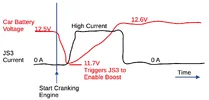
This is kind of what I would expect based on what I have already measured.
I suppose these days you could google "typical jump starter current and voltage waveforms" and get an AI answer.
Maybe some other electronic nerds can critique?

screenshot_1597.webp
 

Attachments

  • screenshot_1596.webp
    screenshot_1596.webp
    43.8 KB · Views: 15
Last edited:
Back
Top