VIOFO A329S - Testing/Review - RCG

Low bitrate recording it is always recording on the card, but the AED is not, but only when it detects motion. And only when it detects motion the chipset is consuming more power because it is recording the video.
 
I wanted to see if the "WW" loader file I have would successfully get installed and load the FWA329WW.bin v1.0_250527 firmware into my A329S. I copied the LD98530A.bin file and the FWA329WW.bin file to a 32 GB VIOFO microSD card that was formatted with a FAT32 filesystem.

With the 32 GB card in the camera, the first boot almost looked "normal". There was just a very slight delay during the boot process as it loaded the LD98530A.bin file. The camera booted up and started recording. After the LD98530A.bin loader file is loaded into the camera, it is deleted from the microSD card.

I long pressed the power button to power down the camera. I then pressed the power button again to boot the camera. During this power up, the camera loaded the FWA329WW.bin file. After I selected my choices for the initial settings a user is prompted for, I stopped the camera from recording and started to looked around the various settings. After the firmware file has been loaded into the camera, it is deleted from the microSD card.

1749887356349.webp


The "WW" firmware does not have any settings for the exterior cameras to turn them on/off [on/off/only while driving/only while parking] like the interior and telephoto cameras have with the "S" and "T" firmware. I don't have any exterior waterproof cameras, so I am using an A329 rear camera as one of the exterior cameras. The "Video Settings > Image Rotate & Mirror" have settings for both options for both exterior rear cameras.

1749887097527.webp


Exterior camera 1's cable is connected to the "Rear" port on the front camera which means exterior camera 2's cable is connected to the "Int" port.

By default, the "Video Settings > HDR" settings group only presents an "Auto HDR Timer" option for the front camera. When you enable the "Auto HDR Timer" feature for the front camera, the "Auto HDR Timer" option becomes available for both exterior cameras. You only have one HDR timer schedule which is set by selecting the front camera "Auto HDR Timer" option. This is exactly the same as the "S" and "T" firmware behaves for the interior/telephoto and rear cameras as well as other VIOFO dash camera models that have the "Auto HDR Timer" feature.

1749885008355.webp


1749886838749.webp


As mentioned in the A329S user manual, the filename suffixes for the rear exterior cameras follow the pattern of "_1R" for exterior camera 1 and "_2R" for exterior camera 2 when the multiplexing feature is not being used.

Here's file listing from my test with a camera connected as exterior camera 1:

1749885282524.webp
 
Last edited:
Perhaps this is already mentioned, but does the LD98530A.bin, once it is loaded, get deleted after the new Firmware is installed?
 
Perhaps this is already mentioned, but does the LD98530A.bin, once it is loaded, get deleted after the new Firmware is installed?
I updated my previous post to state that the LD98530A.bin load file is deleted from the microSD card after it has been loaded into the camera.
 
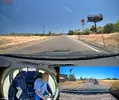
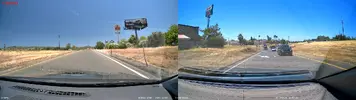
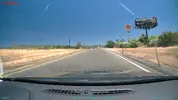
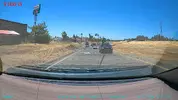
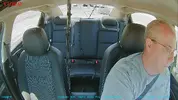
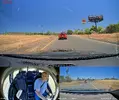
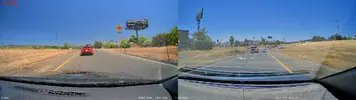
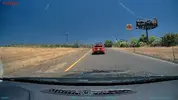
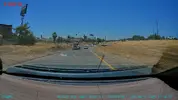
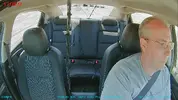
I have two A329S dash cameras in my main test car. One is a 3-channel [front+rear+interior] and the other is a 3-channel [front+rear]. I also have an A229 Pro 3-channel in that car [front+rear+interior]. I set the A329S dash cameras to use the multiplex video feature. I drove my route twice during the midday traffic [HDR Off / HDR On]. Here are frame grabs from the same location on along the driving route with and without HDR enabled.

One thing that is lost with the multiplex feature enabled is the status line no longer contains a HDR marker when HDR is enabled. Please remember the A229 Pro interior camera does not have a HDR setting of any kind in the firmware settings. Since the A329S interior camera without HDR enabled results in the objects outside of the car being extremely overexposed, I had HDR enabled for both driving loops for that one camera.

All three front cameras had a CPL filter installed. The rear / interior cameras had no CPL filter installed.

HDR Off:
01_a329s_3ch_hdroff_2025_0617_125638_001864F.MP4_snapshot_00.56.webp01_a329s_2ch_hdroff_2025_0617_125703_000285F.MP4_snapshot_00.30.webp
01_a229pro_3ch_hdroff_2025_0617_125716_002805F.MP4_snapshot_00.16.webp01_a229pro_hdroff_2025_0617_125716_002807R.MP4_snapshot_00.16.webp01_a229pro_hdrnosetting_2025_0617_125716_002806I.MP4_snapshot_00.16.webp

HDR On:
01_a329s_3ch_hdron_2025_0617_131347_001880F.MP4_snapshot_00.37.webp01_a329s_2ch_hdron_2025_0617_131346_000301F.MP4_snapshot_00.38.webp
01_a229pro_hdron_2025_0617_131350_002853F.MP4_snapshot_00.32.webp01_a229pro_hdron_2025_0617_131350_002855R.MP4_snapshot_00.32.webp01_a229pro_hdrnosetting_2025_0617_131350_002854I.MP4_snapshot_00.32.webp
 
Last edited:
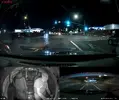
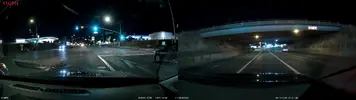
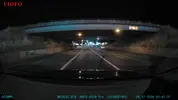
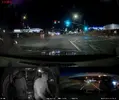
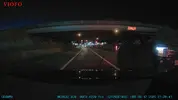
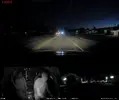
Continuing the multiplex video examples, here are a few frame grabs from nighttime. I disabled the IR LEDs for the A229 Pro interior camera to only have the A329S interior camera LEDs on. I'll leave out the A229 Pro interior camera images due to having its IR LEDs off. I did turn off the A329S interior camera's HDR feature for the nighttime test in the "HDR Off" examples. I wanted to show how much brighter the passenger compartment is with HDR Off vs HDR On.

HDR Off:
01_a329s_3ch_hdroff_2025_0617_214050_001916F.MP4_snapshot_00.48.webp01_a329s_2ch_hdroff_2025_0617_214048_000338F.MP4_snapshot_00.50.webp
01_a229pro_3ch_hdroff_2025_0617_214055_002958F.MP4_snapshot_00.42.webp01_a229pro_3ch_hdroff_2025_0617_214055_002960R.MP4_snapshot_00.42.webp

HDR On:
01_a329s_3ch_hdron_2025_0617_212825_001905F.MP4_snapshot_00.17.webp01_a329s_2ch_hdron_2025_0617_212821_000326F.MP4_snapshot_00.22.webp
01_a229pro_3ch_hdron_2025_0617_212816_002925F.MP4_snapshot_00.25.webp01_a229pro_3ch_hdron_2025_0617_212816_002927R.MP4_snapshot_00.25.webp

Here's a HDR On vs HDR Off from the A329S 3ch at the road location which has less ambient light.
02_a329s_3ch_hdron_2025_0617_213125_001908F.MP4_snapshot_00.04.webp02_a329s_3ch_hdroff_2025_0617_214350_001919F.MP4_snapshot_00.30.webp
 
Last edited:
I been waiting for Bill to verify the content of a video I put together a couple of weeks ago showing the "simple" firmware upgrades of the A329S/T/WW firmwares and the conversion of a "S" to "T" [and the reverse "T" to "S"].


I updated this video on 29-June-2025 to include additional microSD card formatting options when using a Windows computer.

20250630 - FAT32 & exFAT microSD card filesystems will work for firmware upgrades
 
Last edited:
Could somebody maybe test/review this? I’d really appreciate it. πŸ™‚
This can be adjusted. It is mainly requested by the business customer.
I don't think adjusting RTSP settings is useful for personal use.
 
This can be adjusted. It is mainly requested by the business customer.
I don't think adjusting RTSP settings is useful for personal use.
Could you maybe explain what you're trying to say with that?

Here's how I understand it:
RTSP isn't necessarily bad β€” the disadvantages could be addressed manually, but in reality, manual adjustment is mostly something business customers do. So essentially, the downsides (compared to HDMI live output) are pretty much what the other user described, right?

I was asking for a test/review because I honestly have no idea how bad it really is, or whether the RTSP live feed could work as an alternative to HDMI for me in terms of quality. Sure, it depends on individual needs - that's exactly why I'd prefer to see a demo or hear some educated opinions. I'm definitely not saying there's anything wrong with the RTSP stream as it is. I'm just trying to figure out whether it fits my very specific use case - which is a bit unusual, since I'm planning to use the camera for live streaming directly from the road.

showing the "simple" firmware upgrades of the A329S/T/WW firmwares and the conversion of a "S" to "T" [and the reverse "T" to "S"].
That's also a really interesting topic. I was wondering why a different firmware is even necessary. Wouldn't it be so much more convenient to have different modes (within the settings menu) instead of separate firmware versions - so that you could just switch modes whenever you add new equipment or plan to switch things up? I know I'm approaching the whole dashcam topic from a bit of an unusual angle, but to me, it just feels like there's a lot of untapped potential - and that kind of bugs me, whenever I'm deciding to buy something or not. It's not meant negative in any way, I'm just trying to spark some inspiration.
 
That's also a really interesting topic. I was wondering why a different firmware is even necessary. Wouldn't it be so much more convenient to have different modes (within the settings menu) instead of separate firmware versions - so that you could just switch modes whenever you add new equipment or plan to switch things up? I know I'm approaching the whole dashcam topic from a bit of an unusual angle, but to me, it just feels like there's a lot of untapped potential - and that kind of bugs me, whenever I'm deciding to buy something or not. It's not meant negative in any way, I'm just trying to spark some inspiration.
The "S" and "T" firmwares are different from each other and it is not possible to simply switch from "fish eye" to "telephoto". Even if you add such an item to the menu.
 
I was wondering why a different firmware is even necessary. Wouldn't it be so much more convenient to have different modes (within the settings menu) instead of separate firmware versions - so that you could just switch modes whenever you add new equipment or plan to switch things up?
The main reason will be due to the different lenses, the fisheye lens needs fisheye distortion correction, otherwise you get a distorted image, the telephoto lens probably doesn't have any fisheye distortion correction, but it probably does have some correction for other things like vignetting and chromatic aberrations, which will be very different to the fisheye lens, and somewhat different to the other lenses. The waterproof lens is designed for outdoor use, while the others are for use behind glass, so they may have different colour balance corrections. The front and telephoto lenses look through laminated glass, while the others normally look though toughened glass, which has a different colour profile. The exposure metering for the front and telephoto cameras need to meter off the road surface and ignore the bright sky, while the interior camera should be weighted towards the top of the image, and take into account the bright view out the side windows, doesn't much matter if the driver's legs are a bit dark, even though they are in the same part of the image as the road on the front camera.

Then there are things like the infrared lamps, which only exist on the cabin camera, and the washers which only exist on exterior cameras πŸ€”

It would be good if the remote cameras identified themselves, and passed their parameters to the main camera, so that a single firmware can work for all, but Viofo doesn't seem to have achieved that yet... Some of those things will be done within the remote cameras, but I'm not sure how smart these cameras are.
 
I was asking for a test/review because I honestly have no idea how bad it really is, or whether the RTSP live feed could work as an alternative to HDMI for me in terms of quality.
The RTSP is decent quality, but the resolution and bitrate are far lower than the HDMI. It is configured for live streaming, which is what you say you want to do, so I'm not sure why you think it is not already ideal for your use?

I'm not sure how business use differs, but obviously they have different requirements to private use, maybe their data bandwidth is shared with other things, so they only want half a mobile data stream to be used by the dashcam. Most of the time, they are probably not interested in the live stream and just want tracking data, and maybe some of them rely on the video stream as their main recording, instead of using the memory card which can be interfered with, so they want higher quality than most people and are prepared to pay the data costs.
 
Then there are things like the infrared lamps, which only exist on the cabin camera, and the washers which only exist on exterior cameras πŸ€”
What is the washer on the exterior camera? Surely it's not an active lens cleaning function?
 
What is the washer on the exterior camera? Surely it's not an active lens cleaning function?
There are no washers on the exterior rear cameras.
It's just a waterproof sealed unit.

I'm not sure what he means by that. May have been a mis-type
 
Could somebody maybe test/review this? I’d really appreciate it.
May be someone else but not me, I do not receive answer on my request A329S for testing.

The RTSP is decent quality, but the resolution and bitrate are far lower than the HDMI. It is configured for live streaming, which is what you say you want to do, so I'm not sure why you think it is not already ideal for your use?
I can't tells about A329S but previous models use 640Ρ…360 resolution for RTSP. And did not transfer audio stream (why not? I did not know, I changed this on my FW mods).
So if silence mode with so low resolution is okay for live streams for someone, I can't say that it is ideal for my use. @Greenkeeper may agree or disagree.
 
So if silence mode with so low resolution is okay for live streams for someone,
It used to be OK, 10 years ago!

I think it is probably time for an upgrade, but if people use it to stream across 4G mobile then maybe not. The people who use the RTSP seem to be happy with it, but maybe it is time for an extra 4K RTSP option, for streaming to 4K video monitors/android devices?
 
What is the washer on the exterior camera? Surely it's not an active lens cleaning function?
Maybe on the next version, when people want front and rear exterior cameras on the 5 channel dashcam?
 
4G allow stream at 4K resolutions fluently. At current stage RTSP limit is a RAM memory size in hardware level as I understood it. Because we need a memory for main video sensor, rear, internal, Wi-Fi streaming, HDMI and RTSP finally too (and also for other tasks like a voice control, LCD and so on).
Then I test my mods and significantly increase RTSP resolution up to 4K dash cam is still works and I can obtain RTSP via Wi-Fi connection and camera record a video from main sensor. But LCD screen is freese, I suppose it was due not enough memory or cross memory area usage problem was here. That is why I upgrade RTSP only up to FullHD + audio in mod FWs.

Current RTSP quality is enough for viewing on devices with small LCD size. But I suppose that current hardware allows Viofo improve RTSP stream to FullHD and add audio data.
 
Last edited:
4G allow stream at 4K resolutions fluently.
I think most people can only get around 5mb/s upload with good reception; your 4G may be faster than in most countries.

While you can have 4K at 5mb/s, and it will look fine when parked, I think FHD is more sensible for dashcam video.

It would be nice to have the audio for remote viewing.

At current stage RTSP limit is a RAM memory size in hardware level as I understood it.
I don't think Viofo has wanted to improve it, because I think it is used for the app live view, and if you improve the data rate and resolution, a lot of older phones and other devices will stop working!

For the next version of the app, that should support live viewing of the multiplex videos, we will want a 4K stream so that we can zoom in on the individual cameras and still have great image quality.
 
Back
Top