

Augustus
Well-Known Member
- Joined
- Aug 19, 2016
- Messages
- 4,187
- Reaction score
- 2,690
- Location
- Perth, Australia
- Country
- Australia
- Dash Cam
- Viofo, Vantrue, 70mai, Wolfbox
It's almost the middle of 2026, and we have another release in the A8xx stable, the 4K A800SE 4G. This (much like the cheaper 70mai A810 Lite) is 70mai putting their foot down and making their move in the budget segment with the budget GalaxyCore GC8613 true 4K sensor. We do still have a supercapacitor on board which is fantastic to see. The rear sensor is the RC22 model featuring an older GalaxyCore GC2053 sensor, a model shared with other models in 70mai's line-up. The front camera's aperture has also been improved to F1.55 (F2.0 for the rear sensor), and Wi-Fi 6 is also present for faster data transfer speeds.
Turning once again to the box contents, we have the two-tone finish with orange lettering that has been a staple for a while now with 70mai models. Upon opening the box we have the slick black packaging, with two separate envelopes containing the required materials. Contained within is an instruction manual, electrostatic stickers for front and rear cameras, spare mounting adhesives, black plastic pry tool, 12V cigarette lighter adapter (with two USB-A ports), and their respective power cablings.
First impressions are solid of the 70mai 4K A800 SE 4G. There is a certain heftiness to the main unit, which instils confidence in its build quality. But there is also a sense of deja vu, as this is the main housing that has been used on multiple other models before such as the A810S/A800/A800S among others. Both the main front sensor unit and rear RC22 camera units have adjustable swivel function, which is great for fine-tuning the positioning of the dash cameras. There is a 3-inch IPS display (no touchscreen) taking up the majority of the real estate of the front camera. There are also multiple ventilation holes on both the front and rear camera sensors - with plenty of these holes available to dissipate the heat produced by the GalaxyCore 4K sensor. Field-of-view is 140 degrees for the front camera, and 130 degrees for the rear camera. All contained in a package measuring 89.1 x 59.8 x 37.3mm.
The usual suspects from previous 70mai models also make a welcome return here. Buffered emergency parking mode, Lumi Vision for parking mode to brighten very dimly-lit scenarios, time-lapse recording and battery voltage monitoring all make a return, along with support for their existing 4G parking surveillance kits, UP04/UP05. There is also support for a maximum capacity of 512GB for microSD memory cards.
Installation of the 4K A800SE 4G was once again a cinch, and so was it's integration with the 4G parking UP04 kit. Included firmware version was vxxxx.ww (dated xth x 2026), out of the factory. Would like to extend my gratitude to 70mai once again for providing me with this opportunity to test-drive the 4K A800SE 4G. Over the coming weeks, I'll be sharing my detailed findings with you all - stay tuned for my full review coming soon here on DashCamTalk forum.
Please note: there are two versions of the 70mai 4K A800SE - please check before purchase, as this review covers the newest variant that has support for the UP04/UP05 4G LTE remote monitoring parking kits, which the older 4K A800SE does not.
Some close-up photos of the 70mai 4K A800 SE 4G:
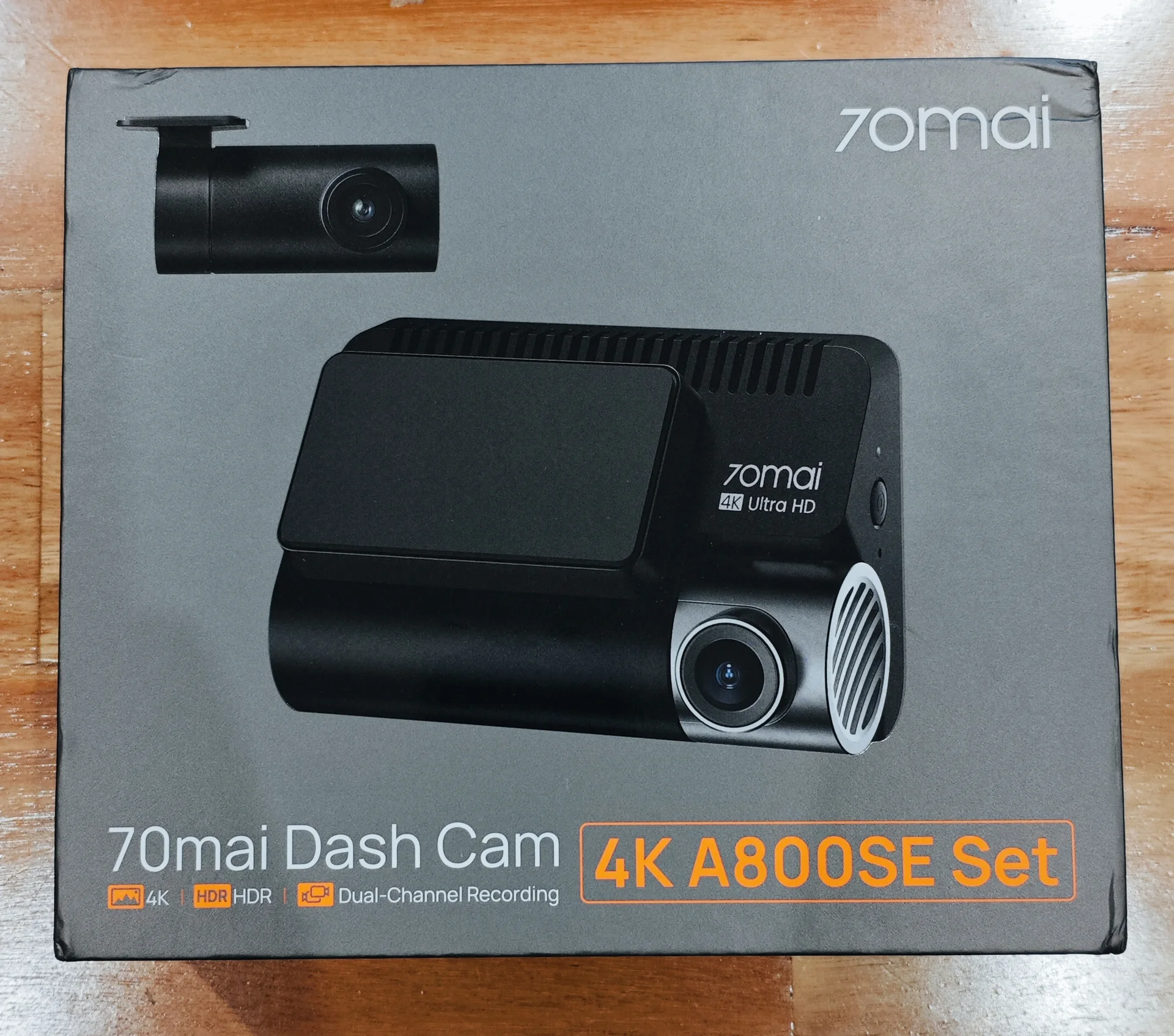
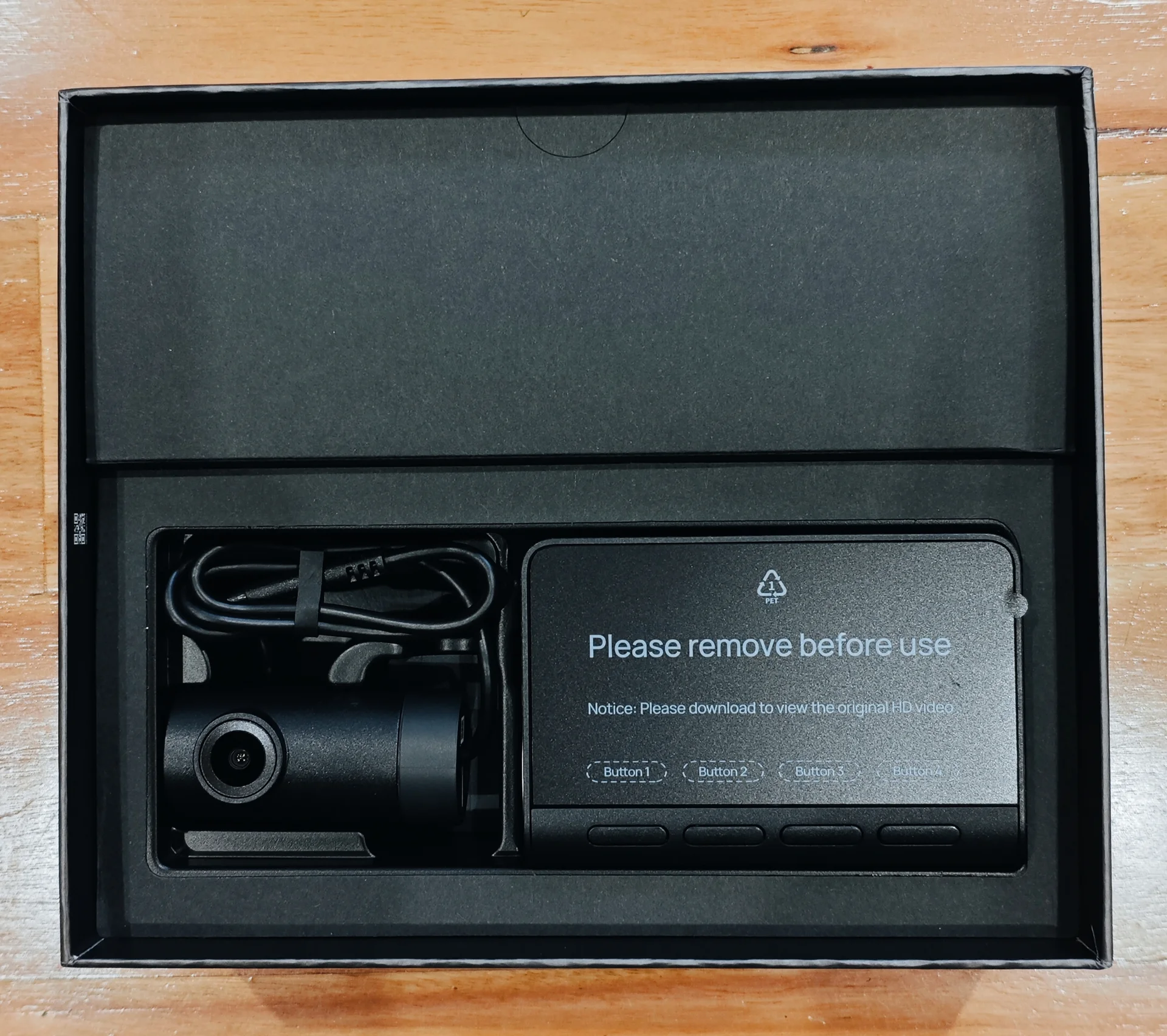


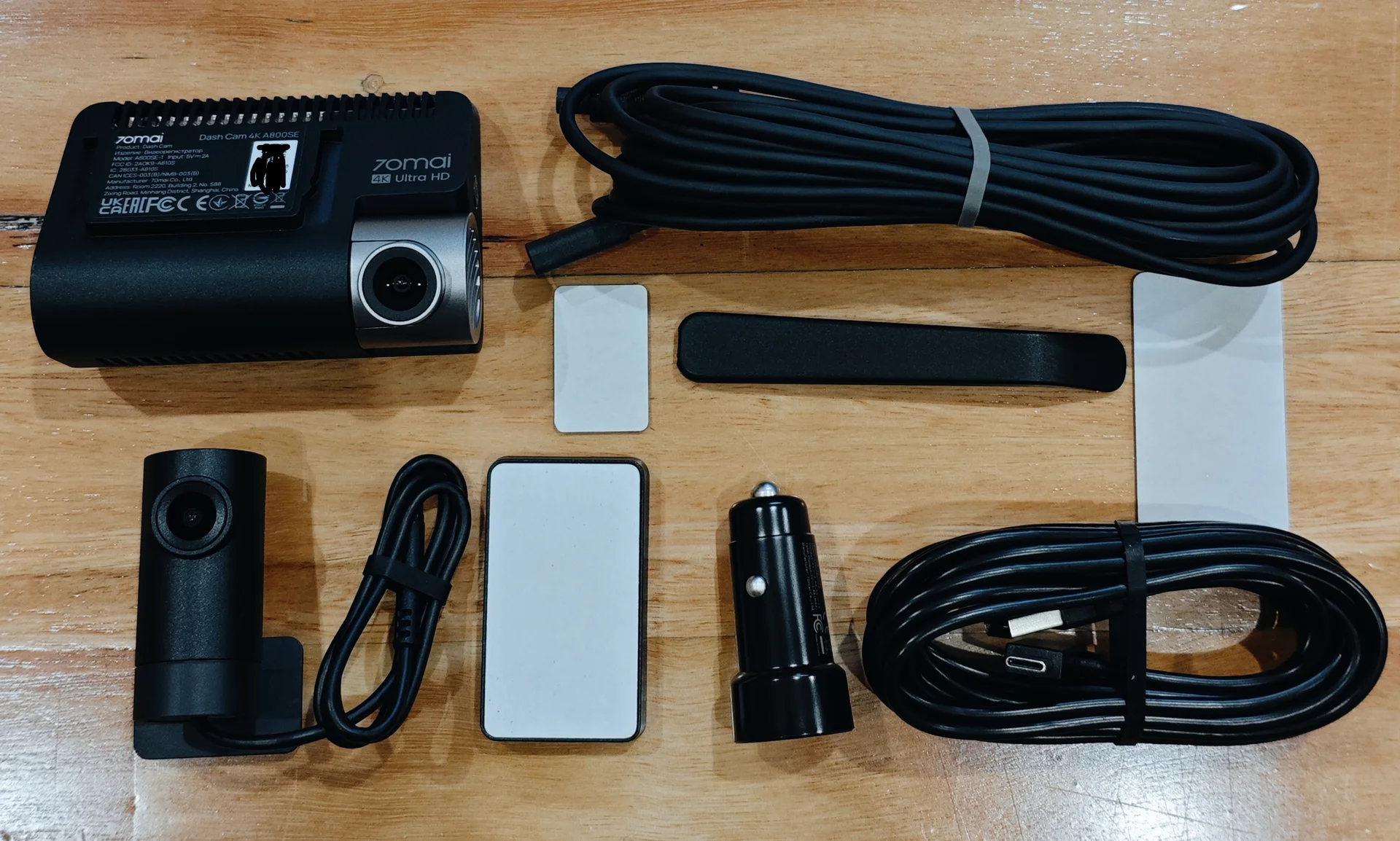
Turning once again to the box contents, we have the two-tone finish with orange lettering that has been a staple for a while now with 70mai models. Upon opening the box we have the slick black packaging, with two separate envelopes containing the required materials. Contained within is an instruction manual, electrostatic stickers for front and rear cameras, spare mounting adhesives, black plastic pry tool, 12V cigarette lighter adapter (with two USB-A ports), and their respective power cablings.
First impressions are solid of the 70mai 4K A800 SE 4G. There is a certain heftiness to the main unit, which instils confidence in its build quality. But there is also a sense of deja vu, as this is the main housing that has been used on multiple other models before such as the A810S/A800/A800S among others. Both the main front sensor unit and rear RC22 camera units have adjustable swivel function, which is great for fine-tuning the positioning of the dash cameras. There is a 3-inch IPS display (no touchscreen) taking up the majority of the real estate of the front camera. There are also multiple ventilation holes on both the front and rear camera sensors - with plenty of these holes available to dissipate the heat produced by the GalaxyCore 4K sensor. Field-of-view is 140 degrees for the front camera, and 130 degrees for the rear camera. All contained in a package measuring 89.1 x 59.8 x 37.3mm.
The usual suspects from previous 70mai models also make a welcome return here. Buffered emergency parking mode, Lumi Vision for parking mode to brighten very dimly-lit scenarios, time-lapse recording and battery voltage monitoring all make a return, along with support for their existing 4G parking surveillance kits, UP04/UP05. There is also support for a maximum capacity of 512GB for microSD memory cards.
Installation of the 4K A800SE 4G was once again a cinch, and so was it's integration with the 4G parking UP04 kit. Included firmware version was vxxxx.ww (dated xth x 2026), out of the factory. Would like to extend my gratitude to 70mai once again for providing me with this opportunity to test-drive the 4K A800SE 4G. Over the coming weeks, I'll be sharing my detailed findings with you all - stay tuned for my full review coming soon here on DashCamTalk forum.
Please note: there are two versions of the 70mai 4K A800SE - please check before purchase, as this review covers the newest variant that has support for the UP04/UP05 4G LTE remote monitoring parking kits, which the older 4K A800SE does not.
Some close-up photos of the 70mai 4K A800 SE 4G: