70mai Dash Cam Battery Pack (7500 mAh) - Test / Review - RCG

The chart is typical for a nominal 12.8V, 4S LFP battery pack discharge.

As for the low voltage and no charge with a load connected, it must be an issue with BMS, the only component responsible for protecting the battery.
It is not good for the LFP cell when the voltage drops so low (around 1.1V! per cell), at that level the LFPs are easily damaged.
 
I've been running a series of charge/discharge tests with the 70mai battery pack to further investigate why the 70mai battery pack would not bootstrap its charging cycle correctly when a 3157 incandescent bulb taillight filament is used as the "load" (600 mA depending on voltage level). It turns out the bulb load would work if the battery pack was only left in a depleted charge start for six (6) hours. When the battery pack was left in a depleted charge state for 36 to 48 hours with the bulb as the load, the bootstrapping of the charge cycle would get "stuck". 70mai replicated the behavior when they used a 14 ohm resistor as the load on the VCC power.

I tested several dash cameras with the 70mai battery pack. VIOFO A139 Pro 3Ch with prototype HK4 with low voltage cutoff disabled, Thinkware U3000 (front) setup to use an external battery pack and LVC disabled, BlackVue DR970X Plus (front) with low voltage cutoff disabled. I used those dash cameras as the load to discharge the 70mai battery pack with the dash cameras in parking mode (usually time-lapse). I would leave the battery pack charge level fully depleted for six (6) hours. I then attempted to start the 70mai battery pack charging cycle by supplying 14.2V DC power to the 70mai cigarette lighter adapter (CLA) charging cable. All of those test runs resulted in a successful bootstrapping of the 70 mai battery pack charging cycle. That led me to test the "bulb load" again with the battery pack only discharged for six (6) hours. That test worked as well.

The Thinkware U3000 was the dash camera that would place a load on the VCC output power from the battery pack the "fastest" (about 2 seconds). I depleted the charge level of the 70mai battery pack again and left it in a depleted started for 48 hours 50 minutes. The bootstrapping of the battery pack charge cycle worked. It did produce a slightly lower voltage range output during the 20 seconds waiting for the BMS to start the battery pack charging. The lower voltages seemed to delay the U3000 bootup until the charging cycle started. In my previous test with the U3000 and only having the battery discharged for six (6) hours, the U3000 booted within two (2) seconds of providing power to the battery pack but about 18 seconds before the BMS started the charging cycle. The VCC and ACC output voltage levels during that test were in the 13V-to-14V range rather than the lower 10V-to-12V range with the battery left in a discharged stated for over forty-eight (48) hours.

In summary, it looks like the 70mai battery pack should be able to bootstrap a charging cycle after its been fully depleted when a dash camera is the "load". I've supplied all of my test results to 70mai and they are still investigating the configuration that allows the 70mai to get "stuck" while bootstrapping the charge cycle.

The results from the 70mai battery charge test after having the charge level depleted for 48 hour 50 minutes:

DC power supply output power turned on at 11:12:30

1729538134560.webp

Three (3) seconds after starting charging power: Instead of outputting high 13V to low 14V as it has done in the past, the voltage levels fluctuated between 10V and 12V

1729538161763.webp

Six (6) seconds after starting the charging power: The U3000 still has not booted

1729538192411.webp

Ten (10) seconds after starting the charging power: The VCC / ACC output voltage levels continue to fluctuate.

1729538222231.webp

Twenty-two (22) seconds after starting the charging power: The 70mai battery pack increased its amp draw to start charging the battery pack. The U3000 still has not booted up.

1729538252670.webp

Twenty-four (24) seconds after starting the charging power: The U3000 boots up enough to turn on its status LEDs and to start announcing its boot status.

1729538279502.webp
 
I ran a cigarette lighter adapter charging test of the 70mai battery pack with no load (nothing connected to the "12V Output" port or the USB-C port).

In summary, the charge cycle completed in 85 minutes 18 seconds with a max amp draw of 5.833 amps.

Time 12:46:42: Start of charging cycle by providing power to the cigarette lighter charging cable

1729786104641.webp

Time 12:46:45: Within three (3) seconds, the VCC and ACC out voltage levels are initially elevated to the high 13V range (ACC = 13.60 / VCC 13.92V)

1729786216974.webp

Time 12:47:04 (0 minutes 22 seconds): The amp draw starts to ramp up to start charging the battery pack. Please note the ACC and VCC output voltage levels initially drop to the mid 11V range when the battery charging cycle begins.

1729786425052.webp

Time 12:47:14 (0 minutes 32 seconds): About ten (10) seconds into the battery charging cycle, the output voltages reach the 12V range.

1729786726427.webp

Time 13:08:52 (22 minutes 10 seconds): 70mai battery pack charge level reaches 25%. ACC = 13.57V / VCC 13.70V / Amps 5.548

1729786943928.webp

Time 13:29:38 (42 minutes 56 seconds): 70mai battery pack charge level reaches 50%. ACC = 13.65V / VCC 13.79V / Amps 5.608

1729787236460.webp

Time 13:50:20 (63 minutes 38 seconds): 70mai battery pack charge level reaches 75%. ACC = 13.80V / VCC 13.93V / Amps 5.677

1729787545243.webp

Time 14:01:59 (75 minutes 17 seconds): 70mai battery pack charge level reaches 75+%. ACC = 14.04V / VCC 14.18V / Amps 5.833 (max amp draw of charging cycle)

1729787781468.webp

Time 14:12:00 (85 minutes 18 seconds): 70mai battery pack charge level reaches 100% charge level. ACC = 13.50V / VCC 13.63V / Amps 0.007

1729787993043.webp
 
I ran a cigarette lighter adapter charging test of the 70mai battery pack with a Thinkware U3000 2Ch dash camera connected to the 12V output connection port. My previous power consumption tests showed the Thinkware U3000 2Ch while recording in normal recording (driving) mode consumes on average 466 mA or 5.87 Watts @ 12.6V.

Comparing the cigarette lighter charging cable "no load charging test" and this charging test with a dash camera load:
  • 25%
    • No Load: 22 mins 10 seconds
    • Dash Camera Load: 24 mins 6 seconds
  • 50%
    • No Load: 42 mins 56 seconds
    • Dash Camera Load: 46 mins 42 seconds
  • 75%
    • No Load: 63 mins 38 seconds
    • Dash Camera Load: 69 mins 12 seconds
  • 100%
    • No Load: 85 mins 18 seconds
    • Dash Camera Load: 90 mins 21 seconds

Time 22:28:12: Start of charging cycle by providing power to the cigarette lighter charging cable

1729789655254.png

Time 22:28:15 (0 minutes 3 seconds): The VCC and ACC out voltage levels are initially elevated to ACC = 13.62 / VCC 14.19V / Amps 0.414

The dash camera started to boot up and record at this point

1729790003196.png

Time 22:28:34 (0 minutes 22 seconds): The amp draw starts to ramp up to start charging the battery pack. ACC = 11.35V / VCC = 11.82V / Amps = 3.283

Please note the ACC and VCC output voltage levels initially drop to the mid 11V range when the battery charging cycle begins.

The dash camera continues to remain powered on and record despite the lowered voltage levels.

1729790237807.png

Time 22:29:12 (1 minute 0 seconds): ACC = 11.93V / VCC = 12.42V / Amps = 4.963

1729790516165.png

Time 22:52:18 (24 minutes 6 seconds): 70mai battery pack charge level reaches 25%. ACC = 13.08V / VCC 13.62V / Amps 5.529

1729790843254.png

Time 23:14:54 (46 minutes 42 seconds): 70mai battery pack charge level reaches 50%. ACC = 13.16V / VCC 13.71V / Amps 5.593

1729791083423.png

Time 23:37:24 (69 minutes 12 seconds): 70mai battery pack charge level reaches 75%. ACC = 13.30V / VCC 13.85V / Amps 5.657

1729791320808.png

Time 23:50:35 (82 minutes 23 seconds): 70mai battery pack charge level reaches 75+%. ACC = 13.56V / VCC 14.12V / Amps 5.840 (max amp draw of charging cycle)

1729791648987.png

Time 23:58:33 (90 minutes 21 seconds): 70mai battery pack charge level reaches 100% charge level. ACC = 13.62V / VCC 14.19V / Amps 0.409

All or most of the amp load of the dash camera is passed through to the DC power source (vehicle).

1729791912468.png

After reaching a 100% charge with a load on the battery pack, every three (3) to six (6) minutes the battery pack will perform a "top off" charge cycle that lasts about 20 seconds. It ramps up the charging amps to a maximum in the 5.8 amp range and it then ramps down the charging amps as the charging cycle reaches its end.

1729793054001.png
 
Last edited:
Interestingly, the battery maintains the near maximum charging current until it is fully charged.
I wonder how they do that.
All my DIY chargers, when set to the maximum charge cut-off voltage for the given battery (say 14.2V for an LFP battery, like the 70mai battery) at around ±90% SOC, start to gradually reduce the current from the maximum value down to essentially trickle current at the end of charge at 100% SOC.
This definetly increases the charge time.
Not sayng which is better for the battery longjevity, just curious.

I think the only way I can maintain full current to the end, is if I increase charger's cut-off voltage way beyond the charging limit for the battery, but then, if the BMS fails to stop the charging at proper voltage limit the battery can overcharge - very unsafe scenario.
Hopefully 70mai does it differently.
 
Interestingly, the battery maintains the near maximum charging current until it is fully charged.
I wonder how they do that.
All my DIY chargers, when set to the maximum charge cut-off voltage for the given battery (say 14.2V for an LFP battery, like the 70mai battery) at around ±90% SOC, start to gradually reduce the current from the maximum value down to essentially trickle current at the end of charge at 100% SOC.
This definetly increases the charge time.
Not sayng which is better for the battery longjevity, just curious.

I think the only way I can maintain full current to the end, is if I increase charger's cut-off voltage way beyond the charging limit for the battery, but then, if the BMS fails to stop the charging at proper voltage limit the battery can overcharge - very unsafe scenario.
Hopefully 70mai does it differently.
The 70mai battery pack's BMS will ramp down the charging amps at some point when the charge level is in the 80% to 90% level. From the data points I included in my previous post, the max charging amps occurred at 82 minutes 23 seconds into the charge cycle. Over the next eight (8) minutes, the charging amps are slowly reduced until it reaches its full charge at 90 minutes 21 seconds.

Time 13:50:20 (69 minutes 12 seconds): 70mai battery pack charge level reaches 75%. ACC = 13.30V / VCC 13.85V / Amps 5.657​
Time 23:50:35 (82 minutes 23 seconds): 70mai battery pack charge level reaches 75+%. ACC = 13.56V / VCC 14.12V / Amps 5.840 (max amp draw of charging cycle)​
Time 14:12:00 (90 minutes 21 seconds): 70mai battery pack charge level reaches 100% charge level. ACC = 13.62V / VCC 14.19V / Amps 0.409​
 
I ran a "fuse box solution" charging test of the 70mai battery pack with nothing connected to the 12V output connection port or USB-C port.

Time 19:45:58: Start of charging cycle by switching on the "ACC In" power using the "fuse box solution" charging cable

1729836358781.webp

Time 19:46:01: Within three (3) seconds, the VCC and ACC out voltage levels are initially elevated to the high 13V and low 14V range (ACC = 13.64V / VCC 14.04V)

1729835948952.webp

Time 19:46:18 (0 minutes 20 seconds): The amp draw starts to ramp up to start charging the battery pack.

Please note the ACC and VCC output voltage levels drop by 2V when the battery charging starts.

1729836186396.webp

Time 19:46:58 (1 minute 0 seconds): ACC = 12.80V / VCC = 12.93V / Amps = 7.543

1729836526411.webp

Time 20:01:08 (15 minutes 10 seconds): 70mai battery pack charge level reaches 25%. ACC = 13.72V / VCC 13.86V / Amps 8.570

1729836926106.webp

Time 20:15:18 (29 minutes 20 seconds): 70mai battery pack charge level reaches 50%. ACC = 13.80V / VCC 13.93V / Amps 8.609

1729837054403.webp

Time 20:29:30 (43 minutes 32 seconds): 70mai battery pack charge level reaches 75%. ACC = 13.90V / VCC 14.06V / Amps 8.680

1729837241792.webp

Time 20:34:55 (48 minutes 57 seconds): 70mai battery pack charge level reaches 75+%. ACC = 14.05V / VCC 14.19V / Amps 8.744 (max amp draw of charging cycle)

The charging amps begin to slowly decrease from this point onward in the charging cycle until the battery pack reaches its 100% charge level.

1729837432775.webp

Time 20:44:33 (58 minutes 35 seconds): 70mai battery pack charge level reaches 100% charge level. ACC = 13.49V / VCC 13.63V / Amps 0.002

1729837736734.webp
 
The 70mai battery pack's BMS will ramp down the charging amps at some point when the charge level is in the 80% to 90% level. From the data points I included in my previous post, the max charging amps occurred at 82 minutes 23 seconds into the charge cycle. Over the next eight (8) minutes, the charging amps are slowly reduced until it reaches its full charge at 90 minutes 21 seconds.

Time 13:50:20 (69 minutes 12 seconds): 70mai battery pack charge level reaches 75%. ACC = 13.30V / VCC 13.85V / Amps 5.657​
Time 23:50:35 (82 minutes 23 seconds): 70mai battery pack charge level reaches 75+%. ACC = 13.56V / VCC 14.12V / Amps 5.840 (max amp draw of charging cycle)​
Time 14:12:00 (90 minutes 21 seconds): 70mai battery pack charge level reaches 100% charge level. ACC = 13.62V / VCC 14.19V / Amps 0.409​
Thanks for the clarification!
 
I ran a "fuse box solution" charging test of the 70mai battery pack with a Thinkware U3000 2Ch dash camera connected to the 12V output connection port. My previous power consumption tests showed the Thinkware U3000 2Ch while recording in normal recording (driving) mode consumes on average 466 mA or 5.87 Watts @ 12.6V.

Comparing the "fuse box solution" charging cable "no load charging test" and this charging test with a dash camera load:
  • 25%
    • No Load: 15 mins 10 seconds
    • Dash Camera Load: 16 mins 1 second
  • 50%
    • No Load: 29 mins 20 seconds
    • Dash Camera Load: 30 mins 57 seconds
  • 75%
    • No Load: 43 mins 32 seconds
    • Dash Camera Load: 45 mins 55 seconds
  • 100%
    • No Load: 58 mins 35 seconds
    • Dash Camera Load: 61 mins 58 seconds
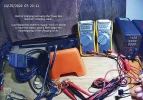
Time 07:22:11: Start of charging cycle by providing power "ACC In" power to the "Fuse Box Solution" charging cable.
1729893130236.png

Time 07:22:15 (0 minutes 4 seconds): The VCC and ACC out voltage levels are initially elevated to ACC = 13.62 / VCC 14.19V / Amps 0.410

The dash camera started to boot up and record at this point

1729893477833.png

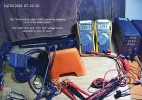
Time 07:22:32 (0 minutes 21 seconds): The amp draw starts to ramp up to start charging the battery pack. ACC = 11.47V / VCC = 11.93V / Amps = 3.255

Please note the ACC and VCC output voltage levels initially drop to the mid 11V range when the battery charging cycle begins.

The dash camera continues to remain powered on and record despite the lowered voltage levels.
1729893713077.png

Time 07:23:11 (1 minute 0 seconds): ACC = 12.32V / VCC = 12.83V / Amps = 7.461

1729893918028.png

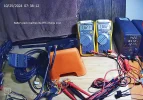
Time 07:38:12 (16 minutes 1 second): 70mai battery pack charge level reaches 25%. ACC = 13.27V / VCC 13.82V / Amps 8.572
1729894130818.png

Time 07:53:08 (30 minutes 57 seconds): 70mai battery pack charge level reaches 50%. ACC = 13.33V / VCC 13.89V / Amps 8.613
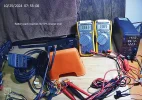
1729894337844.png

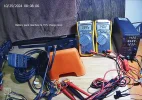
Time 08:08:06 (45 minutes 55 seconds): 70mai battery pack charge level reaches 75%. ACC = 13.45V / VCC 14.02V / Amps 8.689
1729894514937.png

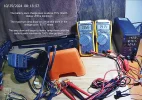
Time 08:13:57 (51 minutes 46 seconds): 70mai battery pack charge level reaches 75+%. ACC = 13.58V / VCC 14.15V / Amps 8.757 (max amp draw of this charging cycle)

The amp draw will begin to slowly ramp down until the battery pack reaches its 100% charge level.
1729894885518.png

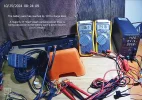
Time 08:24:09 (61 minutes 58 seconds): 70mai battery pack charge level reaches 100% charge level. ACC = 13.61V / VCC 14.18V / Amps 0.415

Most of the amp load of the dash camera is passed through to the DC power source (vehicle).
1729895240959.png

After reaching a 100% charge with a load on the battery pack, the battery pack will perform a "top off" charge cycle that lasts about 20 seconds. It ramps up the charging amps to a maximum in the 8.7 amp range and it then ramps down the charging amps as the charging cycle reaches its end. I only found one "top off" charge in the 23 minutes of video footage after the battery pack reached its initial 100% charge level.

1729895966616.png
 
Last edited:
3-6 min is a very short re-charging cycle.
I wonder how many cycles it will go through in one hour, and how the time between cycles is changing (increasing).
I don't think the frequent re-charging ("top off") is good for the battery longevity.
Are the other dedicated batteries like this?

I usually test and set my DIY batteries to start re-charging cycle in about 1 hour.
So for the most of my trips under 1 hour, the battery will never re-charge to "top off".
 
Are the other dedicated batteries like this?
Yes, I've observed this "top off" charging behavior with EGEN produced battery packs as well.

I scanned the video footage from the "fuse box solution" charging test with the Thinkware U3000 as the load. I have twenty-three (23) minutes of video footage after the battery pack reached its initial 100% charge level. I only found one "top off" charge as noted at 08:27:51. My video footage ended at 08:50:59.

I scanned the video footage from the CLA charging test with the Thinkware U3000 as the load.
  • 1st "top off" charge started at 2 minutes 46 seconds after it reached its initial 100% charge level.
  • 2nd "top off" charge started at 7 minutes 35 seconds after it reached its initial 100% charge level.
  • 3rd "top off" charge started at 14 minutes 38 seconds after it reached its initial 100% charge level.
  • My video footage stops about 3 minutes after the 3rd "top off" charge.
 
Yes, I've observed this "top off" charging behavior with EGEN produced battery packs as well.

I scanned the video footage from the "fuse box solution" charging test with the Thinkware U3000 as the load. I have twenty-three (23) minutes of video footage after the battery pack reached its initial 100% charge level. I only found one "top off" charge as noted at 08:27:51. My video footage ended at 08:50:59.
I scanned the video footage from the CLA charging test with the Thinkware U3000 as the load.
  • 1st "top off" charge started at 2 minutes 46 seconds after it reached its initial 100% charge level.
  • 2nd "top off" charge started at 7 minutes 35 seconds after it reached its initial 100% charge level.
  • 3rd "top off" charge started at 14 minutes 38 seconds after it reached its initial 100% charge level.
  • My video footage stops about 3 minutes after the 3rd "top off" charge.
Thanks for checking.
In principle, there should be no difference between Fuse box and CLA charging solutions with regard of “top-off” charging behavior.

Once the battery reaches its initial 100% SOC, the BMS stops charging process, but the Charger continues to output 14.2V and powers the DVR.
At this stage, the battery voltage slowly drops from fully charged 14.2V to some “resting” fully charged voltage level, depending on resting time and the battery/BMS/LED self-consumption.
At some resting voltage level the BMS will start "top off" charging again as programmed. If this voltage level is too close to 14.2V, the "top off" charging process will start quicker and may be frequent.

For example, my 5S LTO battery needs about 1 hour resting time after the initial 13.5V 100% charge level to drop the voltage to about 13V “resting” fully charged voltage level, and I set 13V as my “top off” re-charge start.
The capacity loss during this 1 hour is negligible, and the battery is near 100% SOC.
If I set my “top-off” charge voltage to say 13.3V it will act like these dedicated batteries, but I don’t think it is good for the battery

The above process is while engine is running.
If the ignition is off, the DVR goes into parking mode and it is powered by the battery, and the voltage quickly drops below 13V, so the next time I start the engine, the charging process will resume.

I don't remember the settings for my (DIY) LFP battery, I need to check, but the principle should be similar.
 
Back
Top