

LateralNW
Well-Known Member
- Joined
- Nov 7, 2016
- Messages
- 1,983
- Reaction score
- 1,236
- Country
- Australia
- Dash Cam
- VArious
This unit was kindly supplied to me by 70mai China.
Update: 28th Nov 2025
Fun facts
You can charge the unit using the 12 Volt output connector! Warning it will back flush eg return power to the circuit when turned off. (Because it was not made to do this.)
If the unit won't charge it may be due to unbalanced battery sets. Fix - manually rebalance the sets.
The 70mai 7500mAh Power Bank Model: BL96NNX
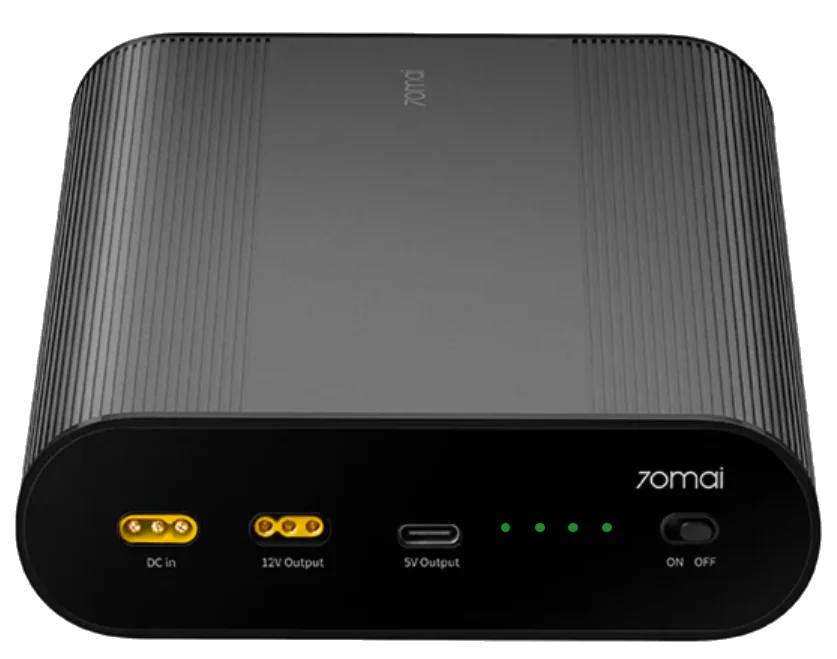
The 70mai power bank delivers reliable energy storage, suitable for 12-volt devices and USB-C 5-volt powered use. Here's an overview of its features and test results:
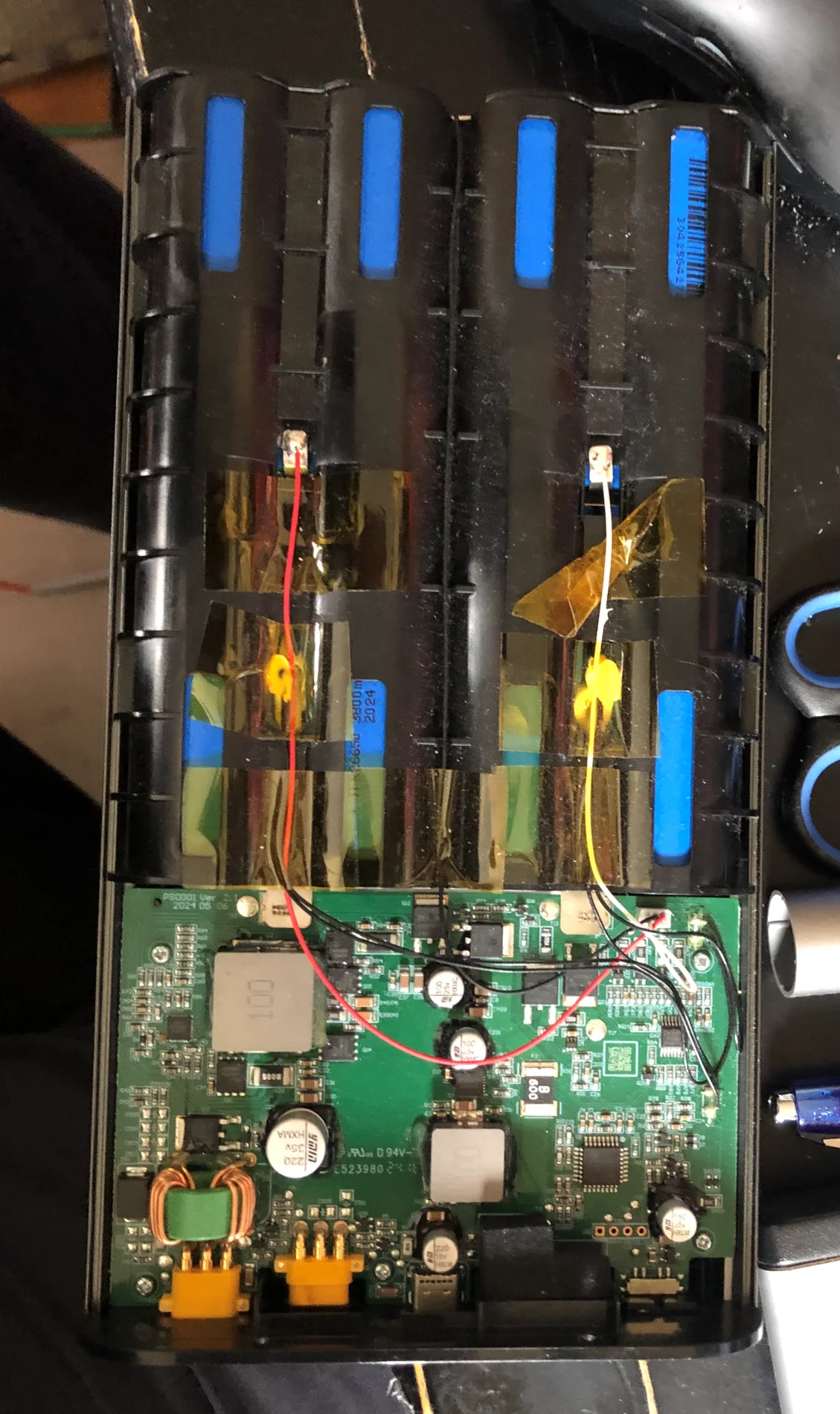
Internals of the 70mai Powerbank
Build and Design
The power bank measures 11.95 × 21.94 × 3.45 cm and weighs 1.4 kg. It has a solid build with the batteries encased in an oval aluminium case. While compact, the weight might be a consideration when mounting it in a car.
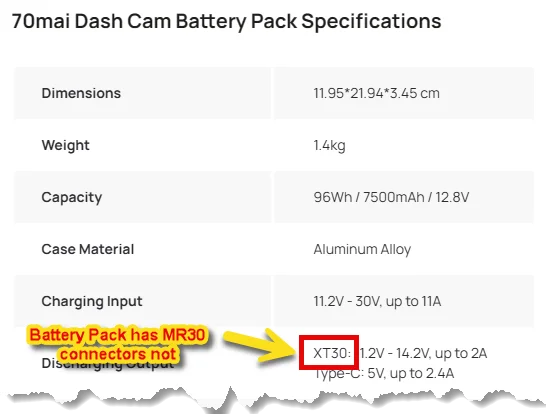
The **XT30 Correction MR30 connectors** are small and less prone to damage; however, placing the unit under a seat may, in some vehicles, expose the cables to being kicked and damaged. This risk is worse for a USB-C connector that is not at a right angle.
70mai manual states incorrectly XT30 actually MR30
The aluminium alloy case provides excellent durability and likely helps with heat dissipation, making it well-suited for regular use in varied environments.
A set of **4 green LED lights** on the unit indicate the battery's charge level, providing a quick and clear way to monitor its remaining power.
Capacity and Battery Type
Rated at 96Wh (7500mAh at 12.8V), the power bank uses a Lithium Iron Phosphate (LiFePO4) battery, offering safety, long life, and thermal stability—particularly advantageous for frequent and heavy-duty use.
Charging Input Performance
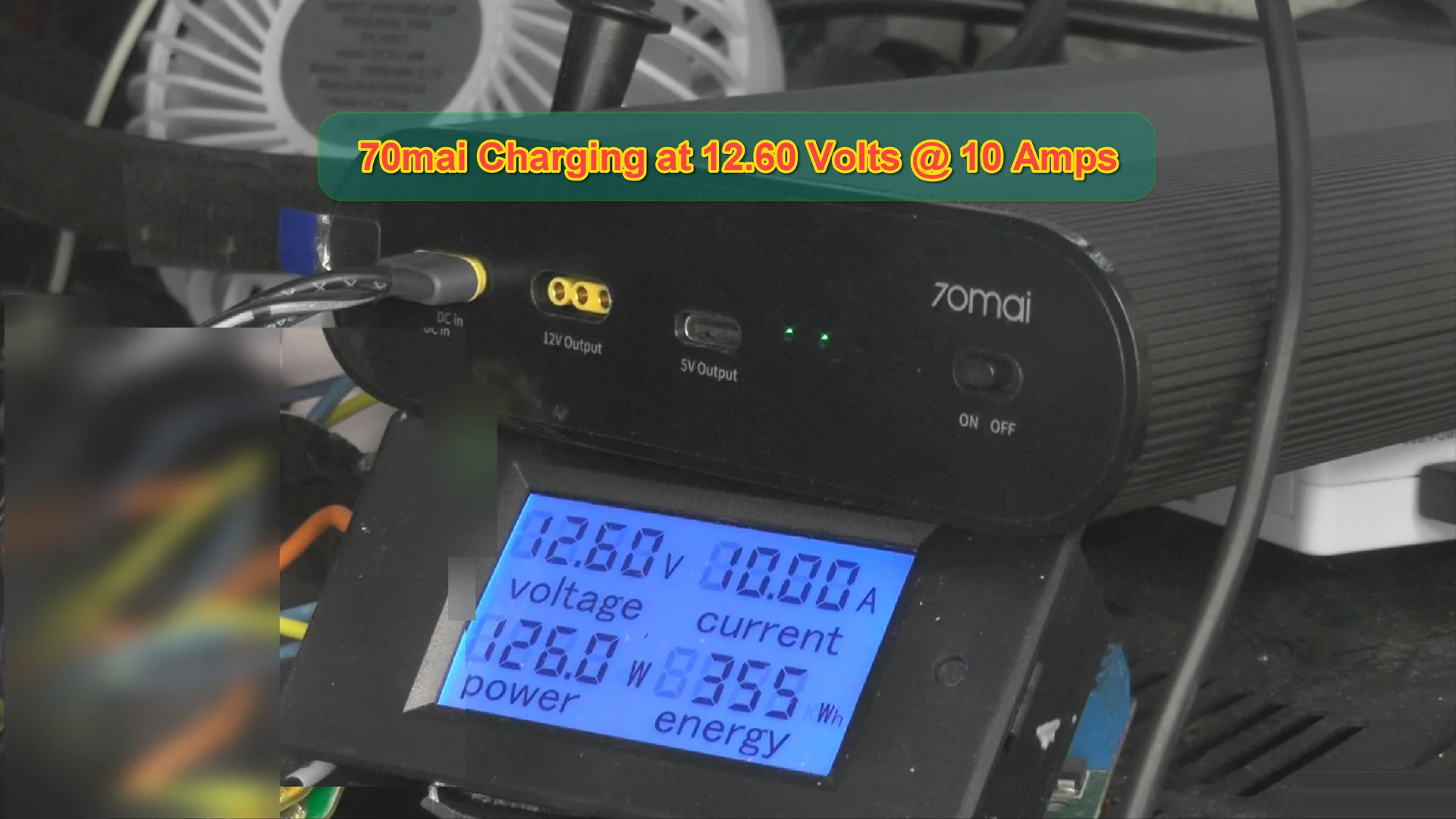
During testing, the power bank charged in approximately **1 hour** when supplied with 13.8V at 9.4A. This aligns with its design for rapid charging, making it efficient for quick turnaround use.
Discharging Output Performance
Testing under load demonstrated consistent discharge performance:
- The power bank uses **XT30 Correction MR30 connectors** for its 12V ports. It discharged at **2.8A** for approximately **6 hours**, indicating reliable sustained output.
- Using the **Type-C port**, the power bank simultaneously discharged **1A**, while the**XT30 Correction MR30 connectors** port handled **1.8A at 12.8V**, confirming its ability to manage multiple devices effectively.
Interestingly, the power bank would not allow me to draw **2A** directly from the load tester. However, I could gradually increase the draw from ~1.8A to 2A without issues. This suggests the device prevents any initial power draw above **2A** on the 12V line, adhering to its specifications—an effective safety feature.
Similarly, I attempted to overload the USB-C port. Once the draw reached **2.4A**, the power bank shut off power as designed, per the specs. I appreciated that it performed exactly as advertised!
I repeated these tests with only a dash cam connected and observed similar results.
Charging and Operating Conditions
The power bank charges efficiently in approximately **90 minutes** via a car cigarette lighter and faster with direct hardwire connections under optimal conditions.
Its wide operating temperature range, according to the specifications, is:
- **Charging**: 0°C to 45°C (32°F to 113°F)
- **Discharging**: -10°C to 60°C (14°F to 140°F)
These features ensure reliable performance in diverse environments, though I was unable to test these conditions directly.
Key Strengths and Considerations
**Strengths:**
- Fast charging capability at high input currents.
- Stable and consistent discharge rates under load.
- Durable aluminium alloy case and LiFePO4 battery for enhanced safety and lifespan.
- **Battery level indicator**: 4 green LED lights provide a simple and effective way to monitor remaining power.
Considerations:
- The supplied fixtures only suit under-seat placement.
- No mounting points are included on the case itself.
- One of the hook-and-loop strips have glue on the wrong side of the tape, which made mounting frustrating. The glue sticks to the part you're supposed to discard!
Summary
The 70mai 7500mAh power bank excels in performance, particularly for applications requiring stable, sustained power delivery and quick recharge times. While its placement options could be improved, its durable build, reliable output, battery level indicators, and efficient charging make it a dependable energy solution.
Update: 28th Nov 2025
Fun facts
You can charge the unit using the 12 Volt output connector! Warning it will back flush eg return power to the circuit when turned off. (Because it was not made to do this.)
If the unit won't charge it may be due to unbalanced battery sets. Fix - manually rebalance the sets.
The 70mai 7500mAh Power Bank Model: BL96NNX
The 70mai power bank delivers reliable energy storage, suitable for 12-volt devices and USB-C 5-volt powered use. Here's an overview of its features and test results:
Internals of the 70mai Powerbank
Build and Design
The power bank measures 11.95 × 21.94 × 3.45 cm and weighs 1.4 kg. It has a solid build with the batteries encased in an oval aluminium case. While compact, the weight might be a consideration when mounting it in a car.
The **
70mai manual states incorrectly XT30 actually MR30
The aluminium alloy case provides excellent durability and likely helps with heat dissipation, making it well-suited for regular use in varied environments.
A set of **4 green LED lights** on the unit indicate the battery's charge level, providing a quick and clear way to monitor its remaining power.
Capacity and Battery Type
Rated at 96Wh (7500mAh at 12.8V), the power bank uses a Lithium Iron Phosphate (LiFePO4) battery, offering safety, long life, and thermal stability—particularly advantageous for frequent and heavy-duty use.
Charging Input Performance
During testing, the power bank charged in approximately **1 hour** when supplied with 13.8V at 9.4A. This aligns with its design for rapid charging, making it efficient for quick turnaround use.
Discharging Output Performance
Testing under load demonstrated consistent discharge performance:
- The power bank uses **
- Using the **Type-C port**, the power bank simultaneously discharged **1A**, while the**
Interestingly, the power bank would not allow me to draw **2A** directly from the load tester. However, I could gradually increase the draw from ~1.8A to 2A without issues. This suggests the device prevents any initial power draw above **2A** on the 12V line, adhering to its specifications—an effective safety feature.
Similarly, I attempted to overload the USB-C port. Once the draw reached **2.4A**, the power bank shut off power as designed, per the specs. I appreciated that it performed exactly as advertised!
I repeated these tests with only a dash cam connected and observed similar results.
Charging and Operating Conditions
The power bank charges efficiently in approximately **90 minutes** via a car cigarette lighter and faster with direct hardwire connections under optimal conditions.
Its wide operating temperature range, according to the specifications, is:
- **Charging**: 0°C to 45°C (32°F to 113°F)
- **Discharging**: -10°C to 60°C (14°F to 140°F)
These features ensure reliable performance in diverse environments, though I was unable to test these conditions directly.
Key Strengths and Considerations
**Strengths:**
- Fast charging capability at high input currents.
- Stable and consistent discharge rates under load.
- Durable aluminium alloy case and LiFePO4 battery for enhanced safety and lifespan.
- **Battery level indicator**: 4 green LED lights provide a simple and effective way to monitor remaining power.
Considerations:
- The supplied fixtures only suit under-seat placement.
- No mounting points are included on the case itself.
- One of the hook-and-loop strips have glue on the wrong side of the tape, which made mounting frustrating. The glue sticks to the part you're supposed to discard!
Summary
The 70mai 7500mAh power bank excels in performance, particularly for applications requiring stable, sustained power delivery and quick recharge times. While its placement options could be improved, its durable build, reliable output, battery level indicators, and efficient charging make it a dependable energy solution.
Last edited:


