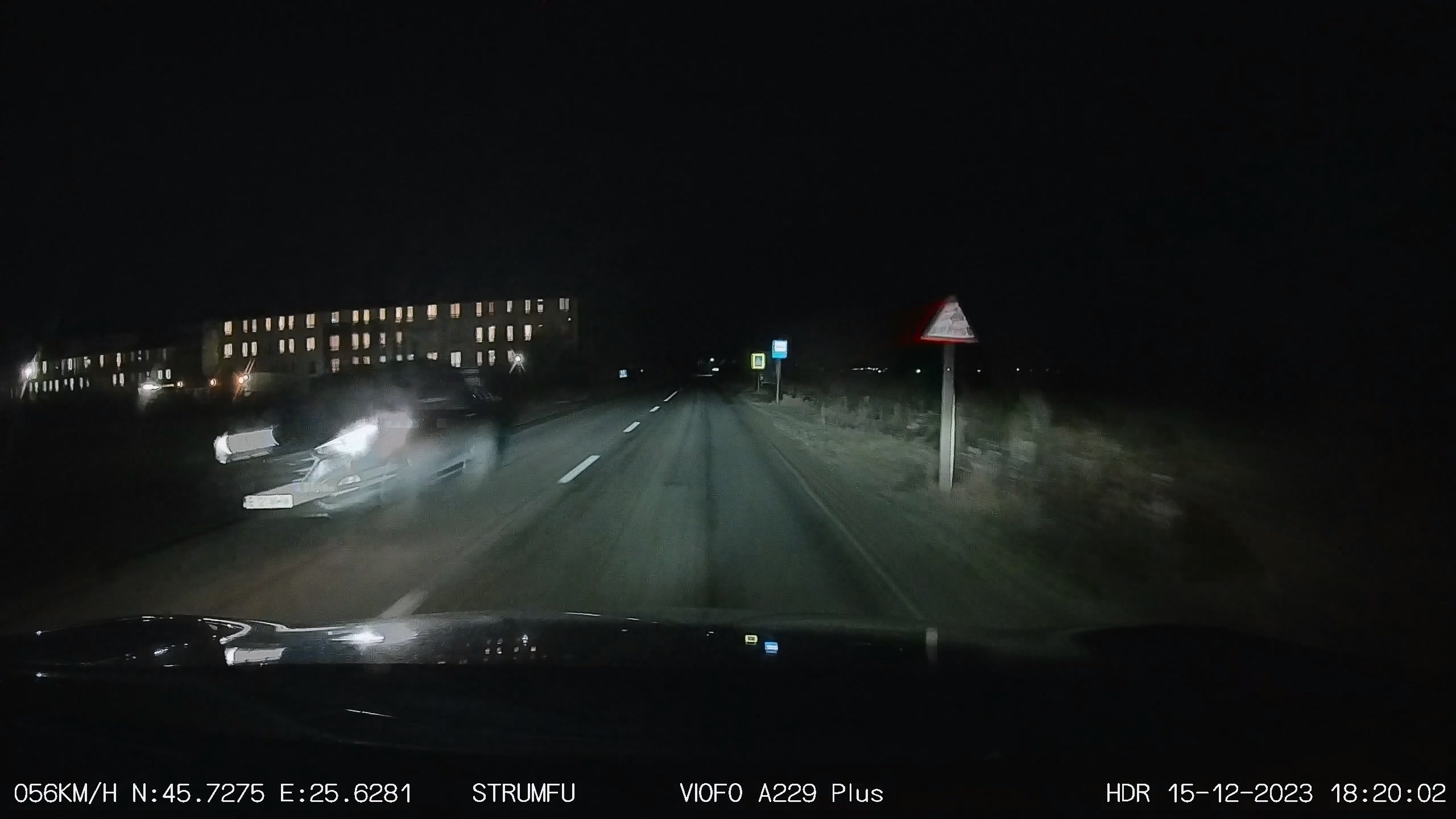
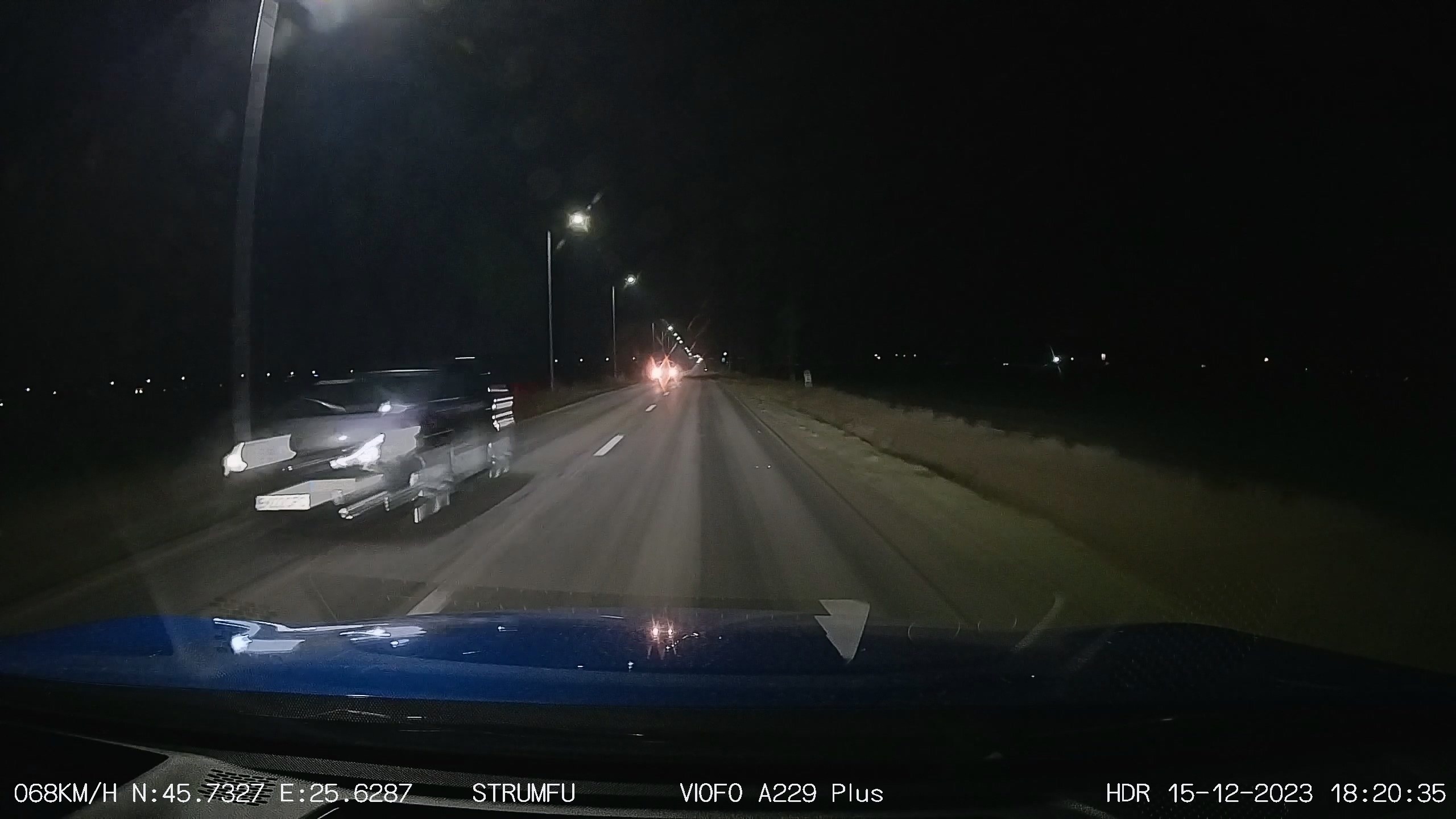
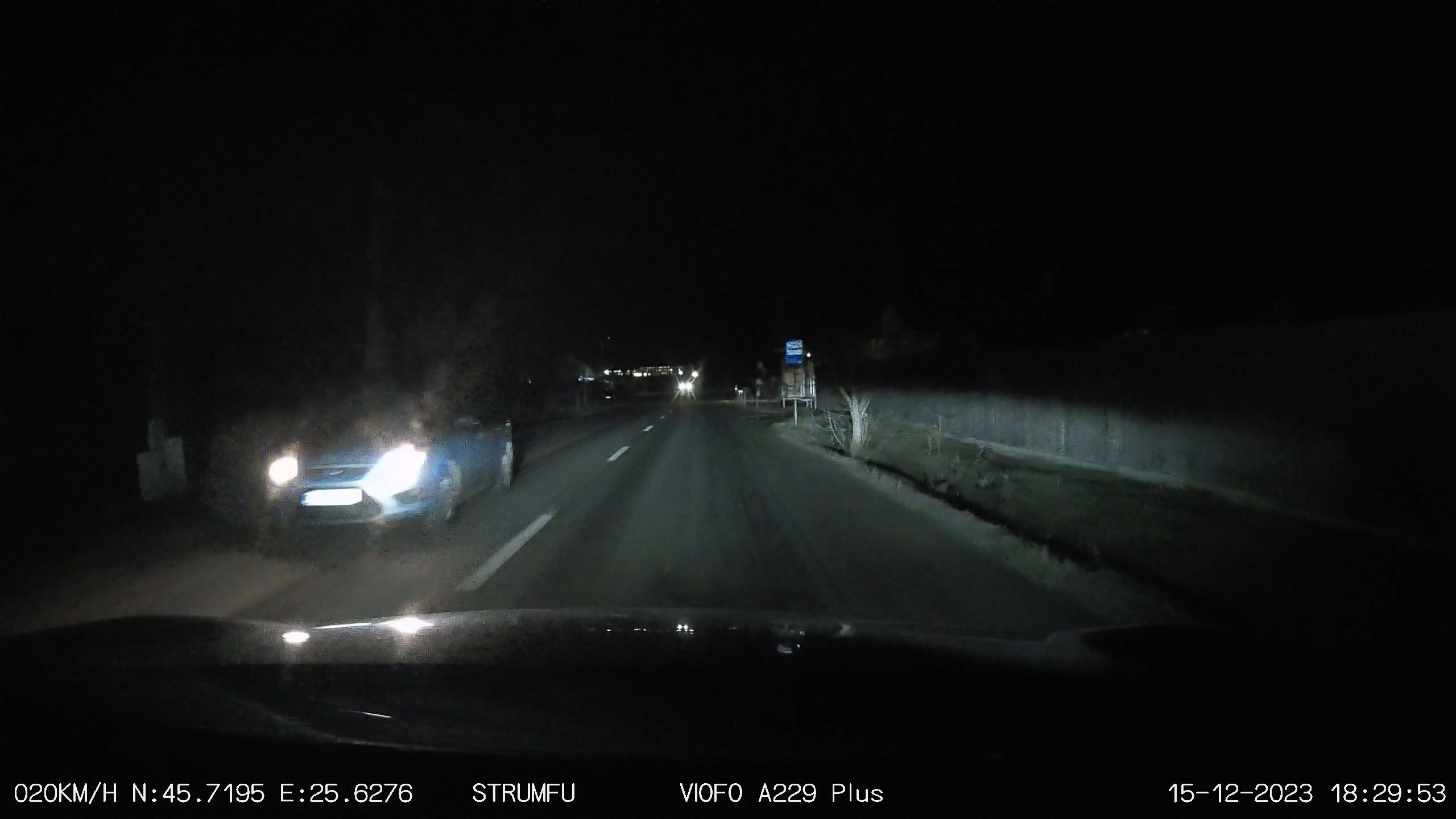
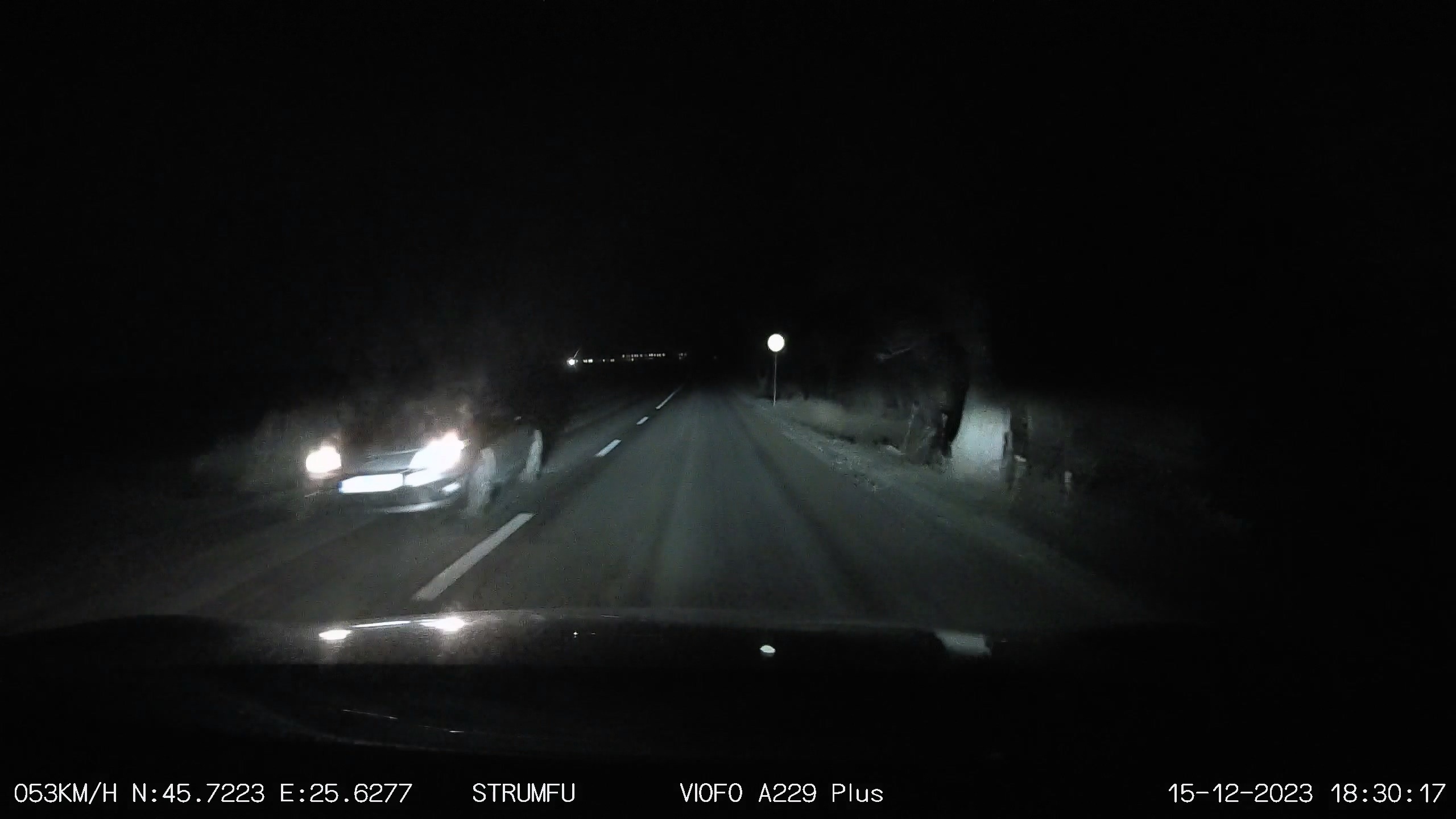
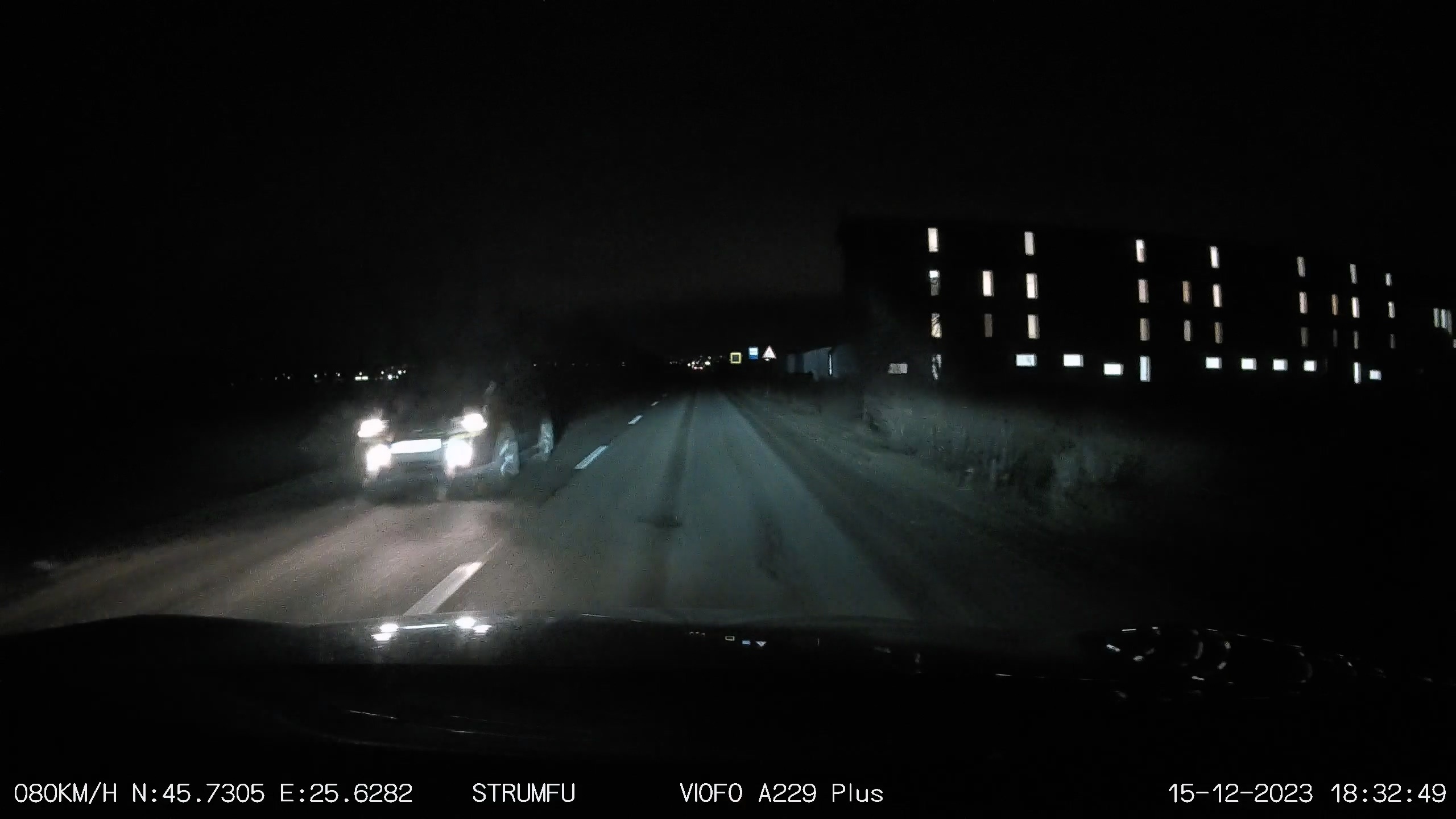
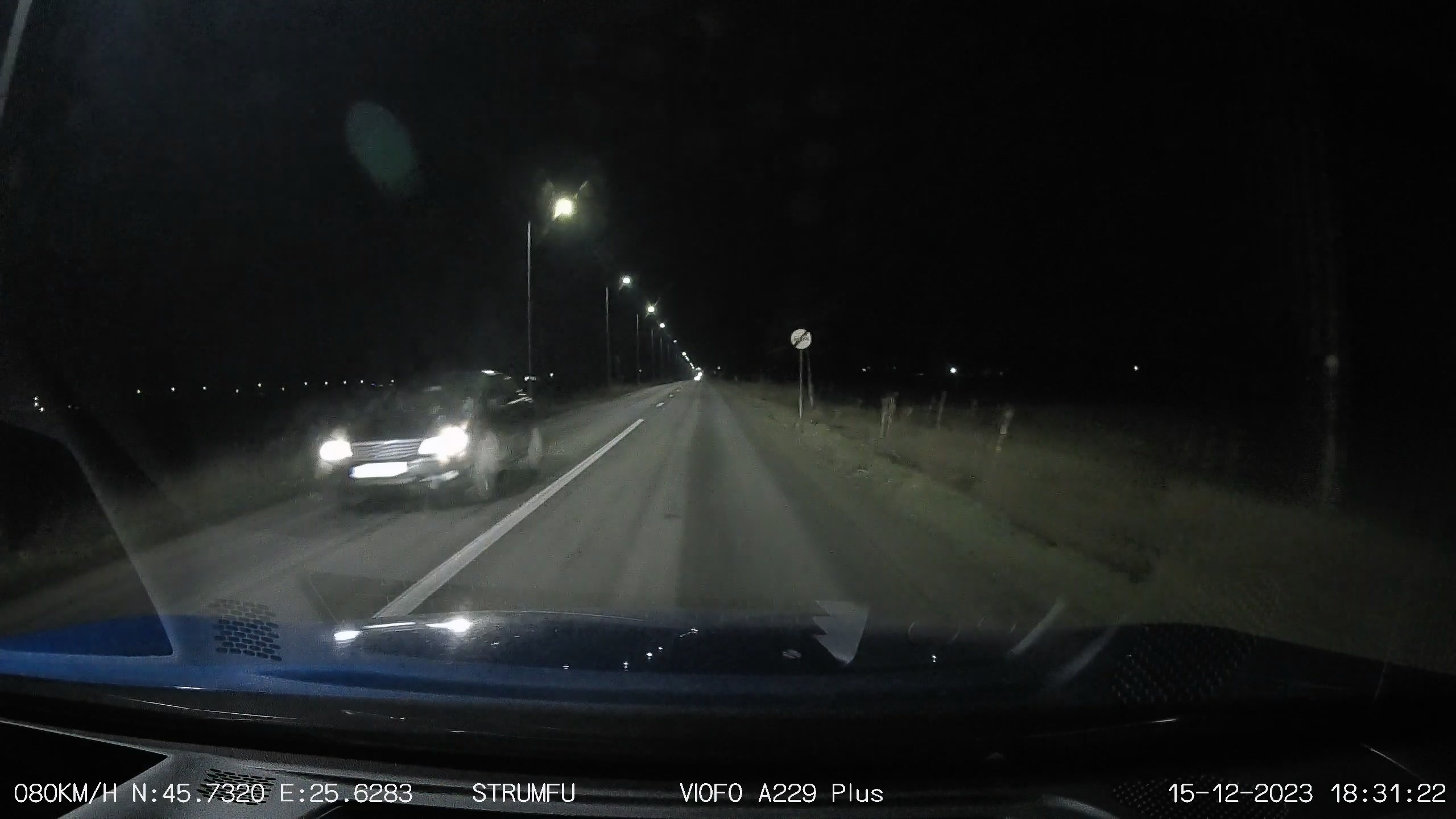
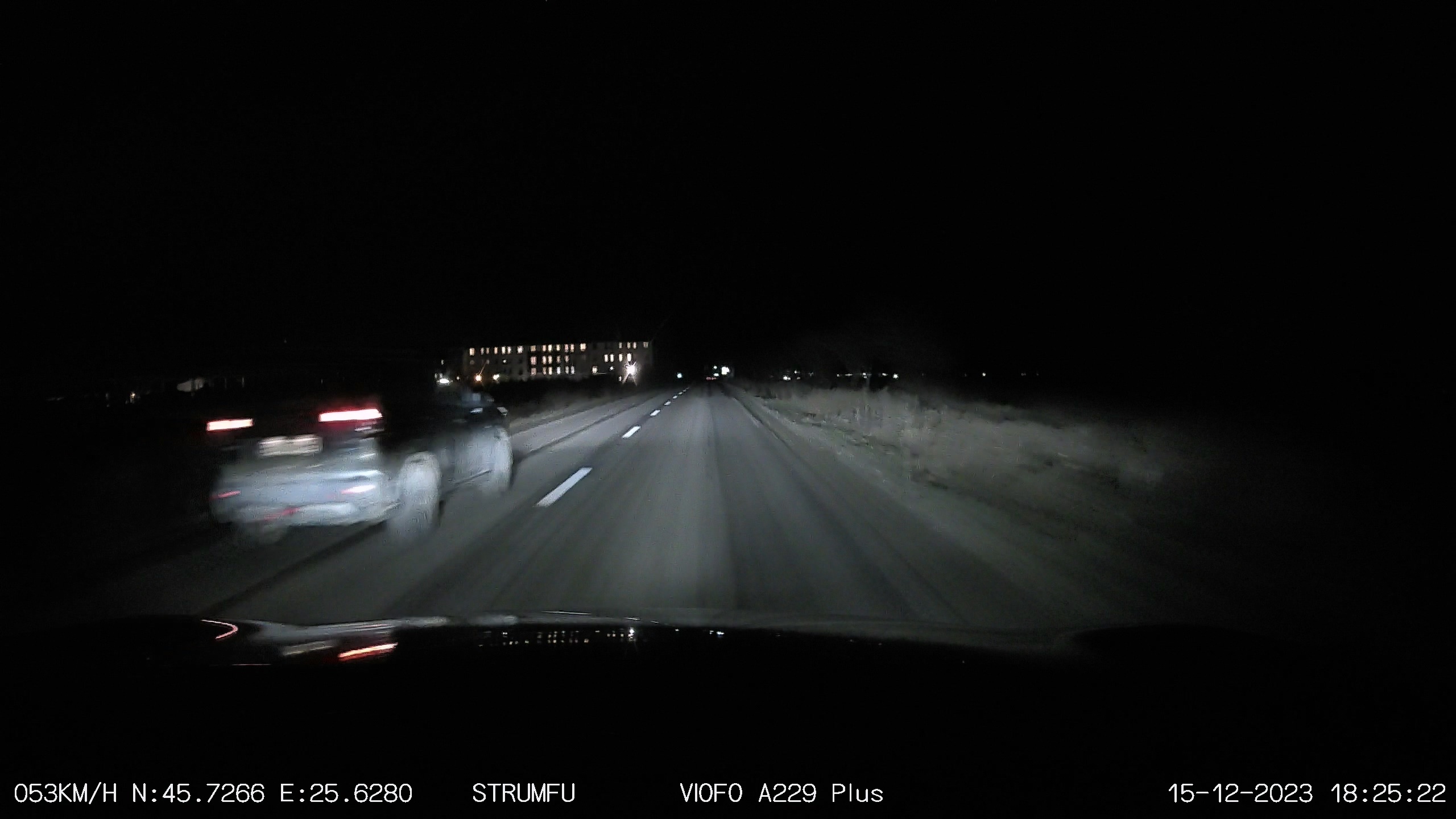
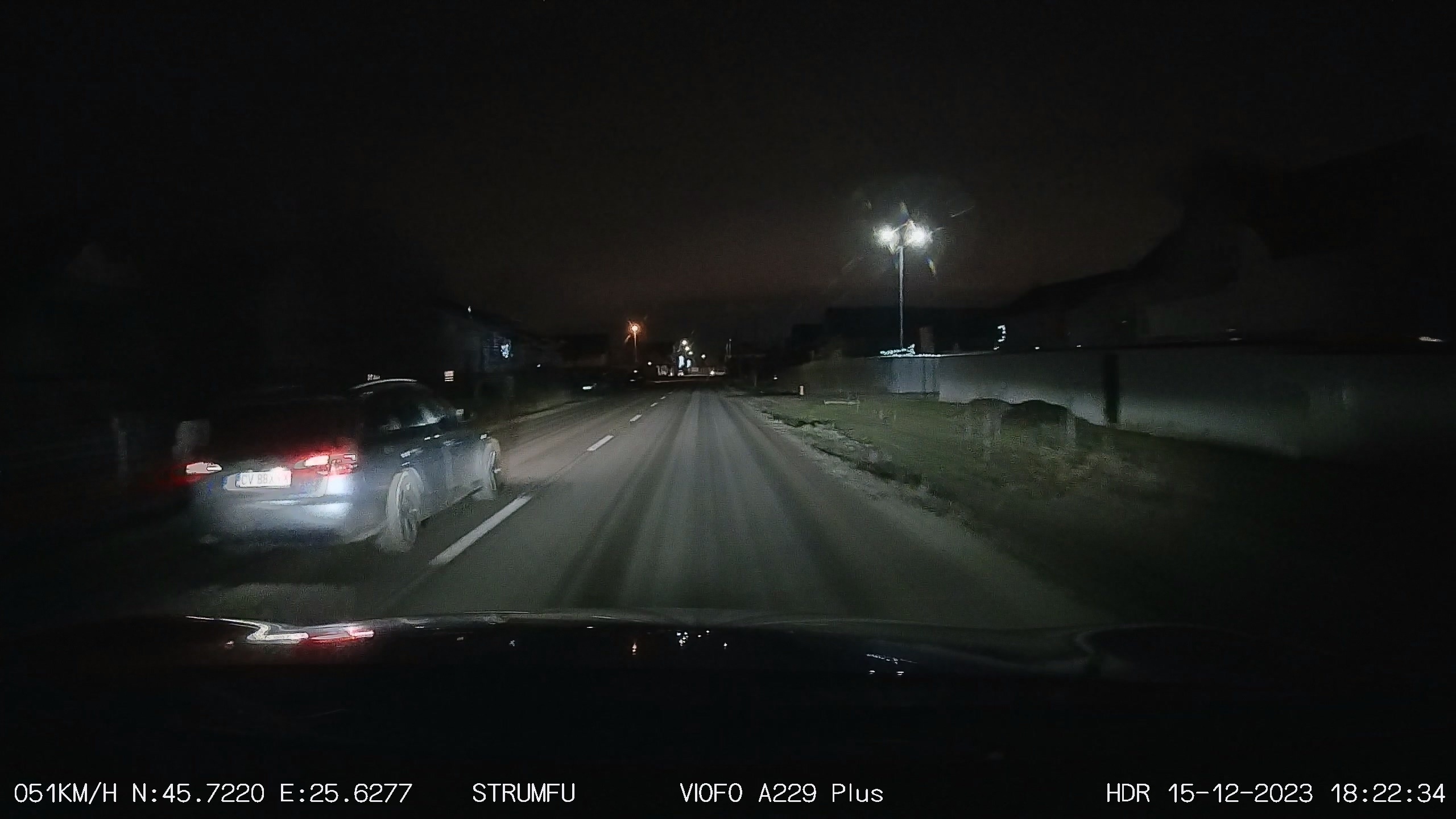
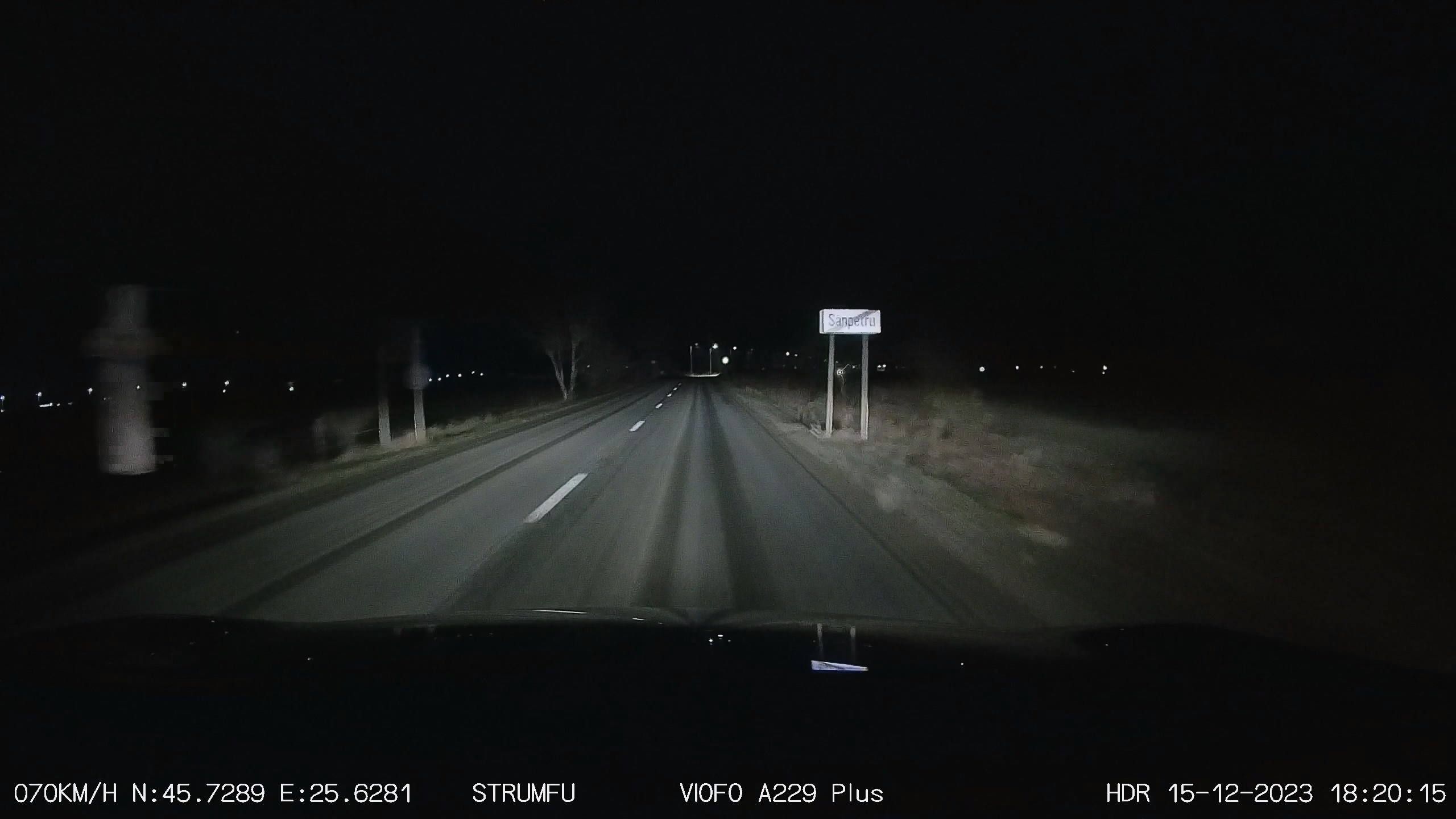
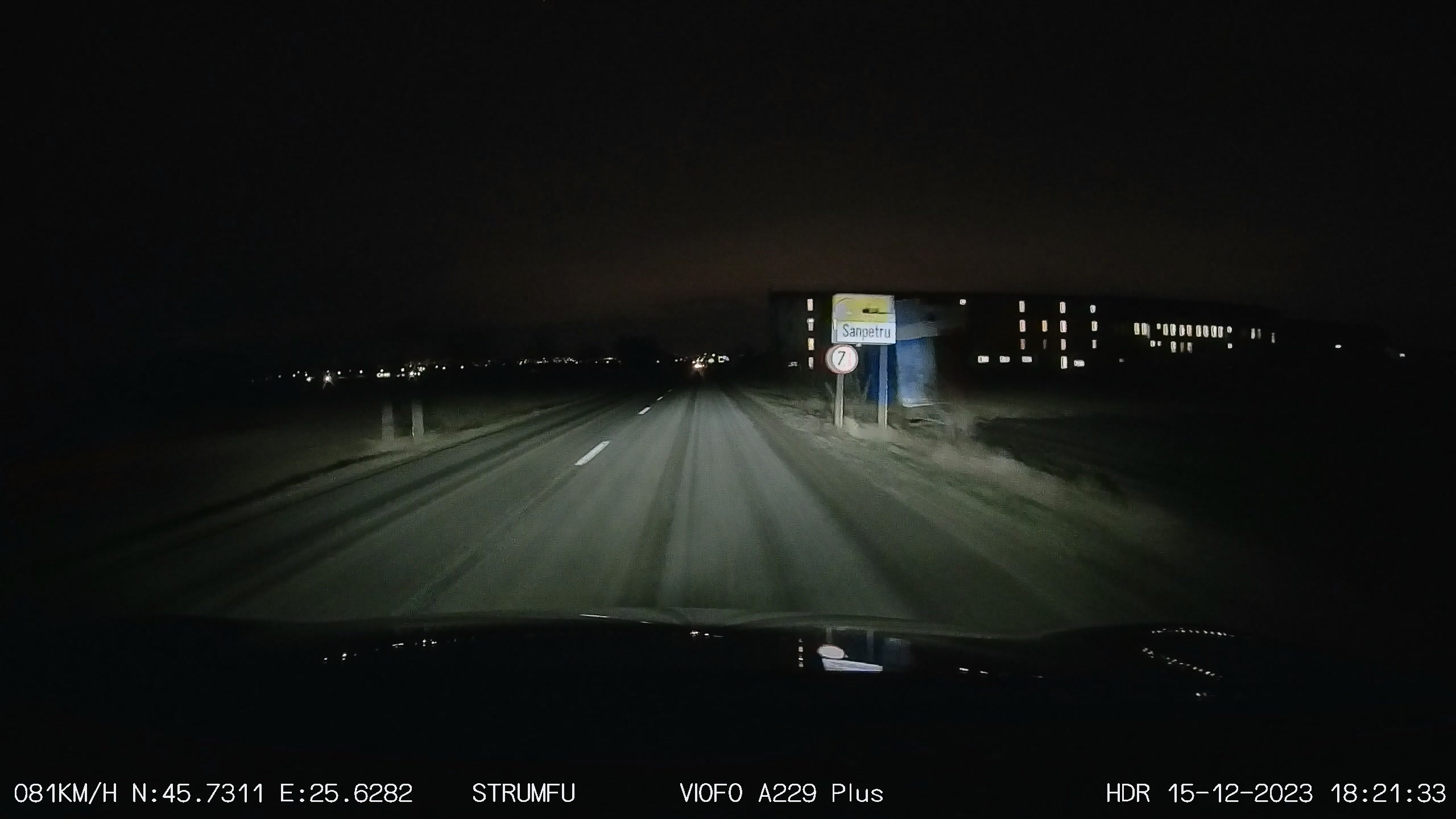
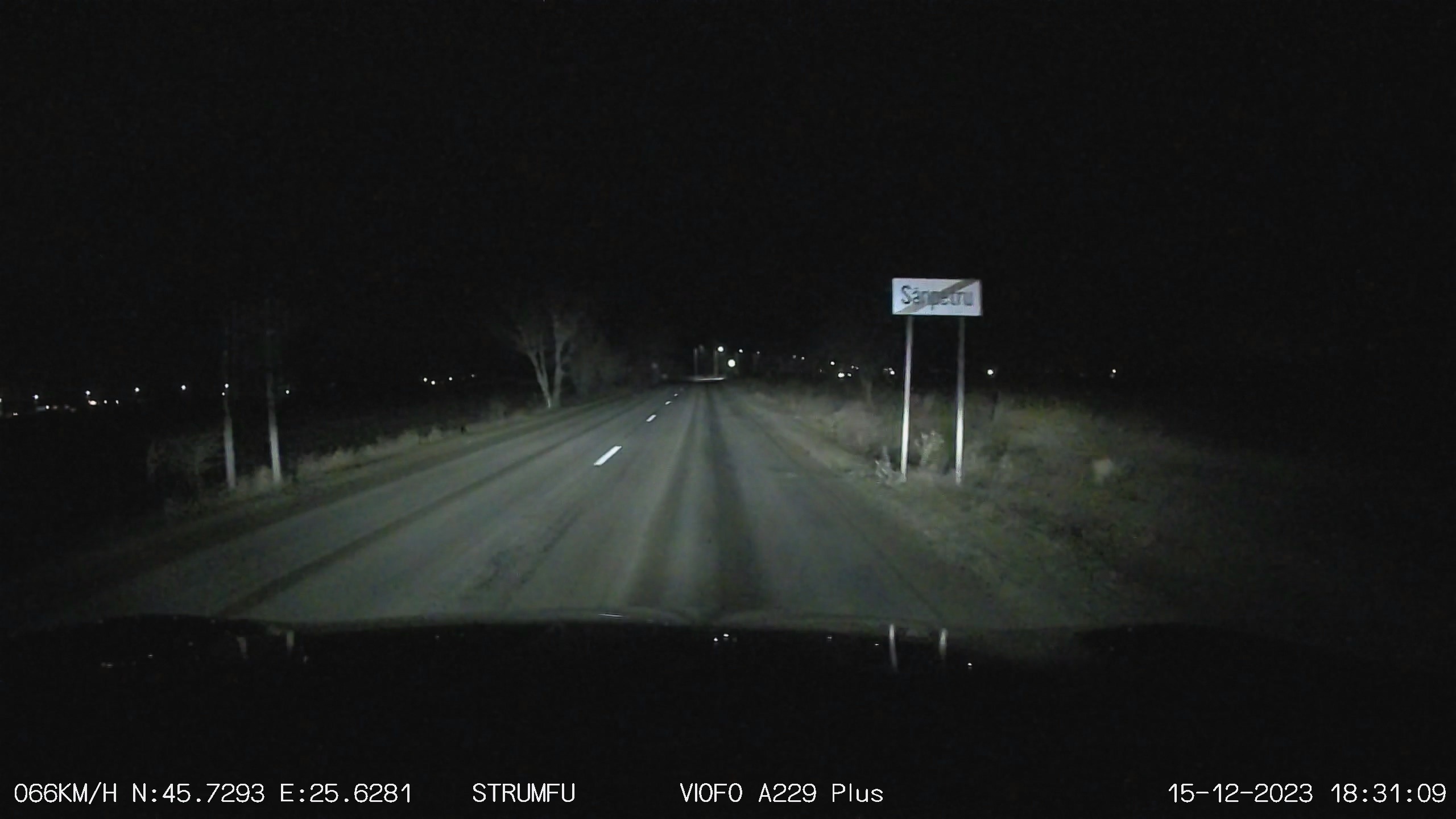
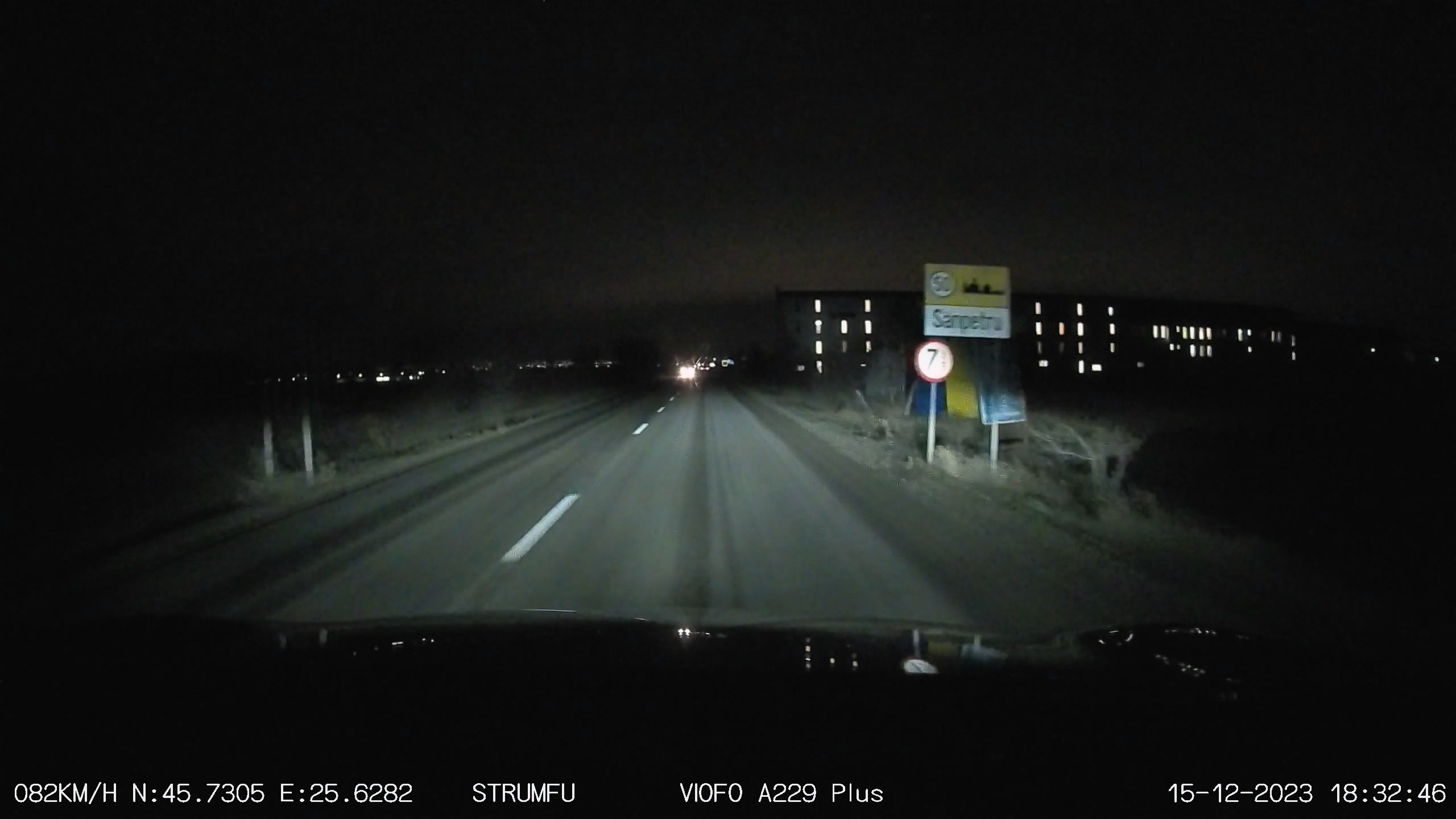
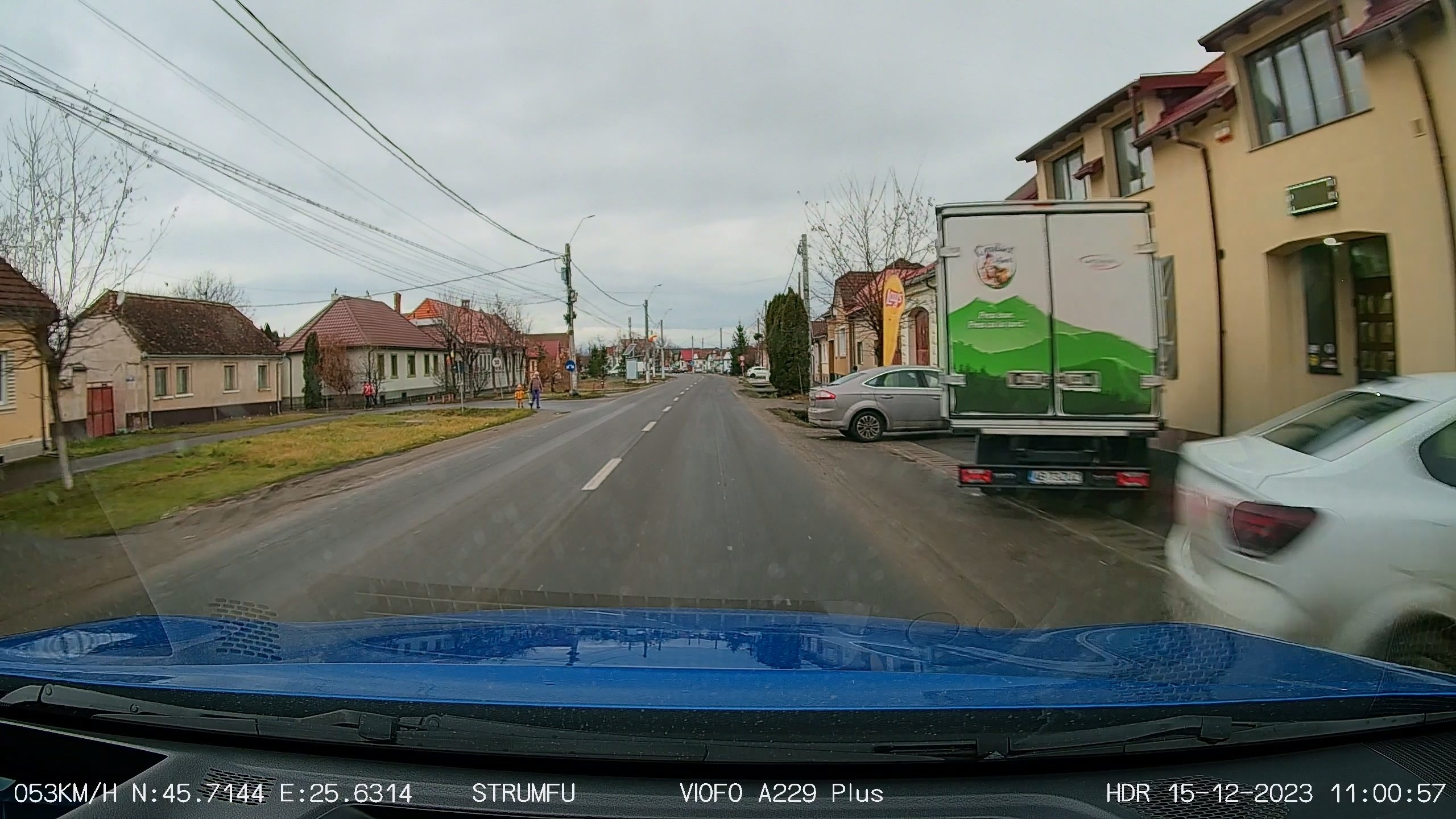
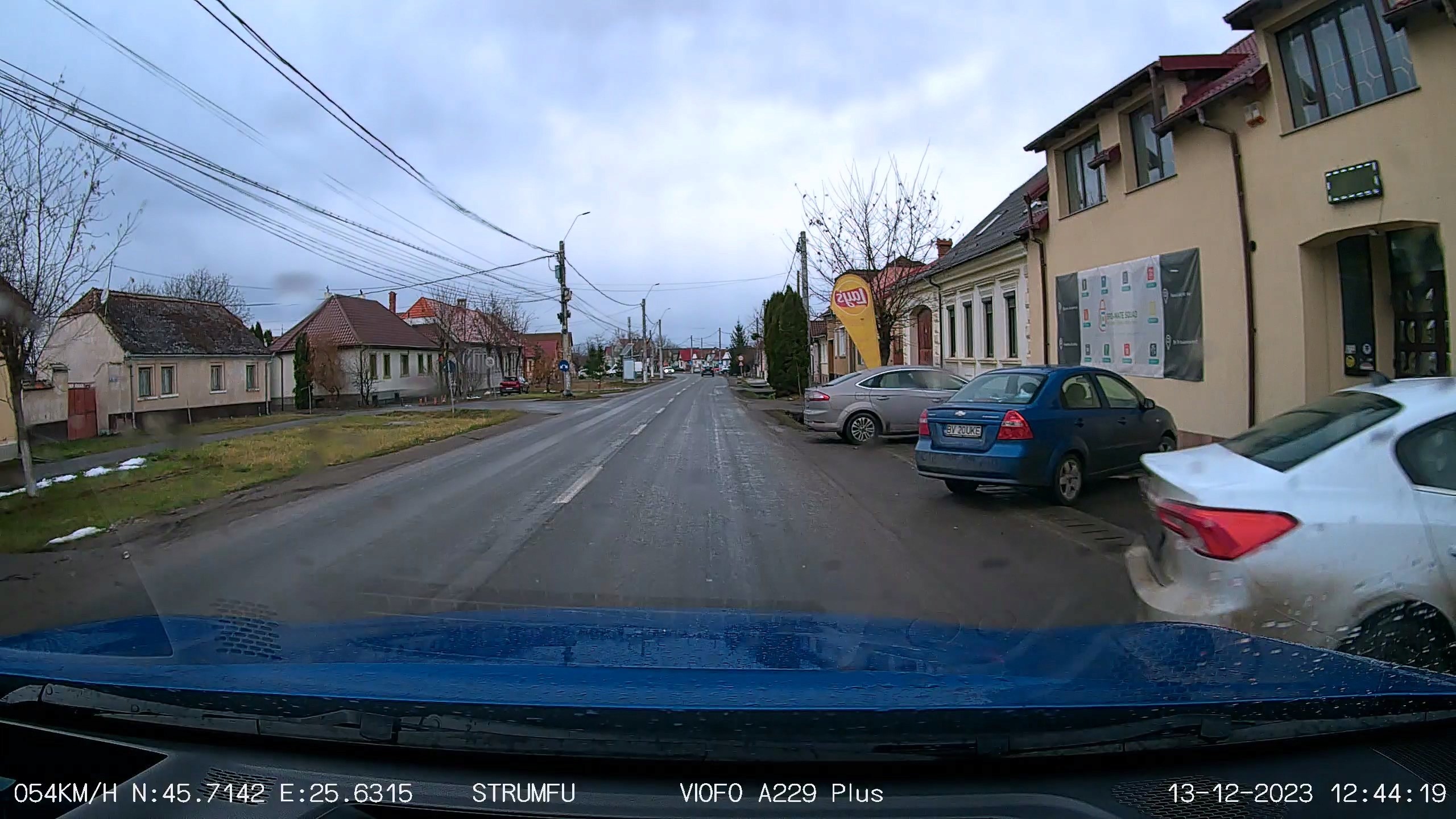
Battle of the frames: 30fps vs HDR (30) vs 60fps

Alexcrist

New Member
Joined
May 31, 2019
Messages
24
Reaction score
17
Location
Iași
Country
Romania
From the start: I don't want to change anyone's opinions on anything. In general I think the more available options/settings in a system, the better, and everyone can decide for himself what he wants to use to better suit his most common scenarios.

I want to post a simple, real-world, no-controlled-conditions comparison between different modes on the A229 Plus, starting with night shots (not sure if I'll ever want to or have time to do for other moments of the day, anyone feel free to do it).
I would have loved to see this kind of footage before buying, but most reviewers just quickly test it in a well-lit city, show off a couple things that favor a few settings (in particular HDR) and call it a day. Not that useful for someone who wants more than the default settings.

Firmware: V1.1_231208 (latest as of today)
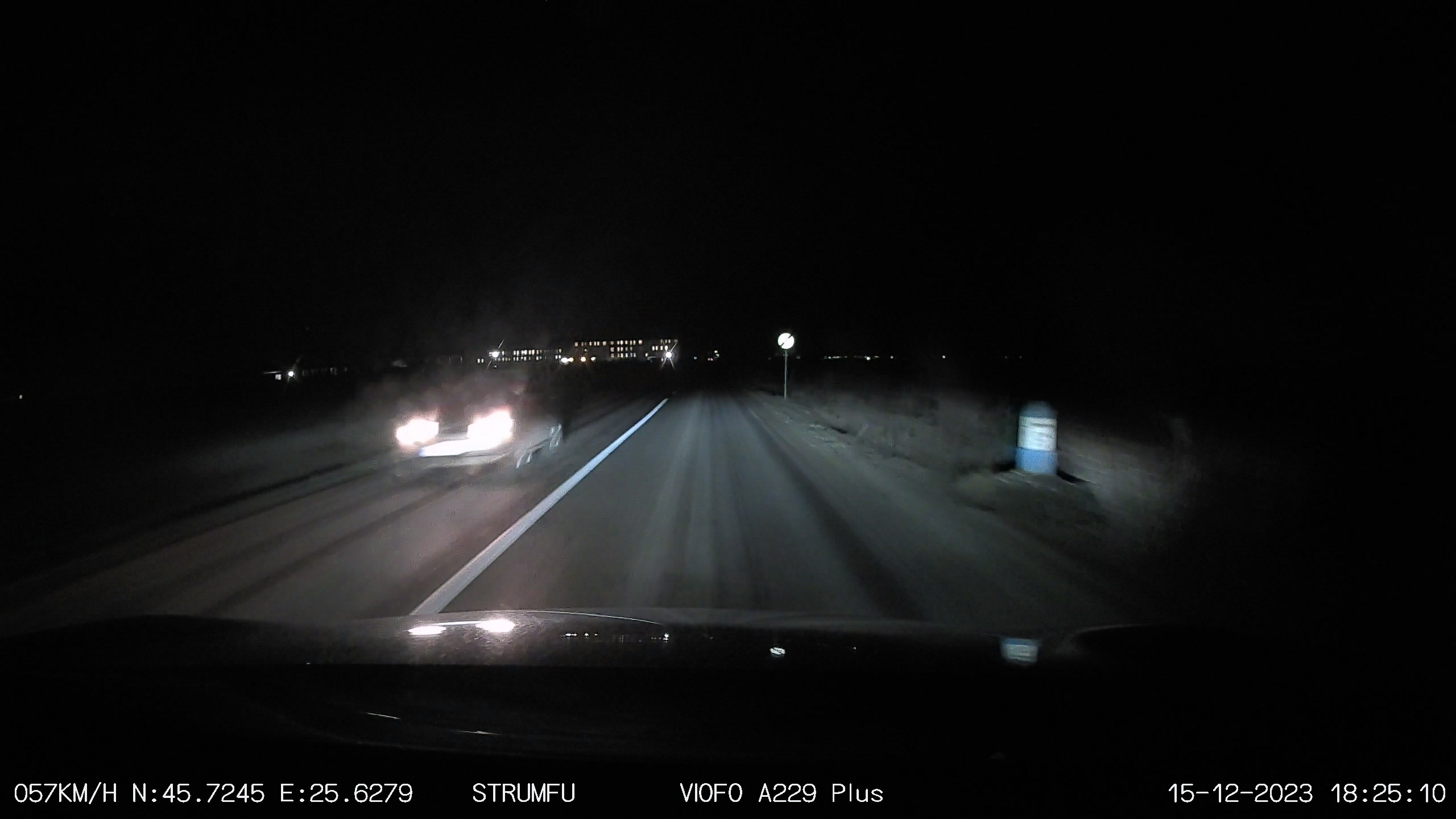
Scene: night time, headlights only, no (or very low) street lighting

Cars on the opposite lane

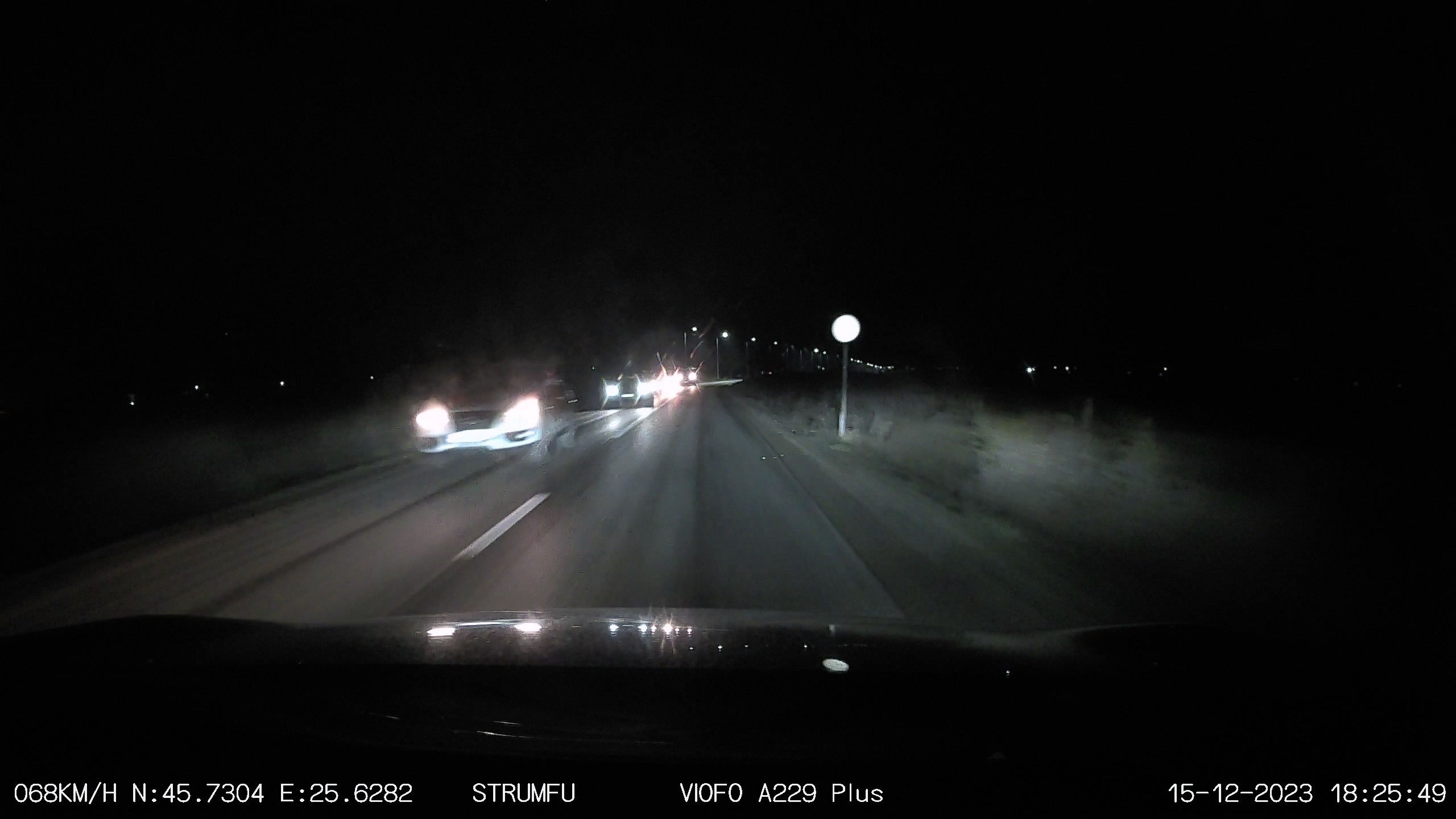
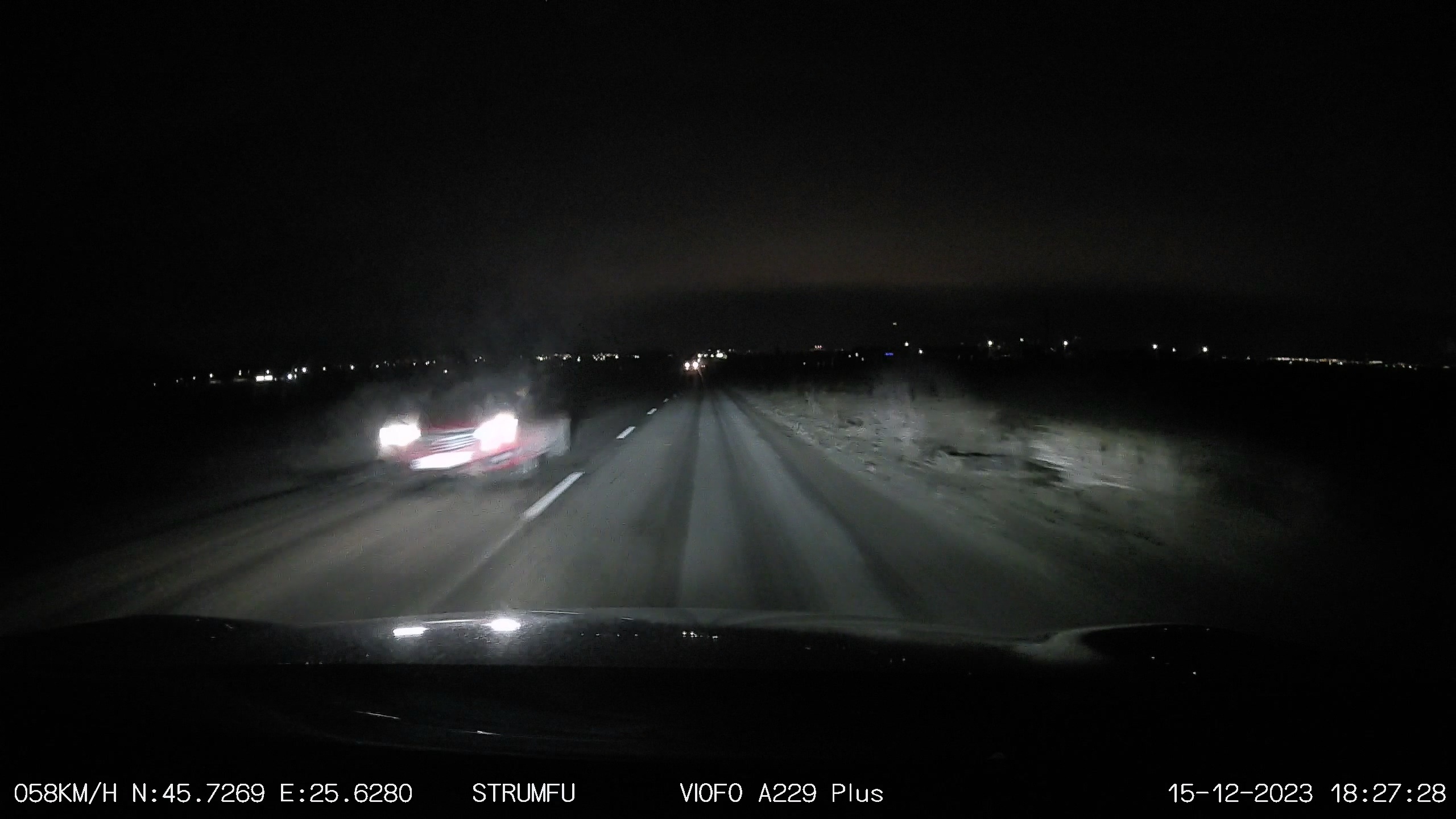
30
433514015_2560x1440_24.jpg

433514022_2560x1440_24.jpg

433514024_2560x1440_24.jpg


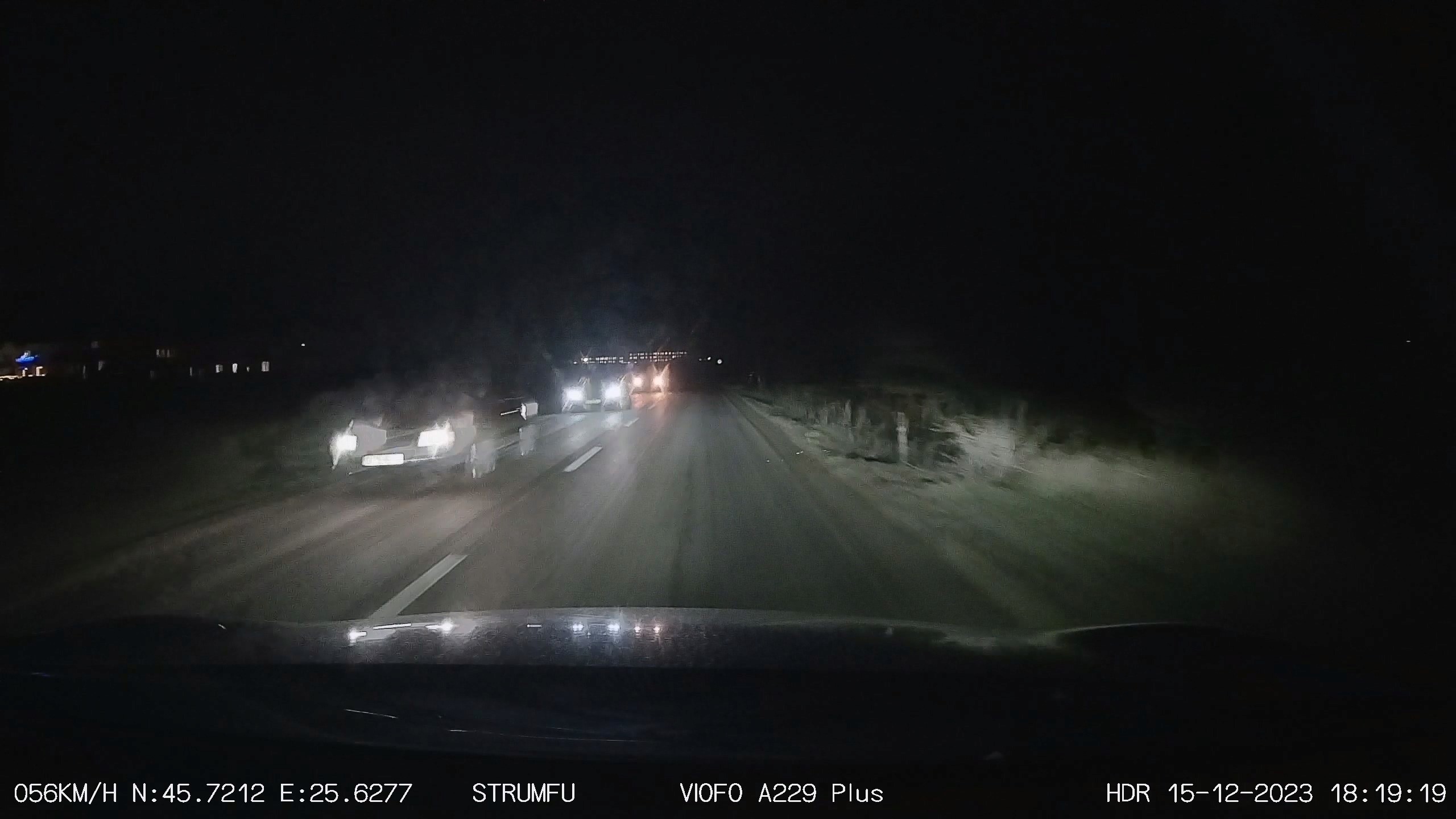
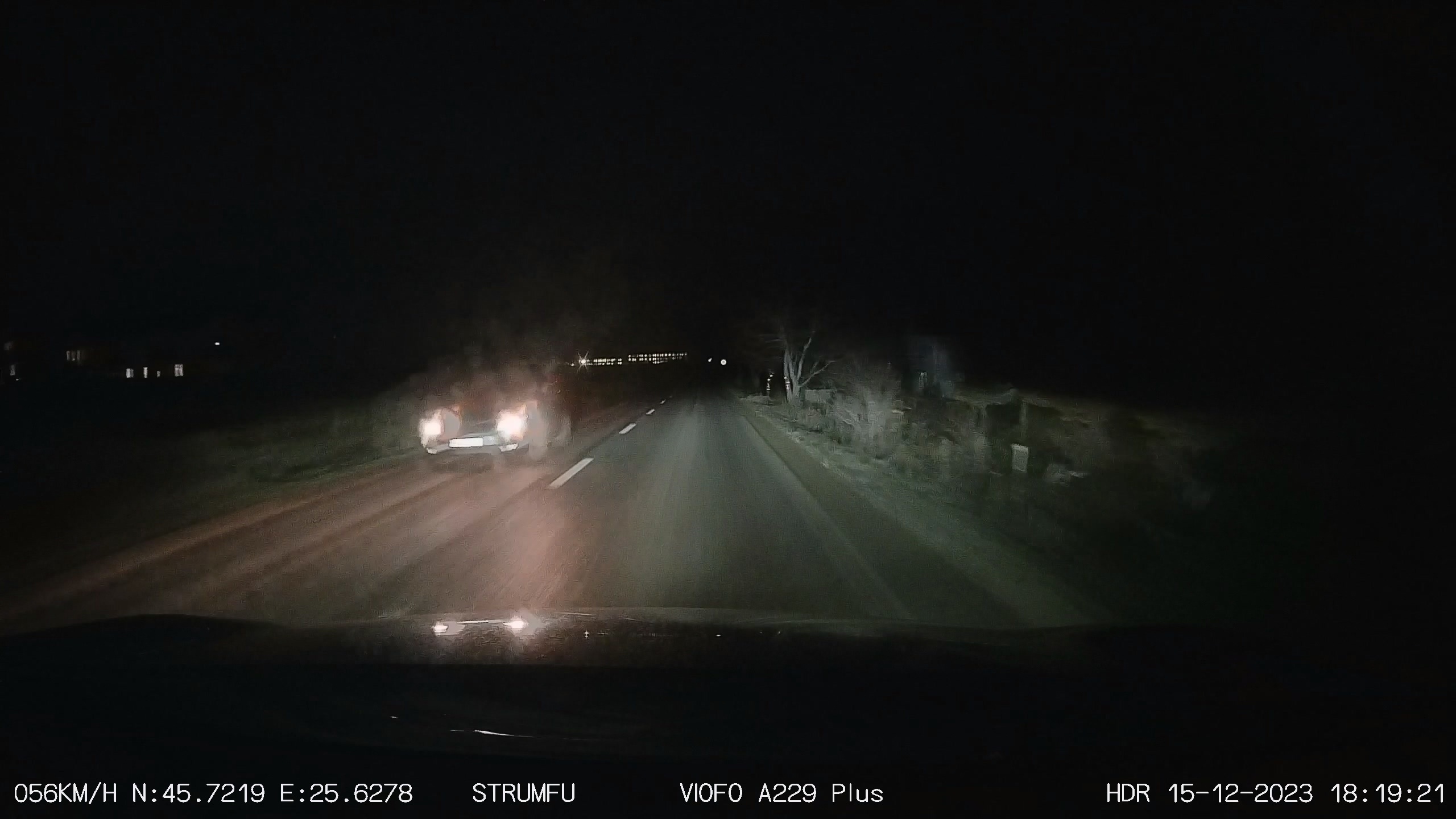
HDR30
433514034_2560x1440_24.jpg

433514041_2560x1440_24.jpg

433514044_2560x1440_24.jpg

433514053_2560x1440_24.jpg


60
433514039_2560x1440_24.jpg

433514042_2560x1440_24.jpg

433514045_2560x1440_24.jpg

433514048_2560x1440_24.jpg


Results:
  • ”Pokemon, collect-them-all” license plates: exactly none. Even with street lights, the chances of understanding a number plate are slim. Very slim.
  • other relevant details:
    • HDR30: all cars look like Enterprise is entering hyperspace, so no relevant details available. At best, you can distinguish between a light color (maybe white) and everything else, also you may distinguish between a crossover/SUV and a smaller car
    • 30 and 60: color and shape of the cars are clearly visible (better on 60). If you know your cars, even the brand/model can be easily determined most of the times (not always, though)

Overtaking
30
433514057_2560x1440_24.jpg


HDR30
433514060_2560x1440_24.jpg


60
433514064_2560x1440_24.jpg


Results:
  • ”Pokemon, collect-them-all” license plates: In some cases, license plates are barely distinguishable with both HDR30 and 60.
  • other relevant details: 60 looks sharp, clear and natural. HDR30 has significant ghosting effect around the lights. Either way, the level of details are similar


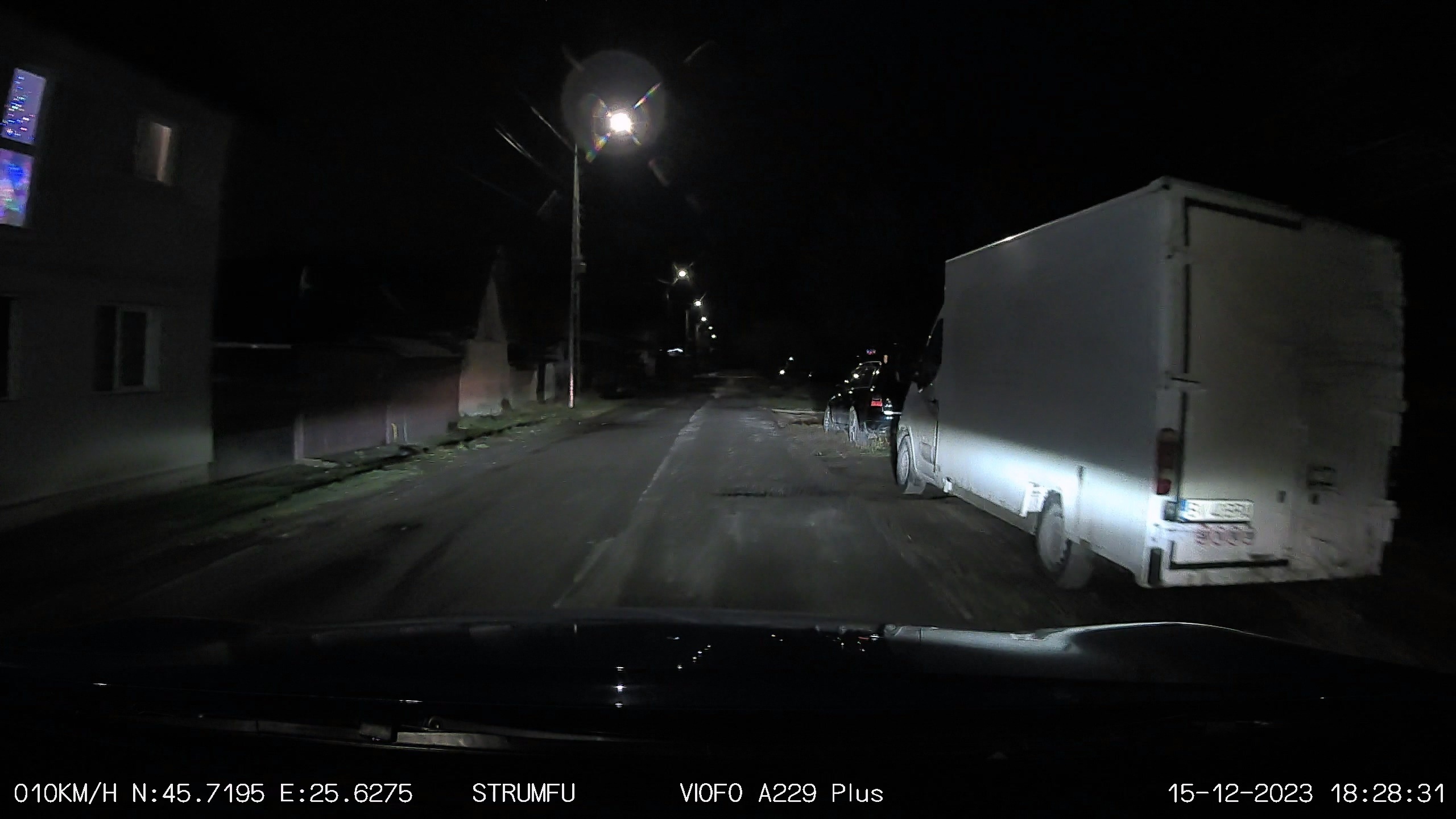
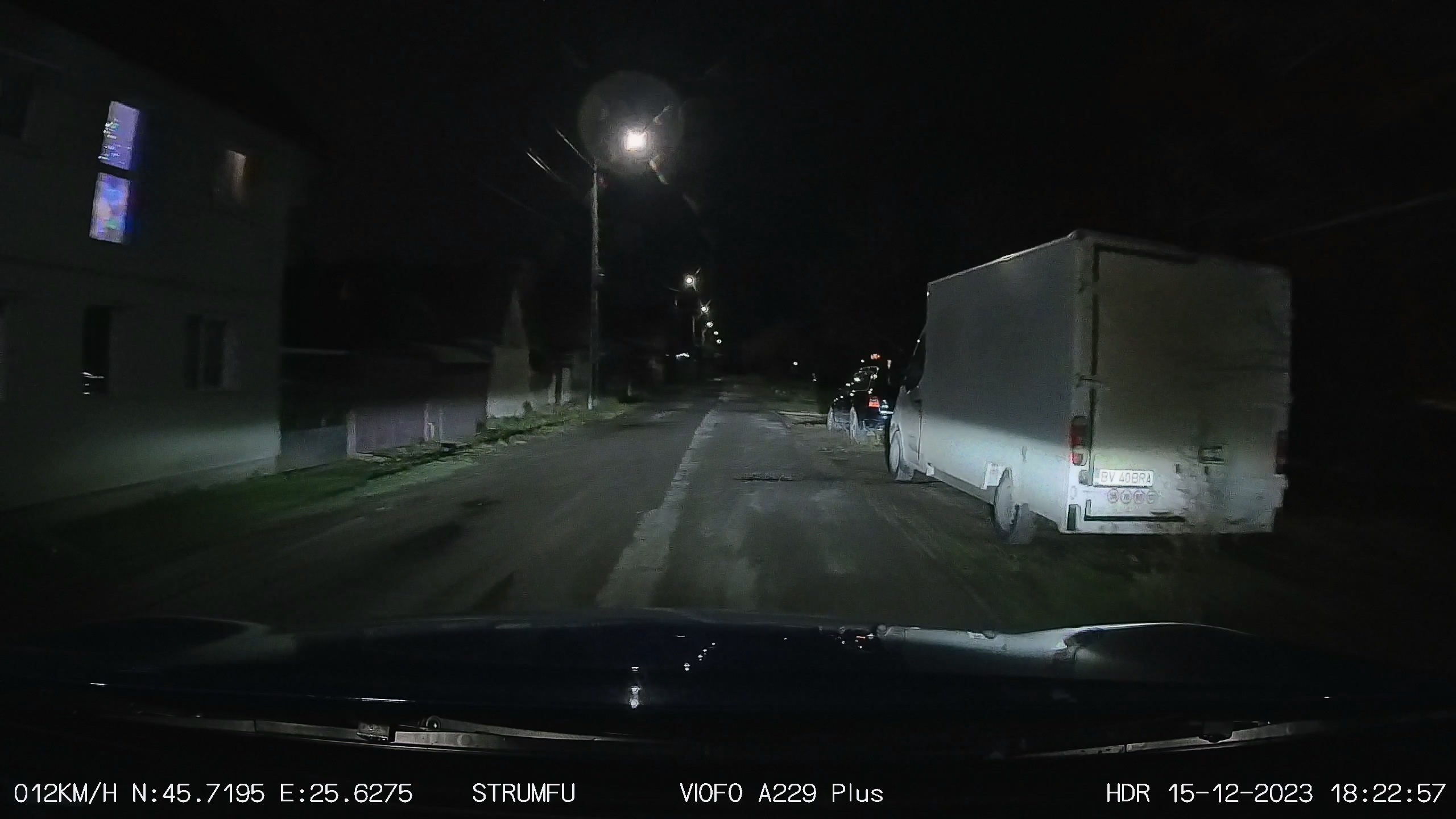
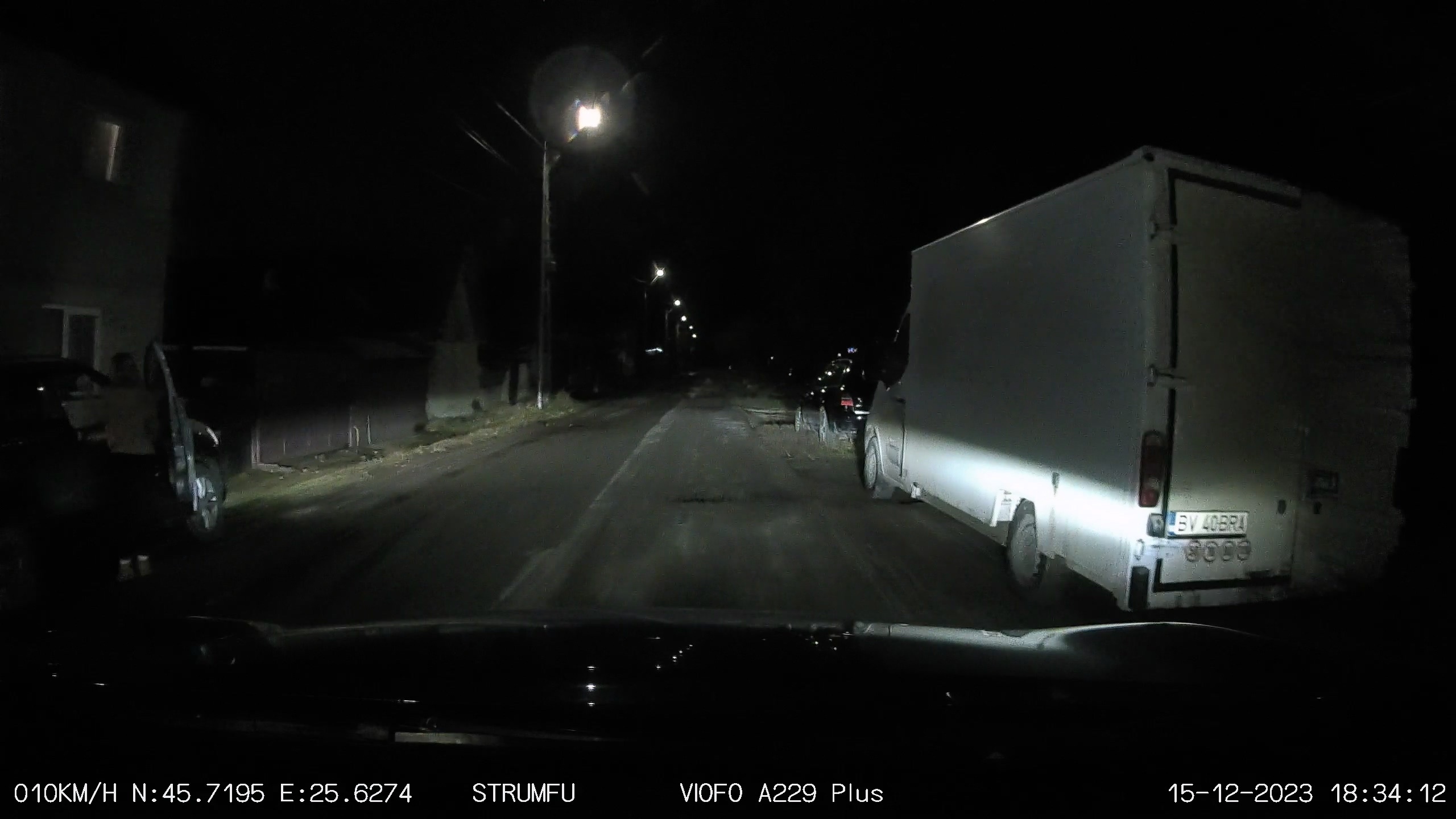
Low speed (with dim streetlights)
30
433514066_2560x1440_24.jpg


HDR30
433514067_2560x1440_24.jpg


60
433514070_2560x1440_24.jpg


Results:
  • ”Pokemon, collect-them-all” license plates: pretty clear in both HDR30 and 60
 
Street signs
30
433514071_2560x1440_24.jpg


HDR30
433514072_2560x1440_24.jpg


60
433514074_2560x1440_24.jpg


Results:
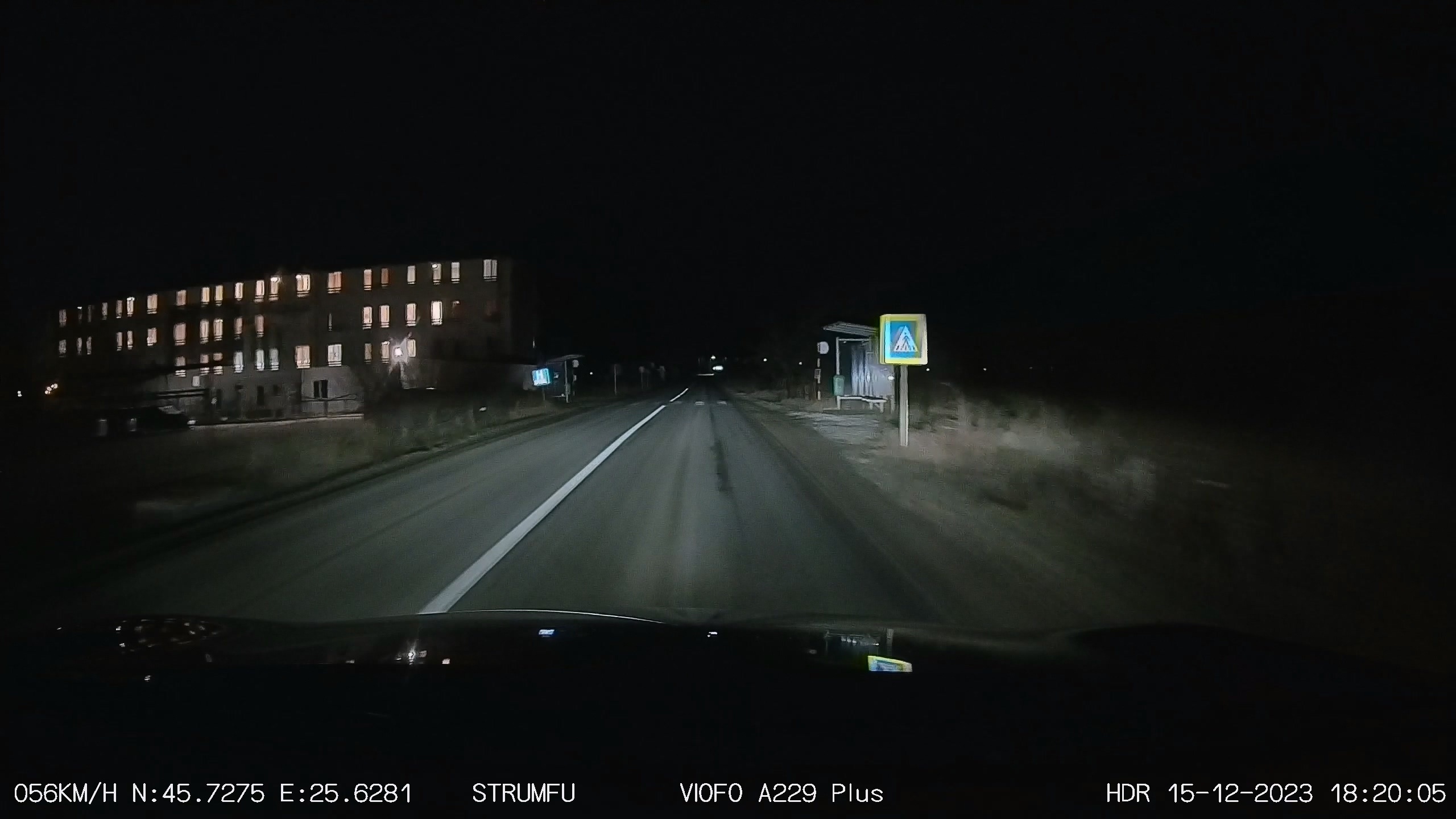
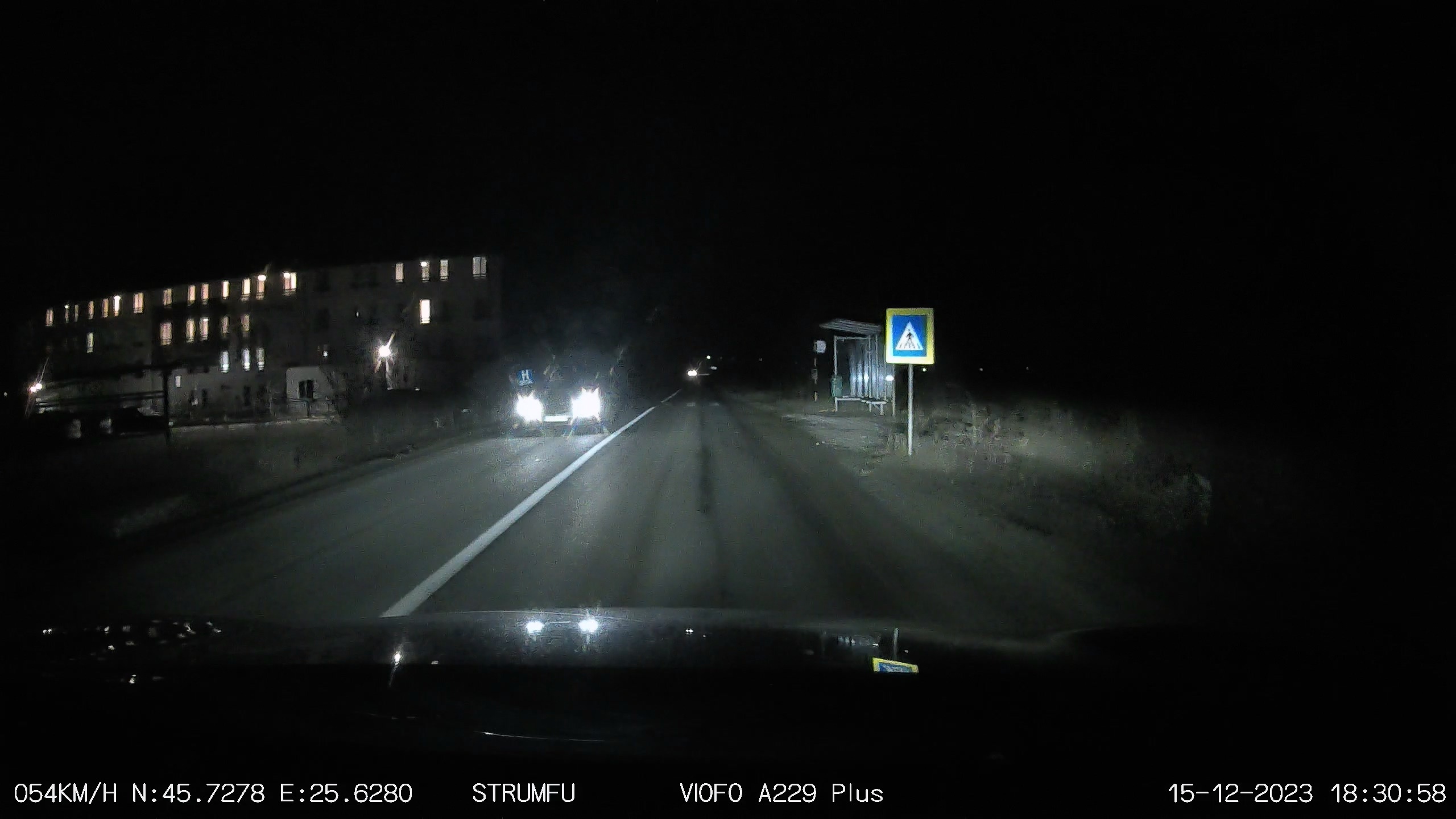
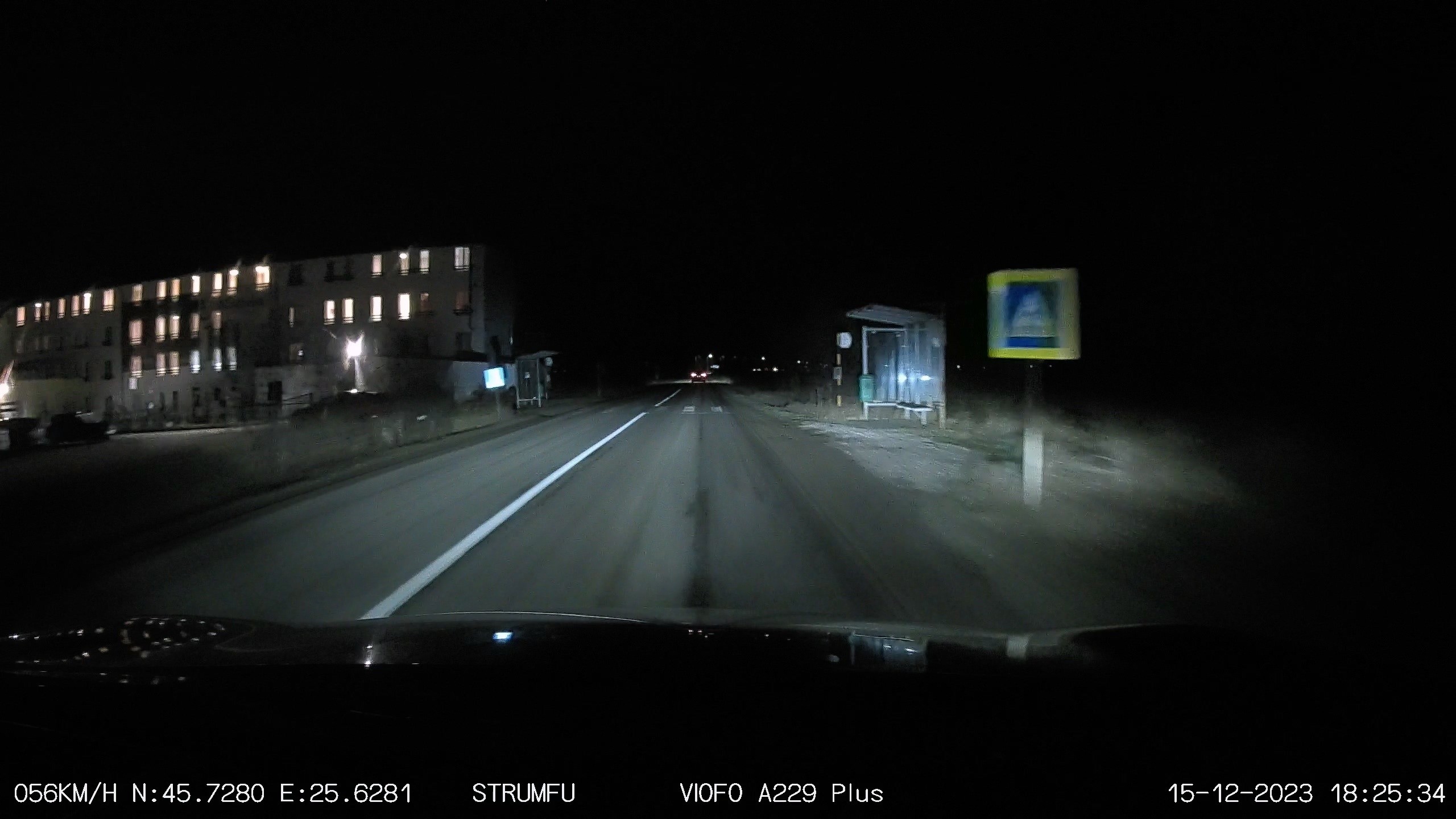
  • Details are there on signs on both the right and left sides of the road on HDR30 and 60. But 60 looks a lot more natural
  • Bonus: in the video, reflective surfaces (including road signs) somehow flicker on HDR30, as if they are electrically lit. Weird effect

City limits
30
433514075_2560x1440_24.jpg

433514080_2560x1440_24.jpg


HDR30
433514077_2560x1440_24.jpg

433514083_2560x1440_24.jpg


60
433514079_2560x1440_24.jpg

433514085_2560x1440_24.jpg


Results:
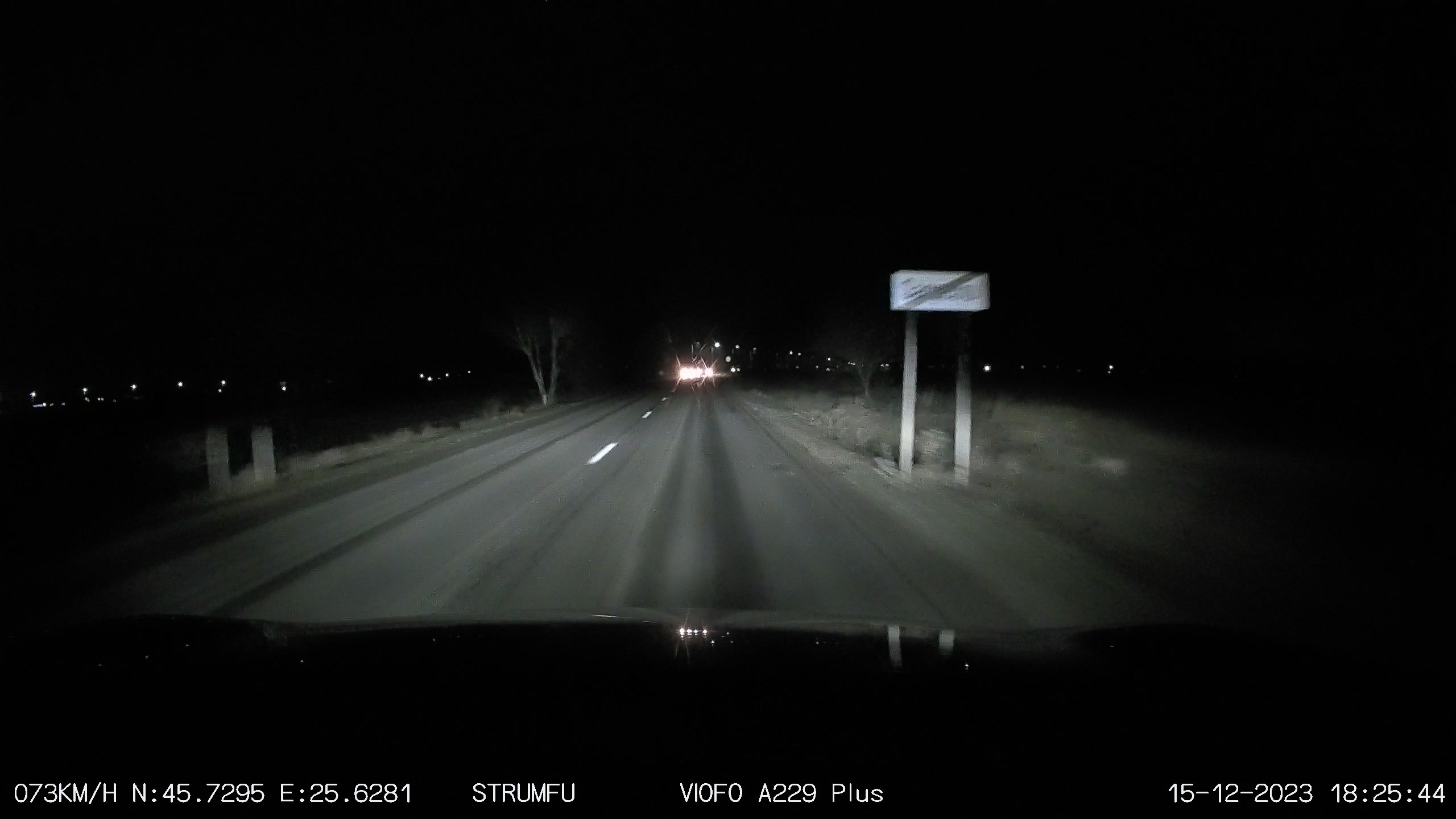
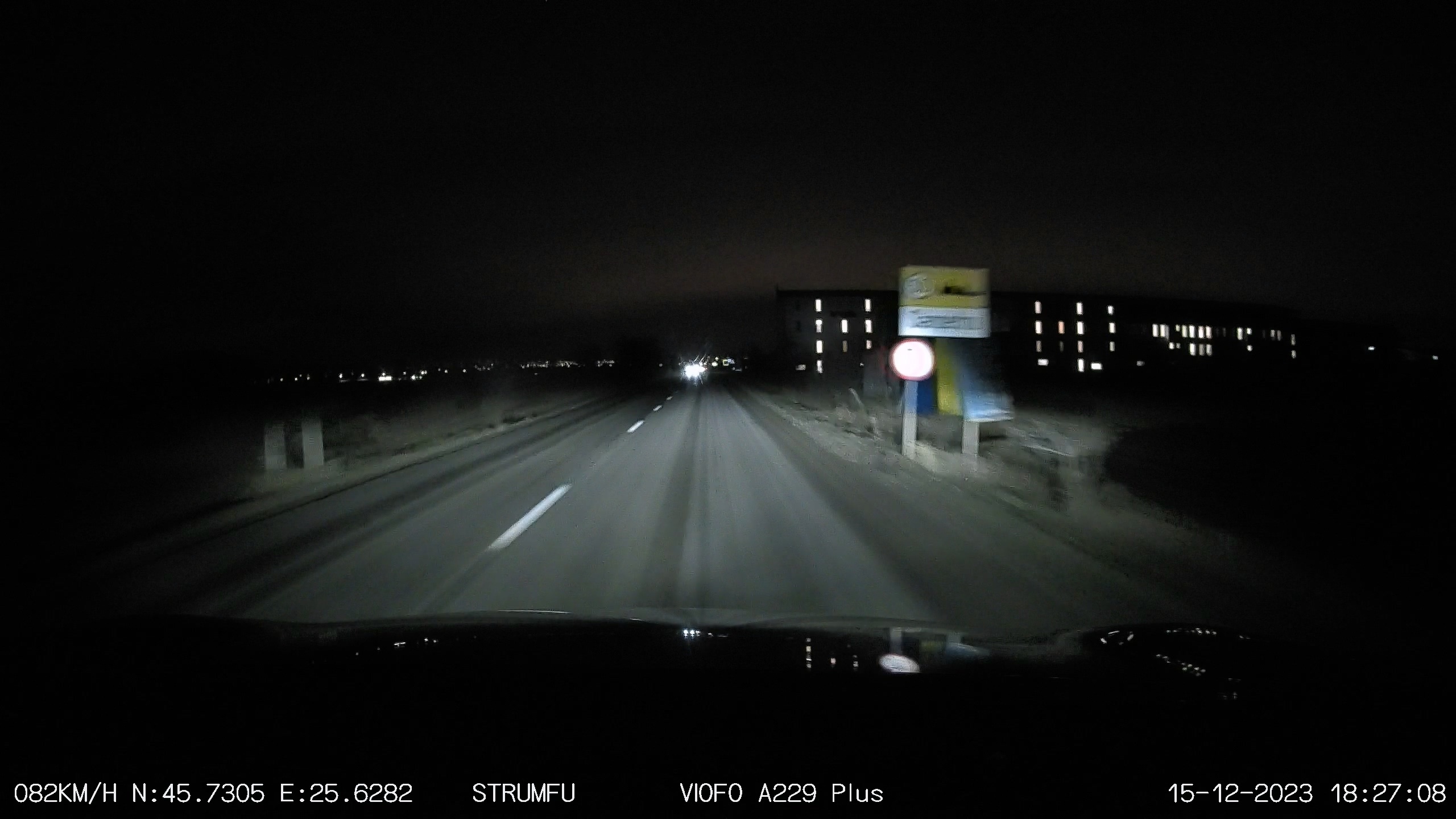
  • Details are there on signs on both the right and left sides of the road on HDR30 and 60. But 60 looks a lot more natural
  • Signs that are less reflective (or outside the light focus, such as above the dipped lights) are still visible with 60, but not with HDR30
  • Bonus: same weird flickering on HDR30

Other details
30
433514086_2560x1440_24.jpg


HDR30
433514088_2560x1440_24.jpg

433536265_2560x1440_24.jpg


60
433514089_2560x1440_24.jpg


Results:
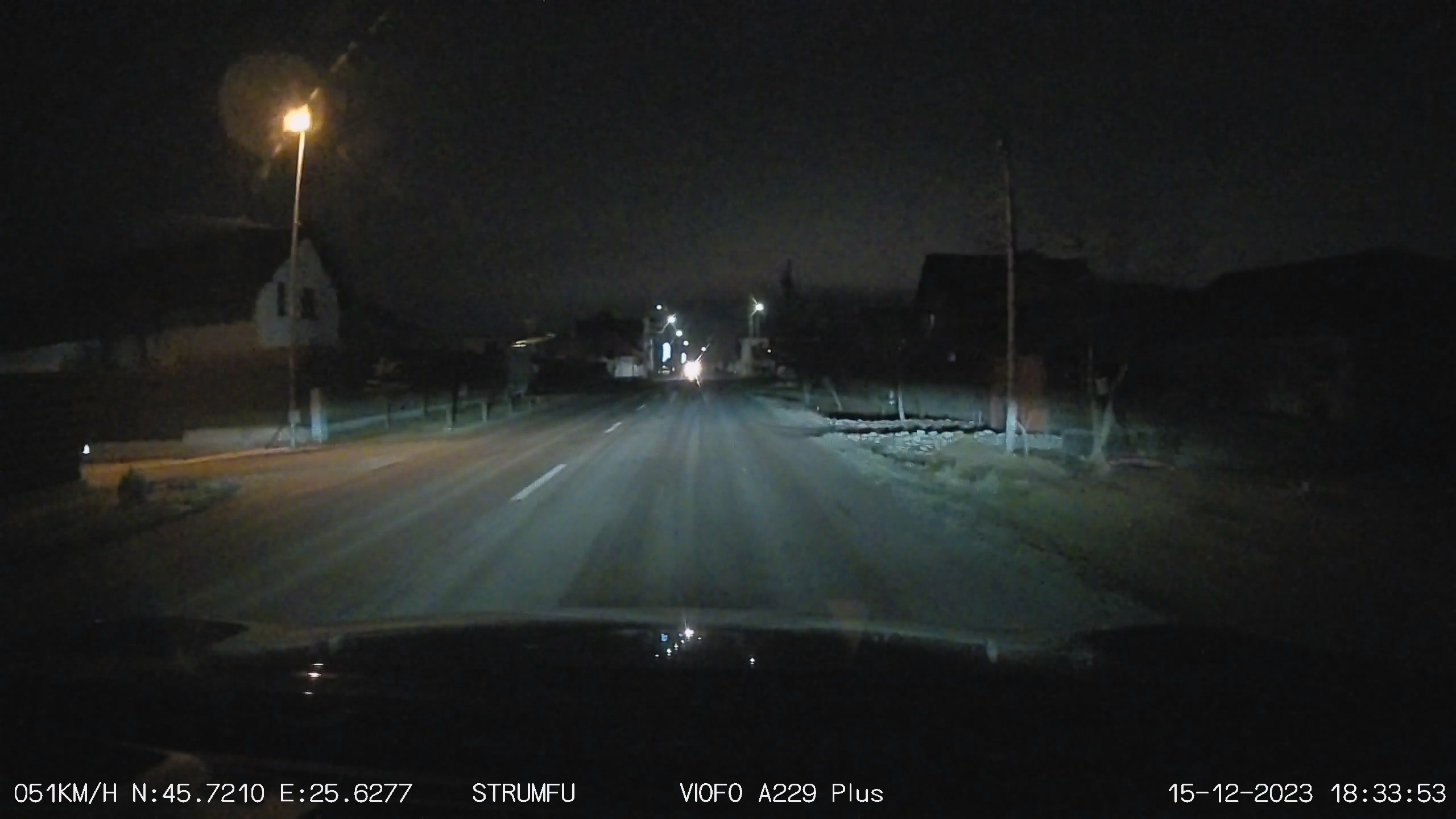
  • 30 is usually correctly exposed, but has moments when it's a bit underexposed (when there are opposite lights, for instance)
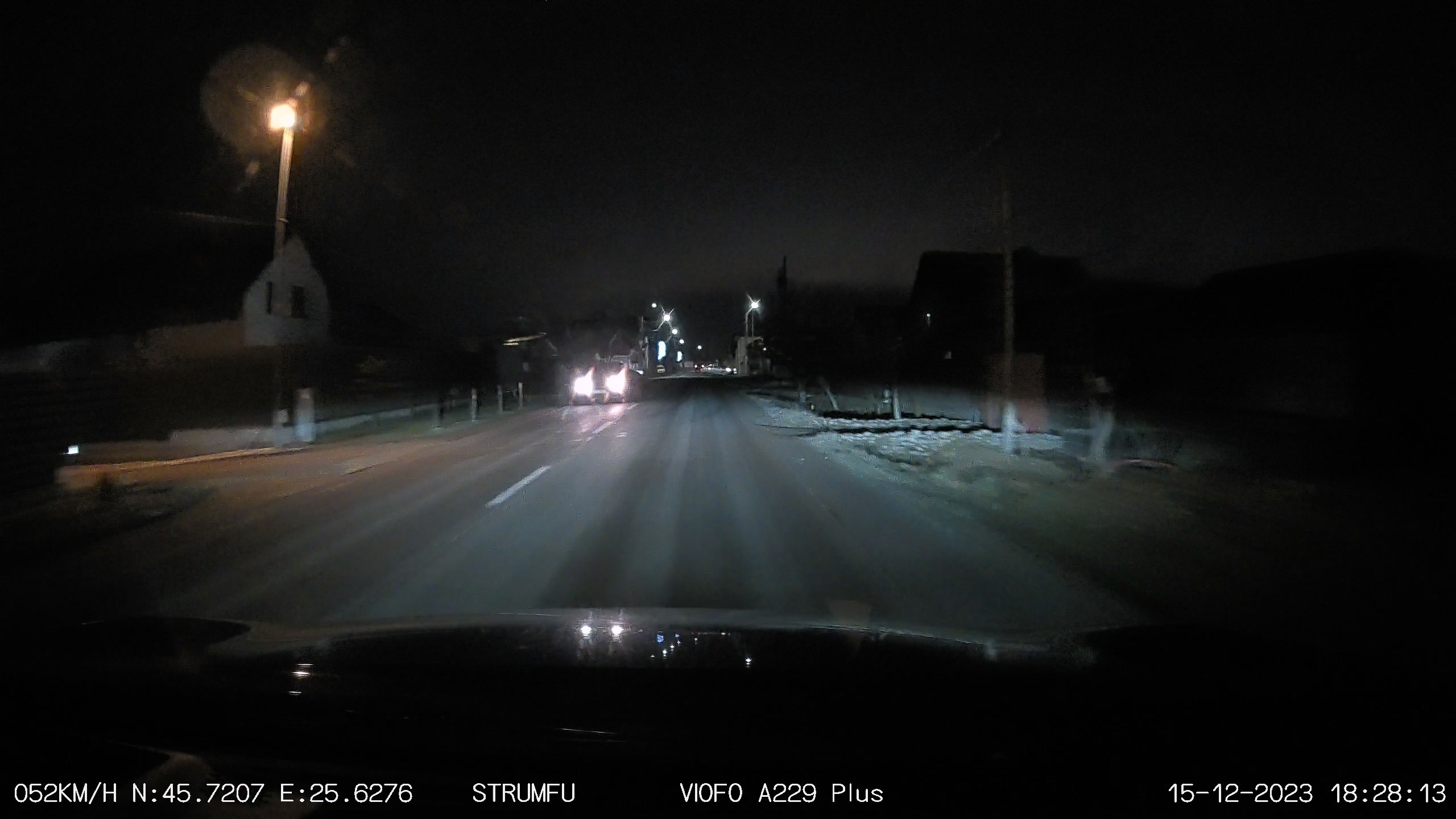
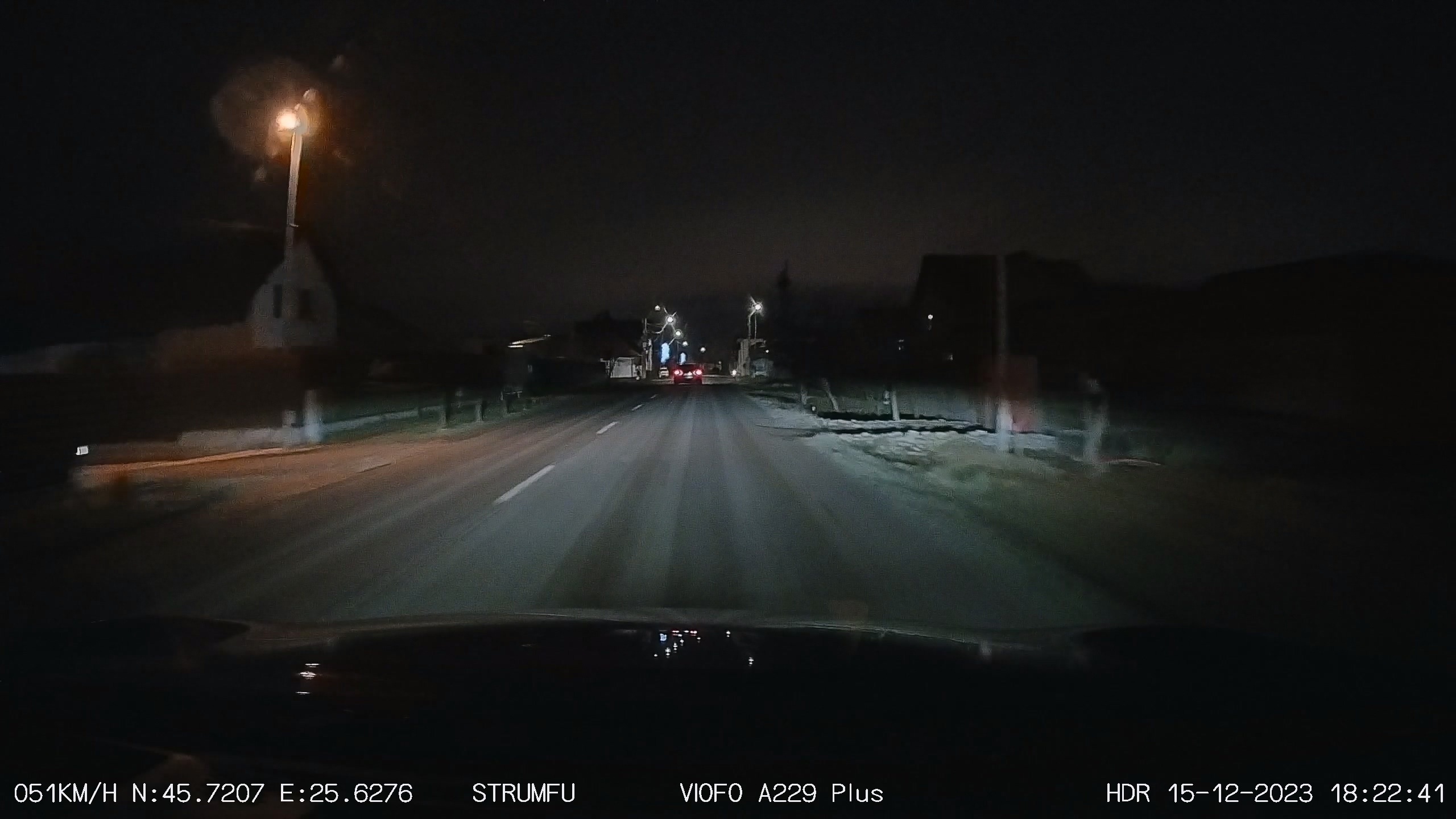
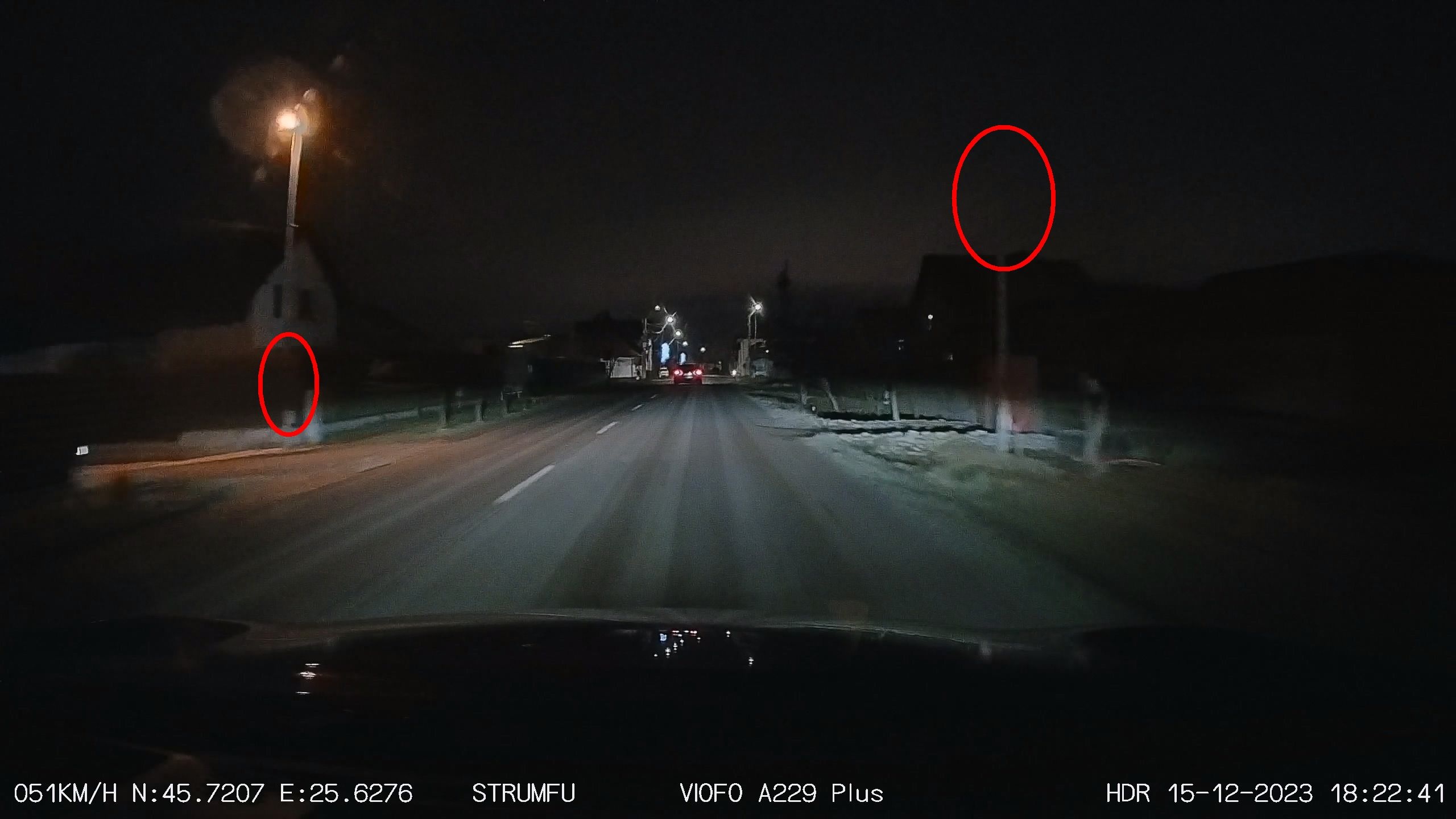
  • HDR30 is hugely and over-aggressively denoised. So much that objects literally disappear from the image (see circled poles in the image).
  • 60 has a wild and uncontrolled exposure, it continuously varies from under-exposed to hugely over-exposed. Noise levels are acceptable when the exposure happens to be correct, but many times details are lost in the noise caused by pointless over exposure.

Daylight (cloudy)
HDR30
433540223_2560x1440_24.jpg


60
433540232_2560x1440_24.jpg


Results:
  • HDR30 is about as clear as plain 30. All details (and pokemon number plates) are sharp and clear with 60.

Overall, the level of details between HDR30 and 60 is similar at night, both having strengths and weaknesses. Personally I prefer a clearer global capture of details, and I always wished (still do) for a camera that handles 60fps correctly. But for whoever wishes to collect all license plates, regardless of anything else, HDR may be the way to go.
On daylight, 60 beats 30 (HDR or not) hands down. And since the ”Timed HDR” option in the camera is effectively pointless (it can only switch between HDR30 and 30, according to Viofo - exactly why do we need in the menu options that effectively do nothing?!), then basically using HDR means losing sharp details during daylight. Probably during full sunshine HDR comes closer to 60, but sunshine is a small part of overall conditions over a year.

30 seems the most stable overall. Not the clearest (because it's 30...), but at least it's more consistent, correctly exposed and not that aggressively post-processed. But if 30 is your cup of tea, then there are cheaper options that perform just as well (Viofo or other brands).

However, with the current state of the firmware, in my opinion neither HDR30 nor 60 are what they could and should be. I suspect the hardware is capable of much more if it's controlled correctly. No offense, but the current firmware looks very much as a beta release at best and I seriously regret buying this camera. Unfortunately, since it's too late to return it, I'm just left hoping that Viofo will finally finish implementing the options in a meaningful manner.

Again: not trying to convince anyone of anything, just a couple of real-world comparison for anyone looking to buy this camera. 🙂

P.S.: If my other topic tells me anything, I'm expecting a lot of criticism and aggressive replies (e.g. ”I don't know how cameras work” and such) just because I go against the flow and I don't praise HDR by default. So just be notified that I won't reply to anything like this. 🙂 I'm still hoping for a productive discussion with more examples and less sterile theory.
 
Nice comparison, thank`s. HDR do not try to do best cinematic images but force light objects readability like road signs or plate numbers. Any other objects will be blurred (have 2nd shade image) due DOL HDR. 60fps image sometimes has less blurred image than HDR because has less exposure time but same time has more dark scene and dashcam algorithms level up frames brightness to same level as for 30fps and it cause noise image in dark areas.
 
60fps image sometimes has less blurred image than HDR
60fps image always has less blur. No exceptions, all day long. 🙂 It may have more noise, yes. But always less blur.

has more dark scene and dashcam algorithms level up frames brightness to same level as for 30fps and it cause noise image in dark areas.
HDR30 has less noise not because of better capture, but because of very aggressive noise reduction. Which, as I've shown, is... far from ideal, to put it lightly. I'm guessing that raw noise levels for HDR30 are similar to 60. But since everyone's focusing on HDR, they wanted to make it look pretty and removed every single spot on it in post-processing. Noise and objects... 🙂

HDR do not try to do best cinematic images
"Cinematic images" means having nice contrast, saturation, color accuracy, nice/cinematic/controlled motion blur and so on.

Sharpness and object definition (even vague) is NOT part of cinematic images. Not from my point of view anyway. When I buy a camera, especially an above average (price-wise) one with latest-greatest state of the art technology (Starvis 2 & co), I expect to capture with it everything that's happening on the road. I don't expect crystal clear details, but I expect the details to be there, even vaguely. Because any type of obstacle (alive or not) can result in damages and insurance claims. That means:

Potholes:

Animals (from the smallest rabbits, cats, foxes, to the larger deer and bears - yes, we have those around roaming in the dark 🙂 )

Drunk guys roaming freely in the dark (on foot or on bikes with no lights - obviously 🙂 )
(this is an older example with an older camera)

Maybe even large puddles on the street during heavy rain - when even plain 30 fps is struggling with exposure on 7+ year old camera technology (but I expect a bit more from the latest state of the art, not less)

None of these have bright surfaces, shiny parts or license plates. And I'm guessing at least part of them (pothole, puddle, maybe even the rabbit in the first frames) would be considered "noise" and completely removed by the current A229 Plus HDR implementation. And, I'm sorry again, but that's not acceptable for me, especially since 7 years old technology captured these things with no problems. And we can all agree that none of the above are "cinematic" images. But they contain the necessary details in case of whatever, and that's exactly the point of the dashcam. 🙂
 
Last edited:
The dashcam requirements are extreme:

- on the one hand, the range of differences in lighting conditions and contrast in the scene (sun, city, open road in the dark and headlights of oncoming cars , sunlight contrasted with shadows)
- at the same time, the scene is not static (as is usual in photography), but the objects in the image are moving at high angular speed (landscape and oncoming cars)
- the advantage of temperature resistance, continuous operation and small size of the device

On the other hand, an acceptable price and low power consumption are required.

Requirement of short exposure time (definitely less than 1/100 and more likely 1/1000 sec.) in low light conditions, image noise if the instrument helps itself by increasing the ISO sensitivity and moving scene never gives a good result in extreme conditions !!!.

A device that would partially meet your requirements could be constructed, but it would require an APS-C or full frame sensor, and only a piece production and a probable number of buyers, and its price would be comparable to high-end cameras priced over $5,000 🙂 . The requirements you have outlined would be liked by everyone. But no one would pay for such a device.

Otherwise, I commend the time and effort you took to compare results for different settings.
====
It wouldn't hurt to record the same day and night shots "for comparison" with a high-end full frame camera costing $5,000 🙂.
 
Umm... what? I just showed and said that a 7 year old dashcam offers decent results, while the latest more expensive one doesn't. I have no idea what you point with thousands of <whatever_currency> gear is. I specifically said I don't expect crystal clear images, I just want best-effort results, which the old camera does, the new one doesn't. Not for the requested price at least.

But if you understood that I want IMAX quality from that, then ok, be it like you said. 😆
 
Apparently I missed something and only see shots of the Viofo A229 Plus.

Just to clarify - is the max bitrate set and is it a single, 2CH or 3CH model ???
 
All videos (with one exception) in post #5 are captured with A129 Duo (actually 2 different units, same model, same settings).

All videos (old and new cameras) are with max bitrate and 2ch. That's my normal setup.
 
Which "great" video is the 7 year old camera ?

Post #3 is A229 - the night shots have street lights
Post #5 is A129 - complete in the dark

Each night video is in different conditions, one is foggy, one is raining. Youtube quality doesn't add either .

I don't understand at all what we are comparing -- in total darkness the video will always be substandard. I'm some kind of dumbass.
 
Well, if you read carefully and slowly everything that I wrote, I'm sure you can understand. Don't worry, you can even read it multiple times. 😉

If you still don't understand, I can explain again. But if we get here, do me a favor and stop throwing around words that you don't understand, like theories about video capturing. I don't mind telling you how a video's quality can be judged (even if it's not the exact same scene), but I do mind wasting time repearing myself for people who don't care what I have to say. 🙂

Thanks for understanding! 😉
 
I wish you success in your endeavors
 
...................
I want to post a simple, real-world, no-controlled-conditions comparison between different modes on the A229 Plus, starting with night shots (not sure if I'll ever want to or have time to do for other moments of the day, anyone feel free to do it).
I would have loved to see this kind of footage before buying, but most reviewers just quickly test it in a well-lit city, show off a couple things that favor a few settings (in particular HDR) and call it a day. Not that useful for someone who wants more than the default settings.

Firmware: V1.1_231208 (latest as of today)
Scene: night time, headlights only, no (or very low) street lighting
Thanks for the 60fps / 30fps / 30fps+HDR comparison, that's exactly the information I was looking for the A229 Plus.

- Looking at the images you provided I definitely prefer 60fps.

Personally, I don't care about the legibility of oncoming vehicle plate.
I cannot think of why I am going to need it? If there is a head-on collision even at 40mph (64kmh), I think the vehicles involved are not going anywhere and nobody is going to be able to run away.
Also, where I live, we don’t have front plates anyway.

- Looking at plate readability for passing cars, 60fps looks better again, and I think it's the car passing (running away) that matters most, not the one right in front of you.

Did you have a chance to test V1.3 beta firmware for A229 Plus?
If yes, please shear your opinion on 60fps differences/improvements if any (my A229 Plus is not yet installed)

According to Viofo, 60fps option is now functional with AutoHDR.
However, I am thinking to set 60fps for both day and night.
 
Last edited:
According to Viofo, 60fps option is now functional with AutoHDR.
However, I am thinking to set 60fps for both day and night.
To have 60fps you will have to disable HDR.
 
Originally for A229 Plus, the 60fps should have worked with AutoHDR like in Mini2, meaning during the day when AutoHDR is OFF, DVR records in 60fps, then at the night when AutoHDR is ON it switches to 30fps, and then the next day when AutoHDR is OFF again it automatically switches back to 60fps.

That auto switch back to 60fps was at some point disabled by Viofo due to reliability, I guess.
With V1.3 beta firmware Viofo notified that it is functional now.

I understand that if I choose to permanently switch to 60fps I will have to disable HDR

Bu the way, isn’t HDR technically kind of 60fps, recording two frames at 30fps simultaneously and then combining/processing them in to one frame?
Is the bit-rate per frame then cut in half for HDR? like for 60fps, if that is the true case?

Just curious.
 
Bu the way, isn’t HDR technically kind of 60fps, recording two frames at 30fps simultaneously and then combining/processing them in to one frame?
Is the bit-rate per frame then cut in half for HDR? like for 60fps, if that is the true case?

Just curious.
HDR on the A229 Plus and A229 Pro is 60 exposures per second, 30 frames per second, so two exposures per frame.
Since the two exposures are collected simultaneously, there are not 60 images per second, the two exposures are the same image, one just has more motion blur and is brighter than the other.

The bitrate is used by the codec to encode the frames, it only sees 30fps, the exposures have already been combined by the time the codec encodes them into bits. So the bitrate is used exactly as it would be for 30fps.
 
HDR on the A229 Plus and A229 Pro is 60 exposures per second, 30 frames per second, so two exposures per frame.
Since the two exposures are collected simultaneously, there are not 60 images per second, the two exposures are the same image, one just has more motion blur and is brighter than the other.

The bitrate is used by the codec to encode the frames, it only sees 30fps, the exposures have already been combined by the time the codec encodes them into bits. So the bitrate is used exactly as it would be for 30fps.
Thanks @Nigel,
Are you saying that two exposures collected simultaneously are somehow processed to final combined version before captured into one frame/image? or two exposures are captured/superimposed into one frame simultaneously?
Sorry if I misunderstood.

My initial thought of two frames/images with different exposures and then combined into one frame/image, was based on some info available online.
For example two statements below:

“An HDR image is usually obtained by capturing three images of the same scene, each at different shutter speeds. The result is a bright, medium, and dark image, based on the amount of light that got through the lens. The image sensor then combines all the photos to stitch together the entire image”

“What is HDR on a phone and what does HDR on a camera mean? It allows capturing a wider dynamic range by automatically combining several shots taken with different exposures. HDR mode works especially well in difficult lighting conditions”
 
Are you saying that two exposures collected simultaneously are somehow processed to final combined version before captured into one frame/image?
Yes.
or two exposures are captured/superimposed into one frame simultaneously?
No, they are collected, and then combined. Not sure that superimposed is a correct description of the merger.

“An HDR image is usually obtained by capturing three images of the same scene, each at different shutter speeds. The result is a bright, medium, and dark image, based on the amount of light that got through the lens. The image sensor then combines all the photos to stitch together the entire image”
That is describing photographs, not video. That is how it used to be done for photographs, but I suspect the latest photo cameras may be copying the dashcam video these days, since it results in no motion between exposures, whereas doing it as in that description results in moving things appearing in three different places in the merged image - ghosting.

The A229 Pro takes two exposures simultaneously, then merges them into a single image which makes up the frame, it does this 30 times per second. There is one short exposure and one long exposure, they are taken simultaneously, but the short one finishes much sooner, so has much less motion blur.
 
Viofo explains on their blog what type of HDR is used and why: https://viofo.com/blog/dol-hdr-or-clear-hdr-which-is-better-for-starvis-2-dashcams-b117.html

In short: no, the 2 frames are NOT simultaneous, they are distinct, one after the other. Hence the ghosting effect. All capturing and merging is done by the sensor itself and is completely transparent to the rest of the encoding process.

The sensor itself indeed supports both types of HDR. But Viofo chose the old approach.

Did you have a chance to test V1.3 beta firmware for A229 Plus?
If yes, please shear your opinion on 60fps differences/improvements if any (my A229 Plus is not yet installed)
Nice to meet another fellow herretic. :lol:

No, I didn't try any beta. I'm not that enthusiastic to dig out beta versions, when the "stable" versions offer so inconsistent results. I already feel like I'm using a beta version...

I did try the 1.2 and there are some minor changes, but nothing to be impressed about.

I still say the hardware is exceptional and sometimes it offers awesome video results, even in the most difficult conditions like night+heavy rain (audio is pure crap). Some examples:

And other times, everything goes nuts, color balance behaves like it smoked some "good stuff", and in full sunshine (the simplest conditions with plenty of light) the entire image exposure continuously changes based on each patch of tarmac of a different shade:
I can't even imagine how it behaves while driving through a woods with patches of shade and sunshine. :lol:


It's like having 2 cameras in one: one awesome, one crap. :lol: Unless 1,3 doesn't bring some huge surprises - as in... they actually tested it on the road :lol: I'm not gonna be impressed. This is an expensive camera. Were it much cheaper, it may have been acceptable. But not at this price point.

But hey, enjoy your new dashcam. 🙂
 
In short: no, the 2 frames are NOT simultaneous, they are distinct, one after the other.
That is not correct, even if some Sony documentation says it is!
Hence the ghosting effect.
There is no separate ghost on DOL-HDR, just a sharp image with a blurred tail. The previous HDR, as used on the A119 V3, did have clearly separate ghost images.
All capturing and merging is done by the sensor itself and is completely transparent to the rest of the encoding process.
No, the sensor captures the exposures and passes them to the processor for merging. The only Sony Starvis sensor that can do the merging in the sensor is the IMX585, which is not used in any dashcam, and even that can only merge Clear HDR images, so it will not read night time license plates. If you want to use DOL-HDR, so that we can read license plates at night, which we do, then the processor must do the merging.
The sensor itself indeed supports both types of HDR. But Viofo chose the old approach.
Yes, Viofo chose DOL-HDR, because that is the best, and much better than the old approach used in the A119 V3, where there were genuine ghosts, and the results for license plate reading were not particularly good. Some people got reasonable results, but it was not the success we see with the DOL-HDR in the A119 Mini 2.
 
Back
Top