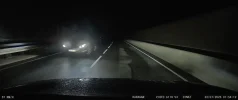
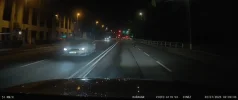
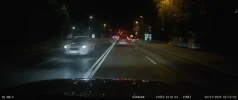
Here's a good example of the difference between having a CPL on your camera or not having one as far as motion blur is concerned.
One of my cameras is a Mobius 1S 2K cam with an 8mm 12 megapixel ƒ/1.8 telephoto lens on it. The camera is custom fitted with a unique 37mm HOYA HD polarizer. HOYA makes the finest polarizers available and this particular one transmits a full
ƒstop more light to the sensor than any other CPL on the market except the even higher quality (and price)
HOYA HD3 HRT polarizer they have come out with since. You can read more about the original HOYA HD polarizer I have on this camera
HERE.
Anyway, here are several screen shots taken with the same camera on different cloudy overcast days. One image was taken without the polarizer yet clearly captures the plate number as the oncoming car and I approached each other at 40+ miles per hour.
The second image was captured on the same road, also at 40+ miles per hour on an overcast day but with the CPL on the camera and you can see that the oncoming car is affected by motion blur. The motion blur with this CPL which performs better than most is noticeable but usually tolerable. I can basically still make out the plate number but not quite so easily. However, you can certainly see the difference between having a CPL on the camera or not in overcast lighting.
Occasionally, with the CPL on the camera the motion blur can be much worse as seen in the third image. What is different in this image is that it is on hour later in the evening and actually darker out but the camera has compensated and so the image doesn't really reveal that.
All in all the superior performance of this CPL in most situations is the reason I went to the trouble of figuring out a way to mount a filter of this size on this particular camera but it is still a CPL and has the same drawbacks as any other.
No CPL
With CPL