How Does It Reduce Windshield Reflections?

Becky_70mai

Member
Manufacturer
Joined
Aug 4, 2025
Messages
49
Reaction score
53
Location
Melbourne
Country
Australia
Windshield reflection is a common issue in dashcam footage, especially when the dashboard is strongly illuminated by direct sunlight. You may notice the dashboard being reflected across the lower part of the image, reducing contrast and making details harder to distinguish.

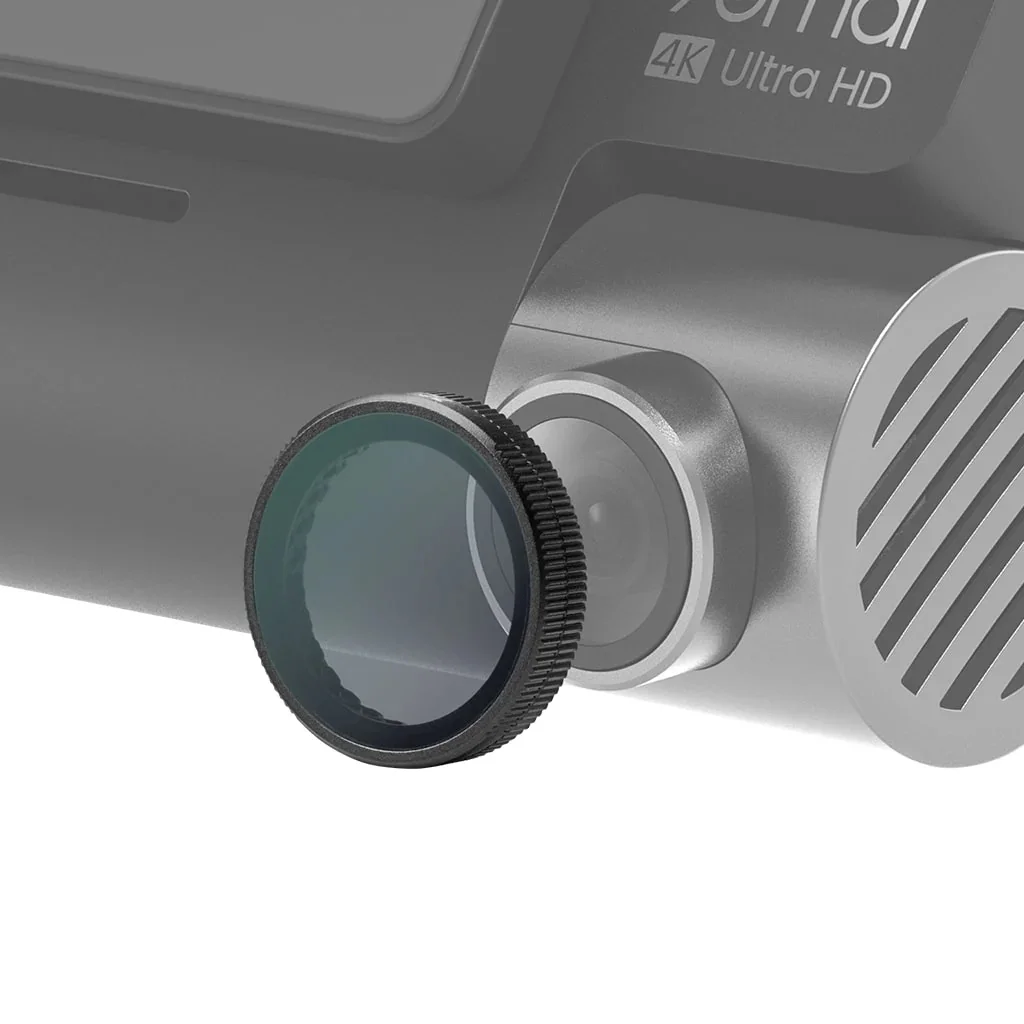
One common solution is a CPL (circular polarizing lens) filter.
1788154998524.webp
 

What does a CPL filter do?​

A CPL filter can help reduce polarized reflected light from surfaces such as glass and dashboards. In dashcam applications, the main benefits are:

  • Reduced windshield/dashboard reflections
  • Improved image contrast
  • Better visibility of details in high-glare conditions
This can be particularly noticeable when driving in direct sunlight.

How does it work?​

A CPL filter blocks certain directions of light, and it mainly reflects light bouncing off flat surfaces like glass or water, especially in directional sunlight scenes. Your dashcam is always shooting through the windshield, which is basically a giant reflective surface. CPL helps clean that up.
 

Is a CPL always necessary?​

The effectiveness depends on several factors, including:
  • Windshield angle
  • Dashboard material and color
  • Cabin geometry
  • Sunlight direction
  • Camera mounting position
Vehicles with a large or light-colored dashboard may show more noticeable reflections, while the effect can be less obvious in some SUVs and trucks.

One Important Detail: CPL Orientation​

A CPL isn't simply an "install and forget" accessory. The filter can be rotated to change the polarization angle. Its effectiveness depends on how it is oriented relative to the windshield and the current lighting conditions.

So after installation, it's worth rotating the filter and checking the live image to find the position that minimizes dashboard reflections.
 
Glass and water polarize light that is reflected off of it at a shallow angle. The shallower the angle, the stronger the polarization.
The reflections can be attenuated by using a polarizing filter aligned perpendicular to the polarization of the reflection, but some cameras malfunction when presented with polarized light.
A circular polarizing filter has a polarizing filter in front of a material that has a different index of refraction for the two polarizations of light. The material is made just thick enough that one polarization is delayed by 1/4 wavelength from the other polarization. The polarization filter is aligned at 45 degrees to the two polarization index of retractions of the material. This results in light where the polarization is spinning. The polarizing filter attenuates the reflections, and the material spins the polarized light. The camera can't tell this spinning polarization from randomly polarized light, so it does not affect its operation.
I don't think that VIOFO cameras really need circular polarizers, I think that was a problem with older SLR cameras. Viofo cameras could probably get away with simple polarizing filters, but I don't think the cost difference is significant.
 
...I don't think that VIOFO cameras really need circular polarizers, I think that was a problem with older SLR cameras. Viofo cameras could probably get away with simple polarizing filters, but I don't think the cost difference is significant.
Correct.

Circular polarizers are needed in SLR cameras in order for the autofocus system to work and no other reason.

Linear polarizers work fine for dash cam use as that's what some members here (myself included) have used for DIY polarizers when camera specific filters were not available. That is what I did when testing the REDTIGER F77 and Virrow X5 cameras:


Linear polarizers work fine for dash cam use as that's what some members here (myself included) have used for DIY polarizers when camera specific filters were not available. That is what I did when testing the REDTIGER F77 and Virrow X5 cameras:

I am interested in how you are making these linear filters and where you got the parts from. I don't use a CPL because I have a dashboard mat that blocks nearly all reflection and glare.
 
I am interested in how you are making these linear filters and where you got the parts from. I don't use a CPL because I have a dashboard mat that blocks nearly all reflection and glare.
Here's a thread I posted some time back when I did my first attempt. I've pretty much followed the same method since - tweaking as necessary for the specific camera involved.

I've been using polarized sunglasses as a material source because I've had them laying around unused but it can be purchased in sheet format and should work just as well, although I haven't actually used it. The Velcro can be purchased just about anywhere.
 
Last edited:
Here's a thread I posted some time back when I did my first attempt. I've pretty much followed the same method since - tweaking as necessary for the specific camera involved.

I've been using polarized sunglasses as a material source because I've had them laying around unused it can be purchased in sheet format and should work just as well, although I haven't actually used it. The Velcro can be purchased just about anywhere.

I have at times pondered if a b/w video with a yellow filter would be beneficial.
 
I have at times pondered if a b/w video with a yellow filter would be beneficial.
Likely not as you need the polarization to remove the reflections. A non-polarized filter will not do that.
 
Likely not as you need the polarization to remove the reflections. A non-polarized filter will not do that.

True about reflections. I was wondering, though, whether the plates and the image in general would be clearer if the video were black and white and we could add an amber, yellow, or orange filter. I was just thinking back to my days of shooting black and white with a Minolta.
 
I still have a little Minolta Dslr lying somewhere, got it in Singapore in 1990, snapper a few pictures on the high seas of the world.
 
True about reflections. I was wondering, though, whether the plates and the image in general would be clearer if the video were black and white and we could add an amber, yellow, or orange filter. I was just thinking back to my days of shooting black and white with a Minolta.
In that context there may be some validity to that approach. I'm not comfortable guessing as to what might happen using a yellow filter on a camera with a color sensor then converting the resulting image/video to B&W.

However, my gut says it should work. I regularly wear yellow glasses (think shooting glasses) around dusk and when driving in the rain and contrast is improved dramatically. I see no reason why the same wouldn't be true for a color sensor.
 
I still have a little Minolta Dslr lying somewhere, got it in Singapore in 1990, snapper a few pictures on the high seas of the world.

Still got mine... this 7S takes some of the best black-and-white photos.
.
.
minolta-7S.webp
.
.
 
In that context there may be some validity to that approach. I'm not comfortable guessing as to what might happen using a yellow filter on a camera with a color sensor then converting the resulting image/video to B&W.

However, my gut says it should work. I regularly wear yellow glasses (think shooting glasses) around dusk and when driving in the rain and contrast is improved dramatically. I see no reason why the same wouldn't be true for a color sensor.

Used to wear them shooting skeet, back in my youth. I can only hit a slow-flying frisbee now; that is about all. 🤣
 
Back
Top