Parking Battery-Power Station, 3X capacity and 3X cheaper than dedicated options + extra functionality

The River 3+ should be working; please check the connections—something must be wrong.

The River 3+, ships with the original 3-pin XT60I charging cable.
Because of this, I was under the impression that it would not work with a regular 2-pin XT60 cable.

However, much to my surprise, the River 3+ actually works with a regular XT60 cable.
Consequently, an XT60 splitter - which allows you to tap into the positive ACC signal - will also work with this power station.

I tested it and recorded a short video:


I think I see the issue on my ecoflow. There is some type of back flow from the solar/car charging input on the ecoflow. I tested the original xt60i cable and a few xt60 cables I had around. With all of them, there is power being output from the solar/car charging input port on the ecoflow. I do have the latest firmware. This has to be why the acc is always on in the setup we are trying to accomplish.

edit: it is about 3.9 volts tested with multimeter directly from the input port on the river 3 plus. Nothing else connected.
 
Last edited:
Oh, that is a known issue with EcoFlow River power stations.
Voltage is present at the XT60 input connector, but there is no actual power (I suspect some internal capacitors)
The voltage is low, though this does not affect Viofo dashcams.
However—for instance—Thinkware dashcams are sensitive to this low voltage and fail to switch into parking mode.
Which dashcam are you using?
See this post, as well as related posts, here:


Please keep in mind that the solutions posted there either do not work or are not particularly reliable.
We have a viable solution utilizing relay somewhere here on forum.
I will try to track it down and post the link here.
 
Oh, that is a known issue with EcoFlow River power stations.
Voltage is present at the XT60 input connector, but there is no actual power (I suspect some internal capacitors)
The voltage is low, though this does not affect Viofo dashcams.
However—for instance—Thinkware dashcams are sensitive to this low voltage and fail to switch into parking mode.
Which dashcam are you using?
See this post, as well as related posts, here:


Please keep in mind that the solutions posted there either do not work or are not particularly reliable.
We have a viable solution utilizing relay somewhere here on forum.
I will try to track it down and post the link here.
Thanks. I am using a black vue and I also tested a red tiger hardwire kit. The backflow seems to trigger the acc for both of those.
 
Here is a link with possible solution I mentioned:


I'm on my lunch break and already rushing back to work.
This linked solution could be simplified/localized.
I'll try to post it here this evening.
 
Here is a link with possible solution I mentioned:


I'm on my lunch break and already rushing back to work.
This linked solution could be simplified/localized.
I'll try to post it here this evening.
Sounds good. Thank you. I was going nuts trying to figure out what was happening.
 
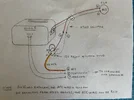
Here is a video demonstrating how to resolve the "phantom voltage" issue on the XT60 input port of the EcoFlow River— that prevents dashcams (such as BlackVue, Thinkware, and Red Tiger) from entering parking mode.
Also attached is the wiring diagram for this solution.

The solution is fully localized, using a 4-pin normally open automotive Relay.
There is no need to search for an ACC power source or a ground connection elsewhere in the vehicle.

I tested this with a multimeter, however, testing with actual dashcams is needed to ensure it works.


Attachments

  • EcoFlow River 3 with a relay providing a clean cutoff of the ACC signal.webp
    EcoFlow River 3 with a relay providing a clean cutoff of the ACC signal.webp
    383.5 KB · Views: 35
Here is a video demonstrating how to resolve the "phantom voltage" issue on the XT60 input port of the EcoFlow River— that prevents dashcams (such as BlackVue, Thinkware, and Red Tiger) from entering parking mode.
Also attached is the wiring diagram for this solution.

The solution is fully localized, using a 4-pin normally open automotive Relay.
There is no need to search for an ACC power source or a ground connection elsewhere in the vehicle.

I tested this with a multimeter, however, testing with actual dashcams is needed to ensure it works.

I will test in a few days to see how it works. I thought I had a relay but had to get one.
 
Here is a video demonstrating how to resolve the "phantom voltage" issue on the XT60 input port of the EcoFlow River— that prevents dashcams (such as BlackVue, Thinkware, and Red Tiger) from entering parking mode.
Also attached is the wiring diagram for this solution.

The solution is fully localized, using a 4-pin normally open automotive Relay.
There is no need to search for an ACC power source or a ground connection elsewhere in the vehicle.

I tested this with a multimeter, however, testing with actual dashcams is needed to ensure it works.

Bench tested both BlackVue and Redriger. Both entering and existing parking mode as intended. Zero reading after installing the relay to the ecoflow. Many thanks. I will add the setup to my truck once I get some time.
 
Thought I'd follow up on my earlier posts here in case my final configuration inspires anyone else...it's a bit of an overkill situation (the story of my life) and it's a long post from a non-expert 😛

Thank you for your long and clear review here. I was curious if you knew if passthrough power starts immediately on the Trail 300 after you turn on your vehicle, if the Trail 300's internal battery is dead?

I understand some users mentioned other models need the internal battery to reach at least 3%+ before the downstream USB-C downstream ports are enabled. Is that about the same for the Trail 300?
 
Thank you for your long and clear review here. I was curious if you knew if passthrough power starts immediately on the Trail 300 after you turn on your vehicle, if the Trail 300's internal battery is dead?

I understand some users mentioned other models need the internal battery to reach at least 3%+ before the downstream USB-C downstream ports are enabled. Is that about the same for the Trail 300?

I have yet to actually fully run down my Trails when I've used them for extended parking mode. But I will do a test in the near future by separately first running down the Trail to maybe 3% before hooking it up so it is a more time-efficient test.

And just to clarify--since I wrote that original post, my setup has changed a bit: front is now A329TC and rear is the original A329. Modified HK6 (no power cutoff) on front and modified HK4 on rear. But otherwise the same and continues to work as expected. I only occasionally have the need to use the battery stations for extended PM, such as when at a local campground (less for security and more hoping to capture some interesting wildlife footage 🙂).
 
Last edited:
Thank you for your long and clear review here. I was curious if you knew if passthrough power starts immediately on the Trail 300 after you turn on your vehicle, if the Trail 300's internal battery is dead?

I understand some users mentioned other models need the internal battery to reach at least 3%+ before the downstream USB-C downstream ports are enabled. Is that about the same for the Trail 300?

Yes--running down the Trail 300 DC to "zero" (screen reports this but of course the BMS is protecting the cells so it isn't a true zero state) naturally deactivates all the output ports. After adding back in vehicle power via the Trail XT60 input, the 12v socket could not be turned on and the USB-C ports did not provide any output immediately. I didn't time it, but once the Trail screen showed 1% charge the outputs then were available again. I tested again inside using a wall USB-C 65w charger and same results with that 1% level (thought maybe input level might make a difference). The delay makes sense in terms of the BMS protecting the cells and not allowing output until a certain charge state is reached.
 
Yes--running down the Trail 300 DC to "zero" (screen reports this but of course the BMS is protecting the cells so it isn't a true zero state) naturally deactivates all the output ports. After adding back in vehicle power via the Trail XT60 input, the 12v socket could not be turned on and the USB-C ports did not provide any output immediately. I didn't time it, but once the Trail screen showed 1% charge the outputs then were available again. I tested again inside using a wall USB-C 65w charger and same results with that 1% level (thought maybe input level might make a difference). The delay makes sense in terms of the BMS protecting the cells and not allowing output until a certain charge state is reached.

Much appreciated for checking this. You didn't need to, but it is very helpful. It does make sense for BMS protection, as I think most lithium battery things (e.g., phones) are doing the same thing these days.
 
Back
Top