

Julian23
Well-Known Member
- Joined
- Nov 16, 2016
- Messages
- 1,344
- Reaction score
- 1,986
- Country
- Germany
- Dash Cam
- Several brands :)
After testing the S1 4K Infinite, I was also in contact with Vueroid and was offered the opportunity to try the S1 QHD Infinite 3CH.
Like its 4K sibling, the S1 QHD Infinite does not use a battery or a supercapacitor.
Instead, Vueroid uses its TFF, or Three Free File, system. It is designed to safely manage recordings without requiring stored backup power to finish writing the final file. When power is disconnected, the camera shuts down immediately.
Another interesting feature is Durashift Parking Mode. If the camera reaches its temperature limit during parking mode, it can shut down and automatically resume recording once it has cooled down enough.
I have already been using the S1 QHD Infinite for the last few months, including parking mode and hot summer conditions. I will cover the results in the following posts.
For now, this post focuses on the specifications, package contents, hardware, and first impressions.
Specifications:
Resolutions:
Unboxing
The box:
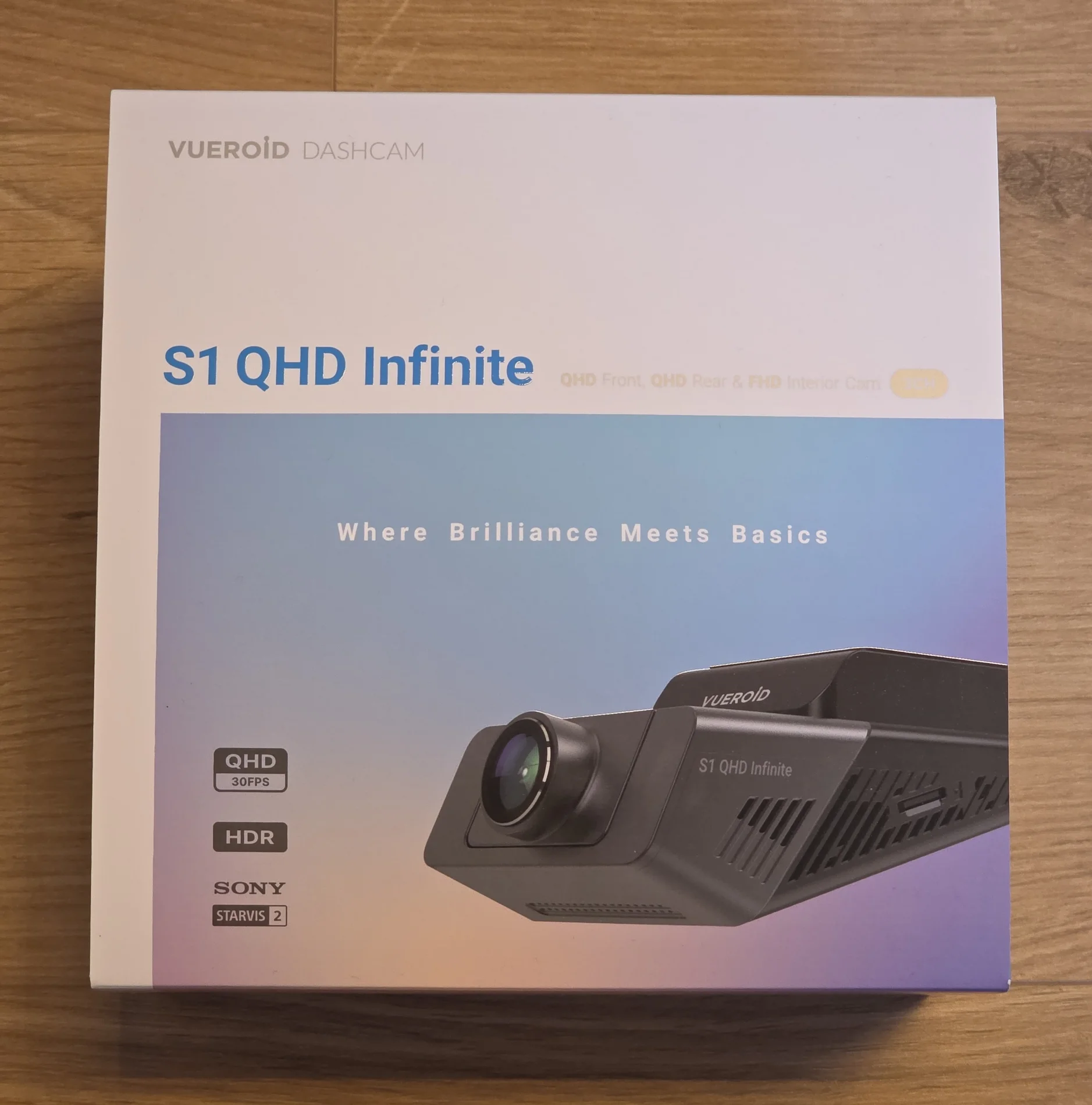
Opening the box, the main camera and the additional components are securely stored inside foam.

Everything included with the S1 QHD Infinite 3CH package:

This is a very complete kit. Vueroid includes the main cameras, connecting cables, hardwire kit, CPL filter, fuse taps, mounting accessories, and installation tools.
There is no need to purchase the most important accessories separately.
The only thing that is required is the SD card. I would recommend at least 256GB to store enough data.
A closer look at the additional camera modules and their cables:
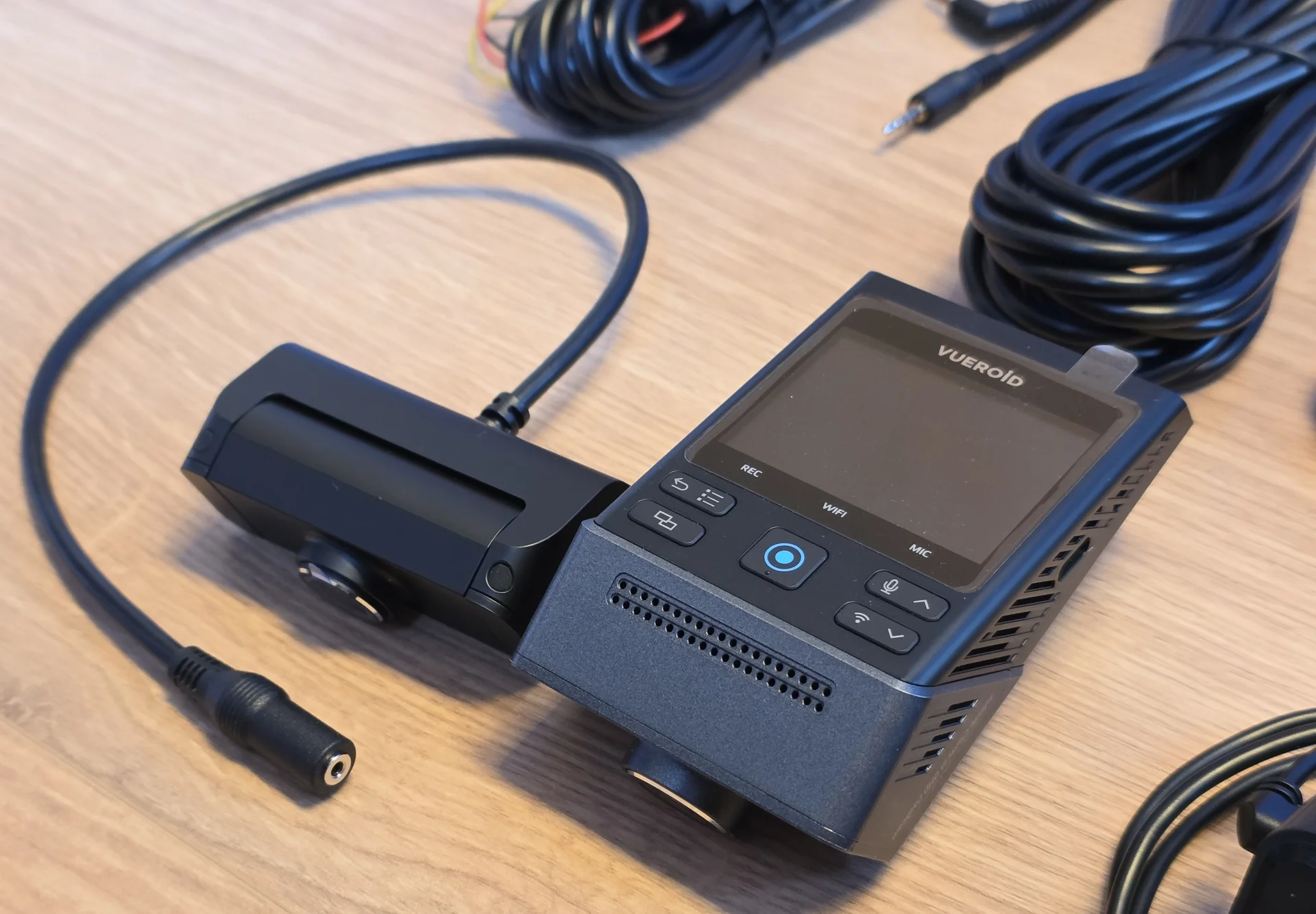
The rear camera is the same unit used with the S1 4K Infinite.
It feels solid and well constructed. However, its adjustment range is mainly designed for installation on angled rear glass.
Mounting it on a completely horizontal surface could make it difficult to aim the lens far enough down. This is worth checking before choosing the mounting position.
The interior camera with IR LEDs:

The supplied cable set:

The package includes the necessary cables for the rear and interior cameras, power supply, and permanent hardwire installation.
The cables feel well insulated and should be long enough for installation in larger vehicles.
The included hardwire kit, fuse taps in various sizes with 5A fuses installed, and installation accessories:

Including the hardwire kit is a significant plus. Vueroid also supplies different fuse taps, which means most users should not have to purchase additional adapters before beginning the installation.
The hardwire kit provides the permanent battery and ignition connections required for the different parking modes.
Battery protection can be configured using both a cut-off voltage and a parking timer.
A CPL filter for the front camera is also included.
This is an important accessory for reducing dashboard reflections and glare from the windshield. Other manufacturers often sell the CPL separately, so it is good to see it included here.
Make sure to remove BOTH protective films before installing the CPL. I do not want to read another thread about blurry footage caused by the second film. 🤣
The S1 QHD Infinite main camera:
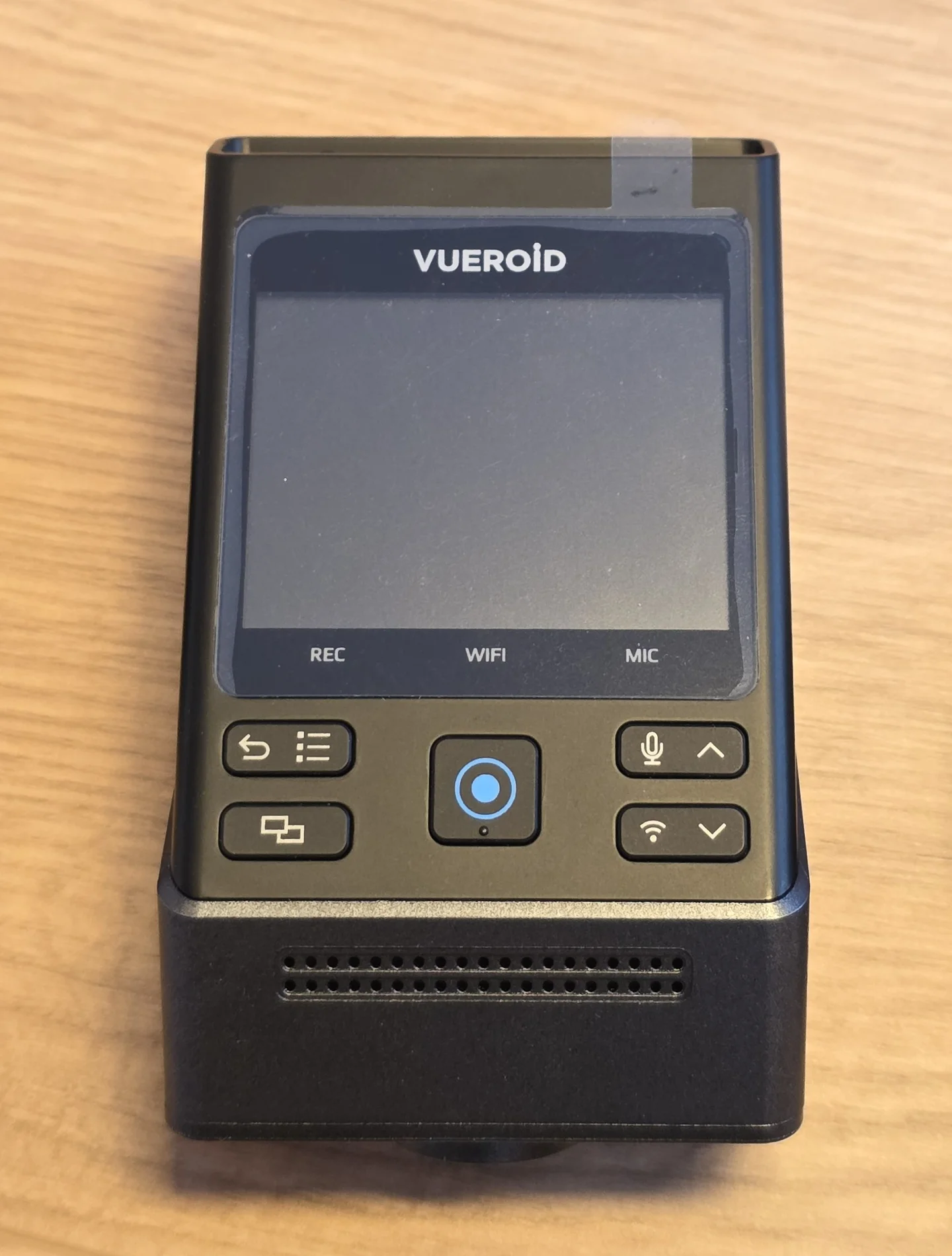
The main unit follows the same general wedge-style design as the S1 4K Infinite.
Despite having a 2.3-inch LCD, it is still reasonably compact. The physical buttons allow the main settings to be changed directly on the camera without always having to open the app.
The windshield-facing side with the adjustable lens and adhesive mounting area:

The lens can be adjusted after the camera has been attached to the windshield. This gives enough flexibility for different windshield angles and mounting positions.
Side view of the housing:

There are large ventilation openings around the housing.
Heat management is particularly interesting with this camera because, like the S1 4K Infinite, it does not contain a battery or supercapacitor.
Removing these components eliminates two parts that are normally sensitive to high temperatures. However, the image sensor, chipset, and the rest of the electronics still have to deal with the heat.
When power is removed, the S1 QHD Infinite shuts down immediately. Vueroid's TFF file system is designed to handle this without requiring stored backup power to finish saving the final recording.
First Impressions
The main unit feels solid and well constructed. The housing does not feel cheap, the buttons are easy to reach, and the port labeling makes the installation straightforward.
The 2.3-inch display is useful for the initial setup, checking the camera angle, and changing settings directly on the device.
The package is also more complete than many competing kits. The CPL filter, hardwire kit, fuse taps, spare adhesive pads, and installation tools are already included.
The rear camera adjustment range may limit a few unusual mounting positions, but it should work without issues when installed on an angled rear window as intended.
The lack of a battery or supercapacitor is obviously one of the most interesting parts of the S1 QHD Infinite.
On paper, the TFF system and Durashift Parking Mode offer a different approach to file protection and heat management.
The important question is how well all of this works in real use.
In the next posts, I will cover:
Like its 4K sibling, the S1 QHD Infinite does not use a battery or a supercapacitor.
Instead, Vueroid uses its TFF, or Three Free File, system. It is designed to safely manage recordings without requiring stored backup power to finish writing the final file. When power is disconnected, the camera shuts down immediately.
Another interesting feature is Durashift Parking Mode. If the camera reaches its temperature limit during parking mode, it can shut down and automatically resume recording once it has cooled down enough.
I have already been using the S1 QHD Infinite for the last few months, including parking mode and hot summer conditions. I will cover the results in the following posts.
For now, this post focuses on the specifications, package contents, hardware, and first impressions.
Specifications:
Resolutions:
- Front Camera: QHD (2560 x 1440) @ 30fps
- Rear Camera: QHD (2560 x 1440) @ 30fps
- Interior Camera: FHD (1920 x 1080) @ 30fps
- Front Camera: S SONY Starvis2 (IMX675)
- Rear Camera: SONY Starvis2 (IMX675)
- Interior Camera: STARVIS (IMX307)
- Front Camera: 160°
- Rear Camera: 160°
- Interior Camera: 170°
- HDR on the front, rear, and interior cameras
- Infinite Plate Capture Mode on the front camera
- Premium Night Vision Mode on the front camera
- AI License Plate Restoration
- AI Privacy Protection
- Built-in Wi-Fi
- Built-in GPS
- Vueroid HUB App
- Vueroid PC Viewer
- 2.3-inch LCD
- microSD cards up to 512GB
- Vueroid recommends using 256GB or larger
- TFF Three Free File System
- DC 12V
- DC 5V through USB-C
- No battery
- No supercapacitor
- Extreme Low Power Mode
- Impact and Motion Detection
- Impact and Timelapse
- Auto REC Off Zone Mode
- Durashift Parking Mode
- Adjustable battery cut-off voltage
- Adjustable parking timer
- -20°C to 65°C
- Adhesive
- H.264
Unboxing
The box:
Opening the box, the main camera and the additional components are securely stored inside foam.
Everything included with the S1 QHD Infinite 3CH package:
This is a very complete kit. Vueroid includes the main cameras, connecting cables, hardwire kit, CPL filter, fuse taps, mounting accessories, and installation tools.
There is no need to purchase the most important accessories separately.
The only thing that is required is the SD card. I would recommend at least 256GB to store enough data.
A closer look at the additional camera modules and their cables:
The rear camera is the same unit used with the S1 4K Infinite.
It feels solid and well constructed. However, its adjustment range is mainly designed for installation on angled rear glass.
Mounting it on a completely horizontal surface could make it difficult to aim the lens far enough down. This is worth checking before choosing the mounting position.
The interior camera with IR LEDs:
The supplied cable set:
The package includes the necessary cables for the rear and interior cameras, power supply, and permanent hardwire installation.
The cables feel well insulated and should be long enough for installation in larger vehicles.
The included hardwire kit, fuse taps in various sizes with 5A fuses installed, and installation accessories:
Including the hardwire kit is a significant plus. Vueroid also supplies different fuse taps, which means most users should not have to purchase additional adapters before beginning the installation.
The hardwire kit provides the permanent battery and ignition connections required for the different parking modes.
Battery protection can be configured using both a cut-off voltage and a parking timer.
A CPL filter for the front camera is also included.
This is an important accessory for reducing dashboard reflections and glare from the windshield. Other manufacturers often sell the CPL separately, so it is good to see it included here.
Make sure to remove BOTH protective films before installing the CPL. I do not want to read another thread about blurry footage caused by the second film. 🤣
The S1 QHD Infinite main camera:
The main unit follows the same general wedge-style design as the S1 4K Infinite.
Despite having a 2.3-inch LCD, it is still reasonably compact. The physical buttons allow the main settings to be changed directly on the camera without always having to open the app.
The windshield-facing side with the adjustable lens and adhesive mounting area:
The lens can be adjusted after the camera has been attached to the windshield. This gives enough flexibility for different windshield angles and mounting positions.
Side view of the housing:
There are large ventilation openings around the housing.
Heat management is particularly interesting with this camera because, like the S1 4K Infinite, it does not contain a battery or supercapacitor.
Removing these components eliminates two parts that are normally sensitive to high temperatures. However, the image sensor, chipset, and the rest of the electronics still have to deal with the heat.
When power is removed, the S1 QHD Infinite shuts down immediately. Vueroid's TFF file system is designed to handle this without requiring stored backup power to finish saving the final recording.
First Impressions
The main unit feels solid and well constructed. The housing does not feel cheap, the buttons are easy to reach, and the port labeling makes the installation straightforward.
The 2.3-inch display is useful for the initial setup, checking the camera angle, and changing settings directly on the device.
The package is also more complete than many competing kits. The CPL filter, hardwire kit, fuse taps, spare adhesive pads, and installation tools are already included.
The rear camera adjustment range may limit a few unusual mounting positions, but it should work without issues when installed on an angled rear window as intended.
The lack of a battery or supercapacitor is obviously one of the most interesting parts of the S1 QHD Infinite.
On paper, the TFF system and Durashift Parking Mode offer a different approach to file protection and heat management.
The important question is how well all of this works in real use.
In the next posts, I will cover:
- Installation and initial setup
- Daytime image quality
- Nighttime image quality
- Plate capture
- Motion detection
- Parking mode
- Heat management
- App reliability
- Audio quality
- Firmware support
- Final pros and cons


