LiFePO4 as second battery with charge controller

Joined
Feb 7, 2025
Messages
56
Reaction score
22
Location
Austin
Country
United States
Hey folks, I see there are several threads about custom battery packs but I'm considering something different. I just got a 2014 Honda Odyssey with a lot of storage space in the rear including a big opening that would be perfect for a sealed battery.

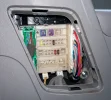
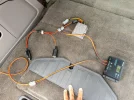
I'm considering using one of those big rectangular LiFEPO4 batteries as a second battery to run my cameras, at least the ones at the rear and sides. Currently I have a 12 volt RF remote control hardwired with a fuse tap on the rear fuse box. I just switch them on when I get in the car, and switch them off when I get home. But I want to add a second battery for two reasons, the power dip on engine start that causes my Viofos to reboot, and so I don't have to worry at all about draining the main battery.

I may also add a solar panel to help keep the battery topped charged if I leave it parked for several days, for example at the airport.

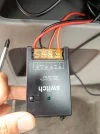
Can anyone recommend a charge controller that would work a battery like the 12.4 one pictured below? Features I would need are:

Ability to limit charging amps so as not to overload fuse tap
Ability to connect a solar panel separately from the vehicle DC input
Management for LiFePO4 chemistry
Power output terminals to make wiring easier (nice to have)

Thanks!

 

Attachments

  • APC_5144-2.webp
    APC_5144-2.webp
    522.1 KB · Views: 178
  • APC_5610.webp
    APC_5610.webp
    381.5 KB · Views: 168
  • 472258924_18480665665032473_5227183172070731333_n.webp
    472258924_18480665665032473_5227183172070731333_n.webp
    113.6 KB · Views: 125
  • APC_4873.webp
    APC_4873.webp
    821.9 KB · Views: 164
  • APC_5478.webp
    APC_5478.webp
    890.5 KB · Views: 148
Here are couple of ways to charge the aux battery with DC-DC and Solar.

First - you can use special dual input MPPT charge controller like shown in a links, but I am not sure if max current is adjustable:
https://www.amazon.com/gp/B0BZCXNHDV
https://www.amazon.com/gp/B08X6HH5GW


Second – it is more like DIY, you can use 5 pin 12V automotive Relay and MPPT charge controller, here is a principal diagram how it can be connected:

1739560627930.webp


In any case, I personally do not recommend to pull power from fuse box, unless you can control/limit the current and you know what you are doing.
The best and the safest option is to go directly to alternator/car battery:
Here is link how it can be done:

 
Last edited:
Here are couple of ways to charge the aux battery with DC-DC and Solar.

First - you can use special dual input MPPT charge controller like shown in a links, but I am not sure if max current is adjustable:
https://www.amazon.com/gp/B0BZCXNHDV
https://www.amazon.com/gp/B08X6HH5GW


Second – it is more like DIY, you can use 5 pin 12V automotive Relay and MPPT charge controller, here is a principal diagram how it can be connected:

View attachment 77760

In any case, I personally do not recommend to pull power from fuse box, unless you can control/limit the current and you know what you are doing.
The best and the safest option is to go directly to alternator/car battery:
Here is link how it can be done:


Thanks! I was hoping to use the fuse box because there's not a good way to route a wire into the cab from the battery but I might have to figure out a way.

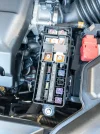
Can I use a terminal on the under-hood fuse box? I think that's what those orange parts are. But I don't know which ones, if any are + vs ground and my multimeter is in storage.
 

Attachments

  • APC_4864.webp
    APC_4864.webp
    720.7 KB · Views: 148
  • APC_4862.webp
    APC_4862.webp
    819.8 KB · Views: 152
Or could I use the red jump start terminal as a power source?
I don't know, may be, I guess it is directly connected to positive terminal of the battery, not sure how it is fused.
My Jeep has a jump start terminal, but I never paid attention to how it is wired.
My battery is in the cabin, which is more convenient to connect to, while the jump starter terminal is in engine compartment.
 
If you get it, be sure to share with us so we can see it operating.
 
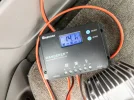
I took a chance on a Renogy Wanderer 10a solar charge controller because it was pretty cheap. ChatGPT had warned me that it would expect a higher voltage, but I couldn't find any definitive info. It turns out it really doesn't charge the battery at only 14V input from my fuse box! The LifePO4 battery is supposed to charge at 14.2v-14.6v and I don't think the Renogy has any step up capability.
 

Attachments

  • APC_5616.webp
    APC_5616.webp
    570.8 KB · Views: 142
So it won't charge?

If you like ChatGPT, give Perplexity a try, I find it works better for questions where internet searches are involved. It didn't do too well on the voltage question though.
 
I took a chance on a Renogy Wanderer 10a solar charge controller because it was pretty cheap. ChatGPT had warned me that it would expect a higher voltage, but I couldn't find any definitive info. It turns out it really doesn't charge the battery at only 14V input from my fuse box! The LifePO4 battery is supposed to charge at 14.2v-14.6v and I don't think the Renogy has any step up capability.
The so-called 12 volt Solar panel open circuit voltage can be around ±24V and is usually around ±17V under load, so your Renogy Solar Charge Controller expects around ±17V or higher input. (I think the output voltage can be adjusted)
You can probably use it with a boost/step-up converter, but that will be an unnecessary complication and the efficiency of the system will be low.
You really need a 12V, DC to DC charger, or MPPT Solar charger that can work at lower voltage input.
If you still need both a DC input and a Solar input, a dual input Charge controller is the simplest and the best option.

Some DC-DC chargers can accept low input current from the solar panel, some MPPT chargers can accept lower input voltage, if you find one of those, you can use a relay to automatically switch between DC and solar panel, it's a bit more DIY work though.
 
I decided to try a step up converter because it's only $21. And any charge controller that can take 12v and charge at 14.4v would have an internal step up anyway so it should be similar efficiency. I'm going to replace the 40 amp fuse with a 10 amp one and connect it to a switched cigarette lighter port

1740151061803.webp
 
It works! There's one weird thing, the voltage shown on the charge controller is 14.1v "PV Voltage". I don't know why it's not 24v. I understand a solar panel would have a big drop when you put a load on it, but this is supposed to do 24v 15 amps constant.

Or maybe it's showing charge voltage. Either way, the battery is charging and shows 13.9V
 

Attachments

  • APC_5793.webp
    APC_5793.webp
    933.8 KB · Views: 160
  • APC_5801.webp
    APC_5801.webp
    560.7 KB · Views: 163
  • APC_5798.webp
    APC_5798.webp
    623.1 KB · Views: 147
I spoke too soon! The buck converter blew my cig lighter fuse. I'm surprised it drew enough amps to do that because the charge controller only does 12v 10a or 120w. Even with losses, I didn't expect the buck converter to pull 15 amps.
 
Your Renogy charger has a 10A output charging current.
For simplicity, let's assume that the car's alternator output voltage and the Renogy's output voltage are roughly the same.
Conservatively, let's assume that the charger and voltage converter are each about 0.9 efficient, then the total efficiency is 0.9 x 0.9 = 0.81, then your system will draw 10A / 0.81 = 12.35A from the fuse box!
In reality, your booster/charger efficiency may be less, and there will be some additional losses due to wire losses etc., so you could easily draw around 15A from the fuse box.
You don't want to draw that much current from the fuse box, you risk damaging something or melting the wires and even causing a fire.
If you still want to keep/use this booster/charger (which I don't t recommend), you should connect it directly to the car battery/alternator using a 12V automotive relay, and only the relay's control wire can be connected to the ACC positive in the fuse box. (the wiring diagram is in a link in my post#2)
 
I spoke too soon! The buck converter blew my cig lighter fuse.
You’re gonna live up to your username…

That’s WAAAAY too much current from a utility port. This is why @GPak linked my advice to go directly to your battery…
 
Unfortunately I can't find a path to route a wire through the firewall. There's a grommet under the brake booster but I can't get to it without removing half the parts in the engine bay.
 
To get to the rubber grommet on my son’s Mustang, we had to jack up the front passenger corner, remove the wheel, remove the wheel well liner, and then remove the battery. It was a project for sure, took more than 2 hours just to run the wire. The rest was cake!
 
Back
Top