Parking Battery-Power Station, 3X capacity and 3X cheaper than dedicated options + extra functionality

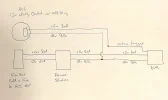
UPS has two modes "auto mode" and "external mode", those wires are for "external mode" (mode B), honestly I didn't even bother to check how mode B works, for auto mode they are not needed/used and simply taped and coiled.
Auto mode (mode A) works like regular UPS/relay, preferred power is ACC, when ACC is OFF auto switching to Battery power.

BTW, today I was playing with it and now it is not working for A229 Plus (very demanding Dash cam), but still works with Mini2, like slower relay, somehow transfer speed disappeared, I am not sure what I did, may be revers powered it accidentally and damaged something inside.
 
Thanks for the additional relay details. I'm using an A139Pro 2-ch recorder and just ordered two of those relays. Here's hoping you haven't just come across a quality issue with their design or manufacturing. There aren't too many relay boards that will run on 5v.

This is my 5v wiring diagram (largely a copy of your original diagram), thanks for leading the way!
DashCam 5v Wiring1.webp
 
Last edited:
This is my 5v wiring diagram ...
Looks perfect!
I'm very curious, how these UPS/relays will work with the A139 Pro, 2ch. (I'm guessing you ordered a cheap one and relatively expensive one)
Please, post the final installation pics/video when all done.
 
I'll let you know how the relays perform when they arrive on Friday. I didn't order any of the $5 relay boards, the reviews say they take close to a full second to make the switch over once the primary power source is shut off.

I also re-ran the power cord above the headliner (and out of the way of the side curtain airbag) on the passenger side of the car (instead of under the doors). This allowed me to shorten the wire significantly (for less voltage drop) so the dashcam will run off of the 5v00 that comes out of the EcoFlow unit. The longer power cable wasn't a problem when using the Viofo USB cigarette lighter power adapter because it provide closer to 5v30.

I'll post a few images of the final implementation in the trunk.
 
All of my wiring is done except for the power relay that is supposed to arrive tomorrow. I cut some horizontal slots into the trunk liner with my dremel and run a 2" velcro strap for each side of the power station's carry handle.

IMG_09262.JPG


The power cord for the dashcam drops down into the trunk as seen below:

IMG_09266.JPG


This image is looking at the back side of the rear seats, I figured that was the most secure place for the power station so if I need to hit the brakes hard, it won't go flying across the trunk. The fat black cord in the middle with the yellow connector is the fused charging cable for the power station. The single black wire is the 5v trigger for parking mode vs normal record mode that comes from the USB adapter in the utility outlet, and the black wire bundled with the yellow wire is the three-wire direct run to the dashcam on the front windshield that I snaked above the headliner yesterday.

After installing the power station and connecting the velcro straps, it looks like this:
IMG_09333.webp


The handle in the back not only provides a good place to secure the power station, but because it sticks out a bit, it also makes sure that the cooling fan always has breathing room. The only remaining work is to install the relay tomorrow afternoon. I'm thinking I'll zip tie the relay box to the frame of the car on the ceiling of the trunk directly above the power station. This will allow me to shorten the 3-conductor power cable to the dash cam, shorten and attach the 5v drive/parking mode trigger wire from the utility port on the right side of the image, and then add the last short 5v USB cable from the front of the power station to the relay above for parking mode power. The velcro holds very securely and does a nice job keeping the power station from sliding around. Turns out that the velcro strap I purchased also sticks rather well to the trunk trim panels. Nice bonus there...

This should be a "set it and forget it" configuration. The dashcam and power station will both come on when I start the car in the morning. The power station will charge on the way to work (though it's only a 10-15 minute drive). The dashcam will record all day and when the car goes back into the garage at the end of the day, I'll manually turn off the camera. Might need to charge the power station at the end of the week, but that's fine.

Final images tomorrow.
 
Last edited:
I started off today thinking it would only take me 30 mins to cut the wires to length, strip the ends, secure them in the relay, then secure the relay to the trunk frame. Ha, if only it was that easy. It's funny what you can learn from failure...

So, the good news is that the relayed works well with 5v sources. Switching goes well, but either the switch speed is no where near as fast as they claim, or the camera is not happy with the change in input voltage. Switching from ignition mode (5v3) to parking mode with the River 2 (5v0), the camera shuts down and then powers up again. This isn't as smooth and seamless as going in and out of parking mode on the same voltage level where the camera just announces that it's in parking mode or that two channels are recording.

But then the symptoms got worse. The camera isn't happy at all with different voltage levels when switching back and forth from ignition mode to parking mode. The 5v USB cigarette socket adapter that came with the Viofo puts out about 5v3 volts while the EcoFlow River 2 USB port provides exactly 5v00. Turns out that 0v3 difference is pretty important to the camera. If I run the camera from the River 2 USB at 5v00, the camera works fine. I can repeatedly make the camera switch in and out of parking mode by connecting the yellow wire to the red wire and removing it again. No power cycling, it works great. The same is true for using the Viofo USB adapter that provide 5v3. By touching and removing the yellow wire to the red wire, the camera goes in and of parking mode repeatedly, exactly as expected. Using both power supplies with the relay, though, the camera will handle the switch from 5v3 to 5v0 when it transitions from driving mode to parking mode, but only one time. Once the camera enters parking mode with a reduced input voltage (transition from 5v3 with the engine running to 5v0 from the River 2), it refuses to come OUT of parking mode. When I switch back to the 5v3 power supply that activates with the car's ignition, it just stays in parking mode. Nothing else happens until I do a full power down. Total bummer...

I also discovered another interesting behavior. The yellow wire seems to cause some issue with the relay I purchased. I'm thinking this is because the relay has a microcontroller and the yellow wire "crosses over" from the relay's output terminals to the input terminals, but it messes a little with the LED indicators on the relay.

My overall conclusion from the day is that I need to abandon my idea for running the whole system on 5v. This is rather disappointing.

I'm thinking I need to reattach the Viofo voltage regualtor to the power cord and switch to using a 12v wiring configuration. I wanted to use a 5v configuration because that's what the River 2 will provide automatically as soon as it powers up with the car. Using the River 2's 12v system requires manual intervention from me, which is not ideal, but workable.

So, it looks like there are two options:
1) use the 12 utility output on the River 2 and have to manually turn it on/off each time, or
2) use a 5v to 12v converter that will fit into the UBS port on the River 2 and connect the 12 into the Viofo voltage regulator.

Playing around with the Viofo voltage regulator and a bench power supply, I learned that the regulator provides a very consistent 5v26 output, pretty much regardless of the input voltage. The regulator IC they use in the little box seems to require very little headroom (about 0v15) which is pretty impressive coming from the context of discrete regulators that I'm more accustomed to using.

Any thoughts about the reliability or feasibility of the 5v to 12v converters? I'm not excited about adding another voltage converter into the power supply chain.

Sigh...
 
Last edited:
My overall conclusion from the day is that I need to abandon my idea for running the whole system on 5v. This is rather disappointing.
Why are you using that relay in the middle? I'm running my a229 pro on the ecoflows usb port without any relay.
I modified your diagram to mimic my setup.
 

Attachments

  • relay.webp
    relay.webp
    180 KB · Views: 189
Last edited:
Hmmm…. Guess my thought was to bypass the River 2 in the event that it was too hot or too cold for it to function. The relay provides that ability and the video that GPak posted showed it working with a 12v configuration.

Removing the relay simplifies the configuration, which is a plus. I also discovered with the River 2 that drive mode consumes 6w, while parking mode consumes only 4w. That looks like it might provide closer to 50 hours of record time.
 
Hmmm…. Guess my thought was to bypass the River 2 in the event that it was too hot or too cold for it to function.
Ditch the relay for now and wire it up without it, then maybe look for some faster switching relay later if you actually run into those issues. Or worst case just plug it into the 12v usb charger, doubt you'll be doing that often.
 
......
So, the good news is that the relayed works well with 5v sources. Switching goes well, but either the switch speed is no where near as fast as they claim, or the camera is not happy with the change in input voltage. Switching from ignition mode (5v3) to parking mode with the River 2 (5v0), the camera shuts down and then powers up again. This isn't as smooth and seamless as going in and out of parking mode on the same voltage level where the camera just announces that it's in parking mode or that two channels are recording.

But then the symptoms got worse. The camera isn't happy at all with different voltage levels when switching back and forth from ignition mode to parking mode. The 5v USB cigarette socket adapter that came with the Viofo puts out about 5v3 volts while the EcoFlow River 2 USB port provides exactly 5v00. Turns out that 0v3 difference is pretty important to the camera. If I run the camera from the River 2 USB at 5v00, the camera works fine. I can repeatedly make the camera switch in and out of parking mode by connecting the yellow wire to the red wire and removing it again. No power cycling, it works great. The same is true for using the Viofo USB adapter that provide 5v3. By touching and removing the yellow wire to the red wire, the camera goes in and of parking mode repeatedly, exactly as expected. Using both power supplies with the relay, though, the camera will handle the switch from 5v3 to 5v0 when it transitions from driving mode to parking mode, but only one time. Once the camera enters parking mode with a reduced input voltage (transition from 5v3 with the engine running to 5v0 from the River 2), it refuses to come OUT of parking mode. When I switch back to the 5v3 power supply that activates with the car's ignition, it just stays in parking mode. Nothing else happens until I do a full power down. Total bummer...

I also discovered another interesting behavior. The yellow wire doesn't seem to be just an input trigger for parking mode vs drive mode. It also carries a signal voltage out of the camera. When the camera is on and the yellow wire is not connected, it carries a 0v1 signal with respect to the black wire and a -4v7 with respect to the red wire while the camera is in parking mode. This voltage seems to cause some issue with the LEDs on the relay because it "crosses over" from the relay's output terminals to the input terminals.

My overall conclusion from the day is that I need to abandon my idea for running the whole system on 5v. This is rather disappointing.

I'm thinking I need to reattach the Viofo voltage regualtor to the power cord and switch to using a 12v wiring configuration. I wanted to use a 5v configuration because that's what the River 2 will provide automatically as soon as it powers up with the car. Using the River 2's 12v system requires manual intervention from me, which is not ideal, but workable.

So, it looks like there are two options:
1) use the 12 utility output on the River 2 and have to manually turn it on/off each time, or
2) use a 5v to 12v converter that will fit into the UBS port on the River 2 and connect the 12 into the Viofo voltage regulator.

Playing around with the Viofo voltage regulator and a bench power supply, I learned that the regulator provides a very consistent 5v26 output, pretty much regardless of the input voltage. The regulator IC they use in the little box seems to require very little headroom (about 0v15) which is pretty impressive coming from the context of discrete regulators that I'm more accustomed to using.

Any thoughts about the reliability or feasibility of the 5v to 12v converters? I'm not excited about adding another voltage converter into the power supply chain.

Sigh...
If UPS/relay is not working with 5V it is not going to work with 12V either.
Mine, when it was working, it was working with 5V and 12V and it was difficult to notice any blinking, switching from normal to parking mode and wise versa, camera would not shut down and re-start, that is not good.
0.1V on Yellow "cross over"" cable is too small and should not effect UPS behavior, since it requires 5V min to operate.
Just to rule out this, remove Yalow wire from UPS and run the system without it, see if power switches between battery and ACC without camera shutting down and turning on again.
Finlay to rule out voltage starvation, you can try to use something like this:
https://www.amazon.com/gp/B08HXR6KQB
https://www.amazon.com/gp/B07P41V4X9
https://www.amazon.com/gp/B076KP6KVL

Adjust output voltage to 5.5 or 6V, I tested camera with high voltages and camera will work with up to 6V input after that it will simply shut down (Over voltage protection I guess). If you set it to 6V by the time it reaches the camera it will be somewat less due to voltage drop in cables.
I would test this myself, but I do not have working UPS/Relay on hand now.

Keep in mind adding any booster to output, adds about 10% to parking consumption i.e. if 2ch regular parking consumption is 5W then it will incrise to 5.5W
If you boost 5V to 12V to use HK4 voltage regulator then parking consumption will increase due to 5 to 12V converter by 10% and also by HK4 regulator staping down from 12V to 5V by another 10% for total approx 20%, i.e. it will go up from 5W to 6W as an example.
 
Last edited:
Why are you using that relay in the middle? I'm running my a229 pro on the ecoflows usb port without any relay.
I modified your diagram to mimic my setup.
To de-couple power supply to camera, basically camera will work like connected directly to car electrical system, completely by-passing the power station when ACC is ON.
You will always have working camera with ACC on regardless Power station condition.
And it also improves charging rate by Camera's power consumption amount - approx by 6W

BTW, on the schematic you showed, what is your charging rate?
Try to disconnect that ACC Black wire from Battery Black wire and check if charge rate improves or degrades.
My charging rate when Black is connected like that is about 40W vs 65W when disconnected.
 
BTW, on the schematic you showed, what is your charging rate?
Try to disconnect that ACC Black wire from Battery Black wire and check if charge rate improves or degrades.
My charging rate when Black is connected like that is about 40W vs 65W when disconnected.
That’s a curious impact from grounding. I’ll have to check the charging rates on the app and see how they compare with different grounding arrangements. More experimenting to come…
 
to rule out voltage starvation, you can try to use something like this:
https://www.amazon.com/gp/B08HXR6KQB

Nice find, thanks! I didn't see that when I looked for voltage converters. I just ordered one and will tweak the pot so that voltages match from different sources and see if that impacts the behaviors.
 
After more playing around with the relay configuration, it seems that there are several possibilities that could be causing the dashcam to not come out of parking mode when the yellow line is re-energized with a 5v signal:

1) the dashcam is unhappy with the momentary interruption in the power supply due to the relay disconnecting then reconnecting a power supply again.
2) the dashcam is unhappy with the difference in voltage - the EcoFlow provides 5v0 and the Viofo USB adapter plug provides 5v3
3) something screwy is going on with the micro controller in the relay box because the yellow wire is "crossing over" from the output side to the input side

So, I'm going to try two different things to help eliminate variables here:

1) I've ordered the adjustable DC-DC converter board that GPak pointed out. It should arrive on Wed and I'll use it to adjust the output of the EcoFlow so it matches the output of the Viofo USB adapter plug. This may or may not make a difference.
2) I'll pick up another relay that does not have a micro controller built in. I've used a T92S11D22-12 DPDT relay from TE Connectivity for another project and I've found them to be very reliable (they only cost $11 when I first purchased them). Yes, it's total overkill for this application (way high voltage and current ratings), but it has quick connect terminals for easy hook up and comes in a large, non-fragile package that I can directly mount in the trunk or in a small project box without any fuss. The coil works on 9-12v and has a 45ms switch time. Part of my thinking is that the 5v relay from Amazon is getting the micro controller "confused" because the circuit that activates the relay coil shares the same terminals for one of the voltage inputs - that is it has "only" 6 terminals instead of more normal 8 terminals for a "bare" DPDT relay which keeps the coil activation circuit completely separate from the switched terminals. If the dashcam is reacting to the momentary drop in power caused by the relay, Omron makes a number of nice 12v relays that have activation times closer to 4-5ms, or I can add a small cap to the output without it interfering with the switching function of the "smart" relay. Over the years, I've become rather disappointed by "smart" devices that don't actually function in a way that I consider to be useful or smart at all...

These two different devices should allow me to determine whether it is a voltage difference or switching logic (or time) that is causing the problem for my wiring configuration. I'll be sure the share what I learn shortly. Have to wait on deliveries. One way or the other, I'll be able to figure this out. If the voltage equalization adjustment board doesn't do the trick, the overpriced $30 relays from Amazon are going back.
 
Last edited:
I have a feeling i might need a boost converter too, sometimes when i press the lock button the camera reboots and when i was just turning on the wifi to connect to it it shut off. My cable is definitely longer than the original one by about 2 feet, the 5.00v from the ecoflow is probably much lower by the time it gets to the camera.
I have a few of these laying around https://www.amazon.com/gp/B094D6JPXP will add it inline the usb cable.
 
Last edited:
I would agree, sounds like events that cause the camera to draw more current are dropping the camera below the operating voltage threshold. My installed hardwire cable is shorter than the original hardwire cable by about one foot. It would be interesting to see how much voltage is actually reaching the camera in the front of the car. I have a nifty little USB-A device that measures voltage and current draw, but I don't have one that fits the USB-C form factor.

On the plus side, 5 hrs of parking mode today only consumed 10-11% of the EcoFlow battery capacity. If it's a linear decline, that means the battery should last close to 45 hours.
 
Little update for today. The cool DC-DC converter that GPak pointed out arrived today - though it looks like they doubled the price since I ordered it on Sunday, pretty sure that I paid $3.94 for it and now it's $7.20. I spent some time fiddling with it before I discovered that you need to put a load on it before it provides an actual usable output voltage. So after poking through my parts box, I found three 6w 20R power resistors that I soldered together in parallel. This provided the same power draw as the dashcam in parking mode (5w). The board uses a 25 turn pot, so it took a little while before I saw the voltage start to rise. It took so long, I was starting to think it didn't work. Once the voltage started to rise, the adjustment was VERY sensitive. With it plugged into the EcoFlow box, it was rather tedious going back and forth to dial in the requisite 5v25 that the Viofo USB power converter provides. Tomorrow, I'll rewire things and try the "smart" relay again to see if it switches properly between driving mode and parking mode now that both input voltages will be identical. I'm a little skeptical that this will work - I'm still thinking that the logic of the smart relay is getting tripped up by the yellow wire crossing over from the output terminals to the input terminals.

My heavy duty relay is supposed to arrive tomorrow, so one way or another, I'll get the wiring all sorted out. If the dashcam isn't happy with the voltage switch over with the heavy duty relay, I'll add a small cap to the output side that should maintain the camera during the 25ms switch over time.

One step at a time...

IMG_09286.JPG
 
@EricSan
On Voltage:
I believe DVR is not that sensitive to voltage as long as voltage is not too low or to high, usually it is too low.
I would set the voltage at about 5.5V, it doesn't have to be precise, you just need to make sure there is no power/voltage starvation.
On the Yellow wire:
It is easy to check, remove Yellow wire from UPS/Relay preferred positive input and connect to output positive with Red wire, turn ON/OFF "ignition" and see if UPS/Relay works fast enough to keep camera going without shutting down and rebooting.
I think the problem is UPS/Relay switching speed, which supposed to be 7 millisecond. Regular relays are not that fast.
I will order that UPS to replace the one I burned and check again.
 
I did find a few small Omron relays that boasted a 4ms actuation time, but I went with the larger form factor relay for ease of mounting. I’ll play with sensitivity analysis tomorrow and see what happens. I think the wiring configuration is a bit more sensitive since I snipped the 12v to 5v regulator out of the Viofo hardwire kit.
 
OK, after playing around for half of the day, it appears that the Viofo A139 Pro is NOT happy with ANY relay or interruption of the power supply at all. I equalized the power supply voltages with the DC-DC converter and I tried using both relays (the "smart" one and a "raw" one) with both 5v (no Viofo regulator box) and 12v (with Viofo regulator box) wiring schemes. None of these four arrangements (2 relays X 2 voltage levels) worked the way I wanted it to, it just seems to be a very sensitive camera. Most of the transitions from driving mode to parking mode worked without rebooting the camera, but no relay arrangement allowed the camera to transition out of parking mode back into drive mode. I was optimistic that using the "raw" relay together with a cap would work, but it didn't. Oh well...

It seems that the EcoFlow unit wants to see some sort of load before it provides a useful USB voltage output (likely a safety feature). This ramp up delay seems to be causing the trouble with the relay switch over.

I am unable to think of another relay-battery-bypass arrangement that will function the way that I want it to. It works great running the camera directly from the EcoFlow battery (most simple configuration), but I'm wondering how the battery will behave in the summer months during the heat.

I'm open to suggestions at this point.
 
Last edited:
Back
Top