Vueroid S1-4K Improvement Wishlist

New to the forum. I wish the S1 had a rear camera that was designed to work on vertical glass. I drive an F150, and it appears that the rear camera would not function properly mounted to it. I’m in the market for a 2-channel dashcam and this is the one thing that is stopping me from buying the S1.
Similar here - the rear camera adjustment arc wouldn't work for me, I have considered getting a plastic wedge cut or printed to get the adjustment angle in range, which may be an option for you?
 
Similar here - the rear camera adjustment arc wouldn't work for me, I have considered getting a plastic wedge cut or printed to get the adjustment angle in range, which may be an option for you?
That could work but to be honest, I’d prefer an OEM solution. I think Vueroid is missing a huge opportunity in the truck segment.

From ChatGPT 5.2:

U.S. Market Share — Pickup Trucks Only
  • Pickup trucks account for ~19–21% of new vehicle sales in the United States.
  • In plain terms: about 1 out of every 5 new vehicles sold is a pickup truck.
This figure includes:
  • Full-size pickups (Ford F-Series, Chevy Silverado, Ram, etc.)
  • Midsize pickups (Tacoma, Ranger, Colorado, etc.)
  • Excludes SUVs, crossovers, vans, and cars
 
Well, you could also say ~80% of vehicles are not pickups....
And to be honest, the world is not just North America for a company selling globally - I try not to use AI as it's skewed towards the 'squeaky wheel' i.e. those that make the most (online) noise.

You'd also need to think of the percentage of sales Vueroid expect in the pickup market (new & existing) - not all new buyers will choose Vueroid, let's say 20% will? so 20% of 20% is ~4% of new sales. If it was 20% of the remaining new sales then that equates to 16% of the available market - which would you prioritise?

Although I'm not a pickup owner, the rear camera is not able to be fitted to my vehicle without an intermediate 'wedge' - I'd be quite happy if Vueroid made it possible, but I recognise they also have commercial constraints.
 
Last edited:
I agree with most of your comment. Numbers are relevant whether USA market or global. Commercial constraints are real whether driven by engineering design constraints or potential to consume constraints. I hope that Vueroid recognizes the opportunity and redesigns the rear camera so it can be used on any vehicle with a vertical or near-vertical rear glass.
 
New to the forum. I wish the S1 had a rear camera that was designed to work on vertical glass. I drive an F150, and it appears that the rear camera would not function properly mounted to it. I’m in the market for a 2-channel dashcam and this is the one thing that is stopping me from buying the S1.
Thank for your feedback. we will consider this point for next line up .
 
reported 2827 occasions of bad driving
I tried that 2 times, and even brought in the press the one time, i have stopped CUZ i do not want to feel silly in this regard, so Danish police are on their own.
 
@2Lazy2P you can probably remedy that by having a wedge printed and insert it in between mount and glass.

This have been a issue before with some systems.
 
I agree with most of your comment. Numbers are relevant whether USA market or global. Commercial constraints are real whether driven by engineering design constraints or potential to consume constraints. I hope that Vueroid recognizes the opportunity and redesigns the rear camera so it can be used on any vehicle with a vertical or near-vertical rear glass.

Hi @2Lazy2P

Before the product launch, we rented a RAM 2500 Heavy Duty in the Bay Area and conducted testing for 10 days.

Prior to launch, we analyzed the overall market size and structure across regions, and we were well aware of the scale and characteristics of the pickup truck market in North America.
Pickup trucks were, of course, considered one of our key target markets.

We tested and evaluated our product alongside other products that were already available on the market at the time.
We are aware that when the camera is mounted on the vertical rear window of a pickup truck cabin, the camera angle cannot be tilted further upward.

However, you may also recognize that the amount of meaningful video information captured by the S1-4K rear camera is comparable to that of other products under the same conditions.
Due to the nature of pickup trucks, the rear bed occupies a large portion of the frame, and the areas blocked by the bed are the same portion for both competing products and the S1-4K.
This limitation is unavoidable from an optical perspective unless a see-through (transparent) camera technology is used.

Since vehicles do not fly 😉, the most meaningful visual information from the rear is concentrated in the central and lower portions of the frame.
We may consider reviewing changes to the camera structure to adjust the view mode and capture more of the sky area; however, doing so would result in vehicles on both sides no longer being visible.

In conclusion, it is difficult for us to agree with the statement that the current S1-4K rear camera is not suitable for use in pickup trucks.
If there is any aspect that I may be misunderstanding, please feel free to let me know.

Have a good day~

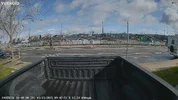
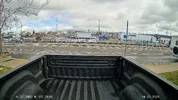
P.S. I have added comparison photos from the Vueroid S1 4K and another well-known dashcam product.
 

Attachments

  • 20250313_094749_INF_R_N.mp4_20260105_140837.750.webp
    20250313_094749_INF_R_N.mp4_20260105_140837.750.webp
    408.5 KB · Views: 154
  • 2025_0314_025905_000018R.MP4_20260105_140818.275.webp
    2025_0314_025905_000018R.MP4_20260105_140818.275.webp
    511.9 KB · Views: 80
Hi @2Lazy2P

Before the product launch, we rented a RAM 2500 Heavy Duty in the Bay Area and conducted testing for 10 days.

Prior to launch, we analyzed the overall market size and structure across regions, and we were well aware of the scale and characteristics of the pickup truck market in North America.
Pickup trucks were, of course, considered one of our key target markets.

We tested and evaluated our product alongside other products that were already available on the market at the time.
We are aware that when the camera is mounted on the vertical rear window of a pickup truck cabin, the camera angle cannot be tilted further upward.

However, you may also recognize that the amount of meaningful video information captured by the S1-4K rear camera is comparable to that of other products under the same conditions.
Due to the nature of pickup trucks, the rear bed occupies a large portion of the frame, and the areas blocked by the bed are the same portion for both competing products and the S1-4K.
This limitation is unavoidable from an optical perspective unless a see-through (transparent) camera technology is used.

Since vehicles do not fly 😉, the most meaningful visual information from the rear is concentrated in the central and lower portions of the frame.
We may consider reviewing changes to the camera structure to adjust the view mode and capture more of the sky area; however, doing so would result in vehicles on both sides no longer being visible.

In conclusion, it is difficult for us to agree with the statement that the current S1-4K rear camera is not suitable for use in pickup trucks.
If there is any aspect that I may be misunderstanding, please feel free to let me know.

Have a good day~

P.S. I have added comparison photos from the Vueroid S1 4K and another well-known dashcam product.
Can't you just make an external weather proof option? Like Viofo has?
 
Can't you just make an external weather proof option? Like Viofo has?
Of course, we can. We already have one available: https://vueroid.com/cv/products/xv/xv1-fhd/

Instead of the S1 4K interior camera, a waterproof camera can be connected.
This camera was originally designed for CV use, so its form factor is slightly larger.

We plan to offer various remote camera options with the next-generation S1 4K.
A waterproof camera will be one of those options.

Have a good day~
 
Of course, we can. We already have one available: https://vueroid.com/cv/products/xv/xv1-fhd/

Instead of the S1 4K interior camera, a waterproof camera can be connected.
This camera was originally designed for CV use, so its form factor is slightly larger.

We plan to offer various remote camera options with the next-generation S1 4K.
A waterproof camera will be one of those options.

Have a good day~
Based on your link, you already have a rear camera for the S1 4K. This would suggest that the S1 4K uses an analogue rear-camera signal. I assume this is because the existing rear camera you mentioned only works with analogue signalling.

To be clear, Vueroid does not currently offer a waterproof external rear camera like Viofo does on its latest dash cam release. Going forward, Vueroid would need to develop one either for the next iteration of the S1 4K or for another future model.

Would this last paragraph be a more accurate description?

So, to resolve the issue of the rear camera not being usable on flat vertical glass, a new rear camera design is required.

That solution should help resolve the wishes of people with vertical rear glass windows on utes.
 
Additionally, the temperature specifications for automotive cameras follow the AEC-Q100 standard, and products that meet the Grade 2 requirement are generally considered Automotive Grade.

Are you saying that Vueroid dash cams are using these AEC-certified components?

If Vueroid is using certified AEC parts, that’s great and can only help raise overall product quality by encouraging other manufacturers to improve their standards as well.

Better for the customer. Great.
 
Based on your link, you already have a rear camera for the S1 4K. This would suggest that the S1 4K uses an analogue rear-camera signal. I assume this is because the existing rear camera you mentioned only works with analogue signalling.

To be clear, Vueroid does not currently offer a waterproof external rear camera like Viofo does on its latest dash cam release. Going forward, Vueroid would need to develop one either for the next iteration of the S1 4K or for another future model.
I was mentioning that we have the capability to provide an external waterproof camera. This does not mean that we are currently offering one for S1 4K.
That is why I explained that the existing waterproof camera could be connected to the interior camera port of the S1 4K.
Additionally, I do not see a strong need to combine an external rear-view camera with a dashcam product at this time.
If you think about the main purpose of a rear-view backup camera, you will get the reason.
We plan to provide one sooner or later, in any case.

Would this last paragraph be a more accurate description?

So, to resolve the issue of the rear camera not being usable on flat vertical glass, a new rear camera design is required.\

That solution should help resolve the wishes of people with vertical rear glass windows on utes.
As shown in the photos I shared previously, it can be used on the flat rear glass of a pickup truck.
Could you please specify the reason why you believe the S1 4K rear-view camera cannot be used for a pick-up truck?
Any detailed explanation would be appreciated so we can better understand your concern.

Have a good day~
 
Are you saying that Vueroid dash cams are using these AEC-certified components?
If you read my previous feed again, you will see that I did not say that S1 4K uses them.
I was explaining the general standard of automotive product qualification in before market.
If Vueroid is using certified AEC parts, that’s great and can only help raise overall product quality by encouraging other manufacturers to improve their standards as well.
Better for the customer. Great.
If the components are capable of withstanding high temperatures, there may be no need for a complicated operating scenario like DuraShift that S1 4K has.
Designing the product using only fully certified components would likely be quite expensive.

Have a good day~
 
Before the product launch, we rented a RAM 2500 Heavy Duty in the Bay Area and conducted testing for 10 days.

We tested and evaluated our product alongside other products that were already available on the market at the time.
Looking at your example I would say the existing S1 4K rear camera is perfectly usable on the vertical rear window of a pickup truck.

The camera is angled downwards slightly, but I don't think this affects the coverage at all due to the wide FOV.

20250313_094749_inf_r_n-mp4_20260105_140837-750-webp.89158
 
Hi @2Lazy2P

Before the product launch, we rented a RAM 2500 Heavy Duty in the Bay Area and conducted testing for 10 days.

Prior to launch, we analyzed the overall market size and structure across regions, and we were well aware of the scale and characteristics of the pickup truck market in North America.
Pickup trucks were, of course, considered one of our key target markets.

We tested and evaluated our product alongside other products that were already available on the market at the time.
We are aware that when the camera is mounted on the vertical rear window of a pickup truck cabin, the camera angle cannot be tilted further upward.

However, you may also recognize that the amount of meaningful video information captured by the S1-4K rear camera is comparable to that of other products under the same conditions.
Due to the nature of pickup trucks, the rear bed occupies a large portion of the frame, and the areas blocked by the bed are the same portion for both competing products and the S1-4K.
This limitation is unavoidable from an optical perspective unless a see-through (transparent) camera technology is used.

Since vehicles do not fly 😉, the most meaningful visual information from the rear is concentrated in the central and lower portions of the frame.
We may consider reviewing changes to the camera structure to adjust the view mode and capture more of the sky area; however, doing so would result in vehicles on both sides no longer being visible.

In conclusion, it is difficult for us to agree with the statement that the current S1-4K rear camera is not suitable for use in pickup trucks.
If there is any aspect that I may be misunderstanding, please feel free to let me know.

Have a good day~

P.S. I have added comparison photos from the Vueroid S1 4K and another well-known dashcam product.
Thanks for providing the comparison images. It helps me understand that the S1 rear camera can function mounted to the rear glass. The larger FOV of the Vueroid compared to the other manufacturer is not insignificant.
 
Last edited:
I agree with most of your comment. Numbers are relevant whether USA market or global. Commercial constraints are real whether driven by engineering design constraints or potential to consume constraints. I hope that Vueroid recognizes the opportunity and redesigns the rear camera so it can be used on any vehicle with a vertical or near-vertical rear glass.
We have installed this is many truck and it works 100% fine. Ram, Ford and GMC trucks had zero issues with viewing angle. I assumed that it would be a problem due to the mount. but it was fine.
 
We have installed this is many truck and it works 100% fine. Ram, Ford and GMC trucks had zero issues with viewing angle. I assumed that it would be a problem due to the mount. but it was fine.
With the information provided in this thread, and your experienced opinion, I’m confident it will work.

Thanks to everyone who contributed!
 
New to the forum. I wish the S1 had a rear camera that was designed to work on vertical glass. I drive an F150, and it appears that the rear camera would not function properly mounted to it.

This is why i suggested a solution of an external camera.
Note later in the post this individual based on @SafeDriveSolutions feels comfortable using the S1 4K

Although I'm not a pickup owner, the rear camera is not able to be fitted to my vehicle without an intermediate 'wedge' - I'd be quite happy if Vueroid made it possible, but I recognise they also have commercial constraints.

This person was the other reason I suggested a solution.
We are aware that when the camera is mounted on the vertical rear window of a pickup truck cabin, the camera angle cannot be tilted further upward.

However, you may also recognize that the amount of meaningful video information captured by the S1-4K rear camera is comparable to that of other products under the same conditions.

Ok.
The only time I think it may be an issue is when the vehicle is close like in a car park or in traffic when they turn onto the road the truck is stationary on.

With the information provided in this thread, and your experienced opinion, I’m confident it will work.

As i mentioned above 2lazy2p reconsidered their position.

The other things mentioned in our post was regarding a solution that does /doesn't exist using a unit you @VUEROiD supplied a link to.
My misunderstanding comes from what electronic technology is used.
Eg analog or digital signals.
I assumed they are digital signals for the S1 4K

Cheers.
 
Ok.
The only time I think it may be an issue is when the vehicle is close like in a car park or in traffic when they turn onto the road the truck is stationary on.

In the case of an external waterproof rear camera, it may be possible to cover the areas that are blocked by the bed of a pickup truck. However, for a typical 2-channel dashcam setup, the rear camera is optically limited and will inevitably cover a viewing area similar to that of the S1 4K rear camera.
If the camera angle is tilted upward, more of the sky can be captured and the pickup truck bed may appear smaller relative to the overall frame. However, in that case, the areas on both sides of the bed will no longer be visible.

In practice, this would require using a rearview backup camera with a monitor together. However, I’m not yet certain whether using two separate rear cameras in this way is truly appropriate or practical.
An external rear camera for a dashcam is designed to remain powered on and record continuously in all driving conditions, whereas a rear backup camera for viewing purposes is activated only when the vehicle is in reverse, providing a visual aid through a monitor for parking safety.

Even if we were to develop such a product, it would need to integrate these two very different applications into a single external rear camera. As you can see, there are many factors that would need to be carefully considered.

While it might be easy to release a product simply to satisfy the idea of having a waterproof external rear camera, I believe that a manufacturer’s responsibility is to carefully evaluate efficiency and suitability and to develop a solution that can be used effectively by a wider range of customers.

Have a good day
 
Back
Top