.
.
Test Configuration / Preparation:
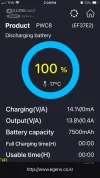
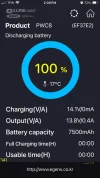
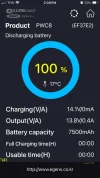
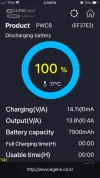
I fully charged the PC8 to 100% and let it “keep charging” for 3 hours before starting this test to let it stabilize.
At 2:00PM I turned off my power supply to enable LBR parking mode.
After the camera entered parking mode I long pressed the power button on the camera to turn it off.
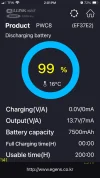
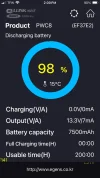
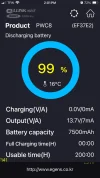
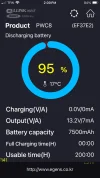
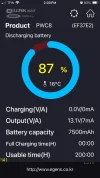
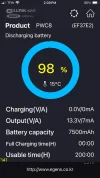
After the camera turned off the Cellink Neo APP reported the PC8 is discharging at 7mA @ 13.70 Volts.
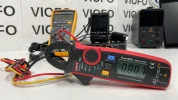
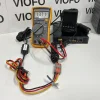
I confirmed this by measuring the voltage with my Fluke 115, and amperage with my UNI-T UT210E Pro.
After taking a screenshot of the Cellink Neo APP I disabled Bluetooth on my iPhone so it’s not connected to the PC8.
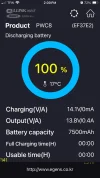
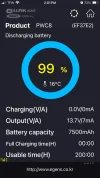
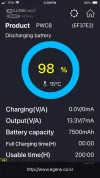
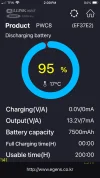
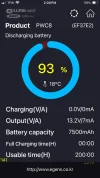
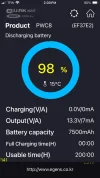
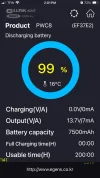
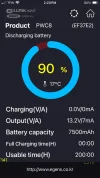
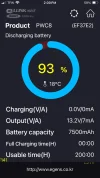
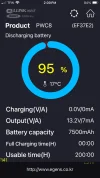
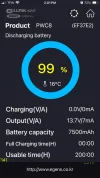
In 24 hours I will enable Bluetooth, and take another screenshot to document the reported battery life percentage.
See attached photos, and screenshots.
Leaving the battery pack on-charge for 3 hours to 'stabilize' is not needed and is no benefit for testing purposes, and wastes 3 hours of your test time. Once the pack is fully charged, the BMS stops current flow; depending on the BMS it may leave the circuit open or it may test for a pre-programmed drop in voltage. If that is the case, it is sensing a natural decline, or one from defect, and it will close the circuit and do a pulse charge to restore to %100, or what ever charge level the BMS is set to. After about 30 minutes, most of these lithium batteries reach a resting charge voltage that is lower than the full charge voltage. You may charge at 14.2 but the resting voltage may be 13.5 as an example.
Once the pack is fully charged, the electrons have reached the one end of the cell where then need to be and the pack on the charger after that point does not 'stabilize' anything at all. Smart charges that can trickle charge and handle sulfation in AGM batteries are a slightly different story, but even then at some point once the AGM is charged, it is charged. A smart BMS will slow charge the lithium in order to preserve the chemistry of the cell or pack.
Achieving a 'stabilized' LIFEPO pack involves more than letting it stay on a charger after a full charge has been reached. First, the cells need to have a low internal resistance value and, that value is the same, or nearly the same in every cell in the pack. Second, the cells need to be configured in a way that charging and discharging is done via a balance harness, wiring, or internal board traces. Each cell during charging needs to be sampled for charge rate and capacity during charge. If there are 8 cells to a pack and 2 of the cells do not take a 'full charge', then the pack will not provide the power it is expected to, nor can it be said the pack is 'stabilized'.
As an example, if charging 8 cells and 2 cells are weak, a good BMS / balance charge will hold the charging on 6 of the cells and attempt to bring the other 2 cells up to reach the same level as the 6 cells. If that is not attainable the BMS follows its algorithm, reaches a pre-determined voltage and stops charging. A really good balance charger/ BMS will indicate those two bad cells, and their capacity in per cent.
One thought about the amp clamp you are using. Amp clamps work from sensing the field around the wire by using both sides of the jaws / clamp. If the wire is laying on one side only, you may get a reading that is slightly off. You could hold the wire in the center of the jaws / clamps and see if there is a different reading.
Knowledge is everything and any person doing this type of testing probably should ask EGEN what the IR of the cells are, the manufacturer of the cells, average age of cells when configured into the pack, is the charge a balance charge, does the BMS do any trickle charging and at what values does it do this.