Parking Battery-Power Station, 3X capacity and 3X cheaper than dedicated options + extra functionality

no offence, but although i have thought about solar panels , I'm not going to put them across my dashboard every time, also potential of the car to be broken into would be higher

Of course, this is not for everyone.
From time to time we get questions about the possibility of solar charging to extend the parking time.
Some want to use it only when parking for a long time in a public parking lot such as an airport, some want to use it daily.
And a 20W single panel solar panel can be only 12"x15" in size to trickle charge the power station.
So I posted a simple solution here for those who might be interested.

I originally implemented this dual charging feature in my DIY LTO battery.
Here is the link, and the relevant videos are in subsequent posts in the same thread:

 
Hi have noticed that my blackvue 970x lte consumes on ecoflow about 8w

I turned the motion section off and switched to time lapse

I dont see any difference when I checked the recording, ecoflow says 6W

now I've switched from Usb to 12v DC (im actually using a barrel to cig lighter) so I can keep the cig plug from jumping out

Im now going from 4w !


Thanks to the Anker , i wouldn't have tested it

I'll be getting a 590x 2ch installed on the side windows next month so I want to keep the power usage down
I have this same annoying problem with the ciagrette lighter adaptor coming loose. Care to share which barrel to cig lighter you are using?
 
I've had a quick look at the Ecoflow TRAIL 200 and 300, the new DC-only power stations, and I have mixed feelings, or rather disappointment, mainly because they don't have app support, so we don't know the default settings, and I'm not sure if they can be changed.

They've improved the USB-C PD ports (couple of them), which now have 140W/100W input/output, but still retain the outdated legacy USB-A ports (no 18W USB-A QC 3.0 ports like the Solix).

On a positive side - they are really small in physical size and currently are much cheaper compare to Solix

I recently received my Ecoflow Trail 300 DC. It is indeed much smaller and lighter in person than I expected (even after knowing the specifications on paper), but obviously that's b/c of no AC inverter.

I currently have a very similar setup to StephenJones Setup but with a BV B130A battery and the 2CH Viofo A329 (original version), which works perfectly when I occasionally need longer parking mode time and insert the River 3 Plus before the BV battery (River is charged via its car/solar XT60 input).

I tried using the Trail 300 today using its 12v socket and solar/car input power just like on the River 3 and it doesn't seem to work. Turning off the vehicle did not trigger parking mode--the camera remains recording normally and assumedly the Trail 300 continues to charge the BV battery (Trail display showed 14w output) and the BV battery powering the Viofo cam. If pertinent, the input on the Trail when the vehicle was running was 111w which is right around the Trail's solar/car charging input rating of 110w (Trail was at about 30% charged itself).

I seen info online indicating that the Trail 300 has power pass-through, but turning off the vehicle doesn't seem to trigger "whatever" (no expert here) to indicate that the Trail and then the BV battery are no longer being charged to then alert the dashcam to go into parking mode. Maybe related to the lack of AC inverter which the River has.

I tried the River 3 again and it worked perfectly as before, so nothing has changed in that regard.
 
On the R3+, the AC side and inverter are not connected to the DC side in any way.

As far as I remember, the B130A has a 3-pin XT60-I input, but the third pin is not used for the ACC signal, but for switching between low and high current charging modes (from the cigarette lighter and from the hardwire cable), so it is actually not a true 3-pin input, but a 2-pin input.
The dash cam cannot enter parking mode with the ignition/ACC off, because the B130A is not powered by the car's electrical system, but by the 12-volt output of the power station, which is always on regardless of ACC.
So I don't understand why the dash cam enters parking mode with the ignition off when using the R3+???
Both the R3+ and the Trial 300 can only enter parking mode after about 5 minutes of inactivity.
I'm probably missing something, can you make a short video of R3+ and Trail 300 in action?

The 70mAh battery has a true three-pin input, because the third pin is used for ACC input.
If this ACC pin is connected to the car's ACC power supply, 70mai can switch to parking mode when the ignition is off.
 
On the R3+, the AC side and inverter are not connected to the DC side in any way.

As far as I remember, the B130A has a 3-pin XT60-I input, but the third pin is not used for the ACC signal, but for switching between low and high current charging modes (from the cigarette lighter and from the hardwire cable), so it is actually not a true 3-pin input, but a 2-pin input.
The dash cam cannot enter parking mode with the ignition/ACC off, because the B130A is not powered by the car's electrical system, but by the 12-volt output of the power station, which is always on regardless of ACC.
So I don't understand why the dash cam enters parking mode with the ignition off when using the R3+???
Both the R3+ and the Trial 300 can only enter parking mode after about 5 minutes of inactivity.
I'm probably missing something, can you make a short video of R3+ and Trail 300 in action?

The 70mAh battery has a true three-pin input, because the third pin is used for ACC input.
If this ACC pin is connected to the car's ACC power supply, 70mai can switch to parking mode when the ignition is off.

Let me do some further testing hopefully this weekend and report back. I'm getting inconsistent results in a short test I just did now.
 
Let me do some further testing hopefully this weekend and report back. I'm getting inconsistent results in a short test I just did now.

Okay, I'm an idiot sandwich, to quote Gordon Ramsey. 🙄 I realized I had only tested my River 3 originally connected directly to the HK4 during some changes to my wiring setup and and without the BV battery, using the method described earlier in this thread.

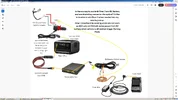
Since I'm getting to the point in my life (ahem) where visual aids help me think things out, I have attached two files--one shows my current setup with just the BV battery and the second shows a setup that won't work (reason noted on PDF) but for which ideally I'd like something similar.

Ultimate question is: I'd like to keep my existing BV battery setup for my more common need for everyday parking mode timeline needs, but also to then add in the R3 or have it replace the BV battery when I need extended PM time. Is there a means to add the R3 to my current setup with or without the BV battery and avoid existing connector disruption and still have parking mode triggered on my A329? Even if I have to add in new wiring or adapt something in that is only used when the R3 is used, that is fine.
 

Attachments

.........
Since I'm getting to the point in my life (ahem) where visual aids help me think things out, I have attached two files--one shows my current setup with just the BV battery and the second shows a setup that won't work (reason noted on PDF) but for which ideally I'd like something similar.

Ultimate question is: I'd like to keep my existing BV battery setup for my more common need for everyday parking mode timeline needs, but also to then add in the R3 or have it replace the BV battery when I need extended PM time. Is there a means to add the R3 to my current setup with or without the BV battery and avoid existing connector disruption and still have parking mode triggered on my A329? Even if I have to add in new wiring or adapt something in that is only used when the R3 is used, that is fine.
Good PDFs 👍

Try the following:
- Do not connect the yellow ACC cable of the HK4 to the ACC output on the B130A, instead, connect it directly to the ACC+ source of the car as shown in the attached image. (you can use splitter)
- Connect the red and black HK4 cables to the B130A output as they should be.
- Make sure both cigarette lighter charging cables are fully connected (to ensure continuity of the ACC ground circuit).

I think it should work as you asked.

*****
I noticed in the PDF that you showed some third-party charging cables for charging the R3+ and B130A.
I think it should work, however, I would prefer to use the original R3+ cable to charge the R3+ from the ACC socket of the car, and the original B130A cable to charge the B130A from the cigarette lighter port of the power station.
 

Attachments

  • Untitled.webp
    Untitled.webp
    120.2 KB · Views: 227
Last edited:
If you're in the UK, check out these guys. They do a few LiFePo4 power banks with multi functions...

 
Try the following:
- Do not connect the yellow ACC cable of the HK4 to the ACC output on the B130A, instead, connect it directly to the ACC+ source of the car as shown in the attached image. (you can use splitter)
- Connect the red and black HK4 cables to the B130A output as they should be.
- Make sure both cigarette lighter charging cables are fully connected (to ensure continuity of the ACC ground circuit).

I think it should work as you asked.

Big thanks to you! I was assuming that I'd have to use that closer-to-original ACC line for triggering when the R3 is inserted in the chain, but didn't want to mention it in case you had a better solution--and you did 👍, a much more simple one to just have the HK4 ACC wire always tap back into the first ACC line instead of to the BV ACC wire (your solution both works with and without the R3 in the chain). My mind was stupidly focused on a more complex (and unnecessary) solution to use connectors to switch ACC lines when I added the R3.

PS: The "12v Socket plug to 3 Pin XT60" from the R3 to the BV battery is actually the OEM R3 cable--I used a generic photo because I couldn't find a suitable one for the R3 version. Should have noted that in my text description. I have two BV battery 12v socket chargers and I thought it was better to cannibalize one of those instead of my R3 one for the connection from the initial 12v socket adapter to the R3 given Ecoflow's love of proprietary cables/connectors (and the accompanying higher expense to replace). The only generic item is that initial 12v socket split wiring adapter.
 
as you are all very knowledgeable, i want to ask an off topic question (but still using my Blackvue)

I have just upgraded the security on my car, it now has remote start

i can use my phone to lock/unlock/start my car over BT, but the range to short for my needs


Would it be possible to use the wifi ?

i have WIFI hotspot in my car thanks to my Blackvue dashcam which has a sim card in it

i have a PowerStation in the boot, so power wouldnt be a problem

I've been googling all day, and came up with a BT bridge to Wifi

anyone know if i can do such a thing ?
 
as you are all very knowledgeable, i want to ask an off topic question (but still using my Blackvue)

I have just upgraded the security on my car, it now has remote start

i can use my phone to lock/unlock/start my car over BT, but the range to short for my needs


Would it be possible to use the wifi ?

i have WIFI hotspot in my car thanks to my Blackvue dashcam which has a sim card in it

i have a PowerStation in the boot, so power wouldnt be a problem

I've been googling all day, and came up with a BT bridge to Wifi

anyone know if i can do such a thing ?
I am not aware of a way to accomplish that and even if you do, the security and reliability may be questionable. Is it an aftermarket remote start? In the US, Compustar is the main after market brand in use. You can start with a base system that is a brain, antenna and a remote. From there, you can upgrade to a compatible antenna and remote that would connect into that same brain that would give about 3 miles in range for the remote. Beyond that, there is a different box called a "drone" that is cellular capable. It can connect into that same brain and you pay a subscription fee for the data that enables the use of a smartphone app and remote start functions via the app. It will not connect to a hotspot to give you those features or even has the ability to connect to wifi at all in that way.

Of course, you can skip the base system and just purchase the exact items you want based on needs. You can add alarms and such to it as well.
 
Thought I'd follow up on my earlier posts here in case my final configuration inspires anyone else...it's a bit of an overkill situation (the story of my life) and it's a long post from a non-expert 😛
  • Front: Viofo A329TC with modified no LVC HK4 powered by Blackvue B130X battery mounted under passenger side dash. Battery is wired into the front switched accessory socket via a generic harness split-out adapter and uses the 5a-limited BV XT60 battery charging cable. I have the HK6 and may use it instead for the benefits of hybrid parking mode depending on long the BV battery lasts in real world parking mode using the modified HK4.

  • Rear: Viofo VS1 with HK5 powered by a second BV B130A battery mounted at base of driver side interior B-pillar (well away from any airbag trajectories). That also is wired in the same manner as the front but into the separate rear accessory socket circuit. In my vehicle that is always on, so I inserted a positive trigger relay into the mix which is hidden under my rear seat bench. The ACC trigger is via a tap into my vehicle's rear console USB wiring (switched) via wiring from the relay under the center hump carpet to the console. I also have a Vantrue VP05 wiring harness with an 11.6v cutoff setting that I might use instead, again depending on real world usage to see if that makes a significant difference to the HK5's 11.8 cutoff, but the PM power draw I'm seeing is fairly low. I've already confirmed the VP05 harness works fine with the VS1, including triggering PM on/off. I don't think Viofo offers a no LVC HK5 version for us dashcam battery users.

  • For when I need extended PM time, I will insert an Ecoflow power station ahead of the BV battery. The BV charging cable will be connected to a regular (no 3rd pin) XT60 extension cable and that connected into the XT60 port on the ECF unit*. The 12v socket on the ECF will be used to connect to the BV battery. Connecting the ECF unit to the vehicle power is optional if it doesn't need charging. I successfully used both my River 3 Plus and my Trail 300, with the Trail having the smaller size advantage but still providing significantly extended PM time.

  • Everything works mostly flawlessly, just with some notes:
    • A minor quirk where it seems the ECF unit's 12V output socket must be turned on before the vehicle, or the dashcam does not come on even if the BV battery is then turned on after the vehicle. However as long as both battery units stay powered, subsequent PM/regular recording cycles work perfectly. I think the same or similar thing was mentioned earlier by someone.

    • It is essential to carefully assess the input power being pulled from the vehicle by any portable battery station via whatever connection method is used versus what that circuit is rated for. For example, my vehicle manual states to not power any device with the accessory sockets that will pull more than 120w/10a for each socket. The Trail screen shows that it pulls ~110w from my vehicle (there are no adjustments possible with the Trail, as it not an app connected unit). The R3 car charging input is adjustable in the app and I have it set at 8a (and the use of a no-pin XT60 extension cable should also trigger that 8a limitation like the ECF cigarette charger). I also have to remember to not plug in anything else into that front circuit as it is shared with all 4 of the vehicle's USB ports, the SD (for Nav) card reader and the OEM wireless phone charger (which I have disabled b/c it sucks LOL). While the rear circuit is dedicated to just the 12v socket, I still must remember to not plug anything in there when there's an ECF unit receiving power. I'd rather err on the side of caution here.

    • *Getting a bit into the weeds, but I discovered during my “testing” that the Trail's XT60 car/solar input does not have any center pin connection unlike the majority if not all of more recent ECF units. I assume this means that the unit itself is fully internally managing the input and the manual notes the following specs for that input "10-30V⎓10A Max, 110W Max". This also means that an OEM ECF 12v car charger with the center pin connection that alerts other ECF units to limit input charging to 8A isn't functional in that way--I'm still getting ~110W when I use it and that means ~9.17a @an assumed 12v (still below my vehicle's stated max, but I'd be happier with the usual ECF 8a limit).
 
Last edited:
Careful with a utility port splitter, many of them are only rated for 3A. Be sure to check the specs of your splitter. If you are looking at pulling 8A out of the utility port, I would recommend going straight to your battery instead. Best to measure the actual charging current of your power station, many of them pull more current than they actually claim.
 
What I’m doing right now: I’m running the U3000 in radar parking mode, powered by the Cellink Neo 8+. I also have a USB LTE modem connected to the same battery, which is controlled by an RF 433 MHz remote switch. Normally, this wouldn’t be necessary, but my car is parked in a garage with no internet, so there’s no point in leaving it on, although you could if you wanted to. Camera itself is on 24/7 and doesnt consume almost nothing and gets triggered alot even in my garage. About 20 clips a day or about 150 clips at my work place and I still come out with 85% at the end of the day easy.


The battery is connected to the cigarette port via one of those splitters with a switch that lights up red when turned on. This is how I manually control the camera for parking mode, since it doesn’t have a G-sensor or GPS motion controls. It’s the only camera I can actually use because of my limited driving time and preference for an almost “set and forget” setup, so running one with always-on recording isn’t ideal for me. The low power consumption of the U3000 has really saved me, and I’m loving it. I’m getting impact notifications when something hits my car, parking snapshots, and video uploads.


I also have a second setup in my trunk that runs three security cameras powered either by the EcoFlow River 3 or the Anker Solix DC300. I swap between the two from time to time. However, since I now have the U3000 and Cellink wired up, and I can’t risk overloading the cigarette port, there really aren’t many options for recharging the two power stations, right? So I also have two Ugreen 20K+ power banks that I use every third day to top up the power stations via a USB to XT60 cable (EcoFlow R3 max 110W) or Solix C300 USB-C to USB-C (2x140W). I can manage with 110W if I plug it in when driving to work and back home afterwards.


The third option I’m considering now is replacing my power stations with one of those 12V LiFePO4 batteries, which are much cheaper, much larger, and rated up to 60°C, which is higher than the power stations themselves. I’d just need a 12V to USB PD car adapter, and it could power all my cameras. They even come with Bluetooth now and can be turned on or off remotely. Of course, there’s no easy way to recharge them from a car, but a 100Ah 12V battery for about €200 could run a 7W load for up to 16 days in my case if I only run it 9 hours a day. Still debating this since I already have the power stations but I wouldnt need to recharge it as ofther as this smaller ones. Best pick for me would be the 140Ah.

The three security cameras are also on a Wi-Fi USB switch, which I can use to selectively power them on depending on where I park the car, to save even the smallest amount of battery when needed.
 
Last edited:
Nice setup,
A Cellink Neo 8 powered dash cam and three security cameras powered by an Ecoflow River 3 or Anker Solix 300DC is quite an extensive system.
I also like the "set it and forget it" concept, so manually charging the River 3 and/or swapping power stations every 2-3 days is a bit inconvenient.
For a "set and forget" solution, the River 3 can be powered via a 30A SPDT automotive relay connected directly to the vehicle's battery/alternator and controlled via an ACC power source, either from the cigarette lighter or the fuse box. The ACC power draw in this case is fairly low.

Using a 100A, 12.8V LFP battery is OK, but a "set it and forget it" system would ideally require a suitable DC-DC charger with ACC control.
And DC-DC chargers are quite expensive.
At 7W load, it will last about 7 days or even less if you take into account the BMS's self consumption, rather than 16 days.
 
My calculation was 16 work days like in if its only on 9 hours each day at max. Total 222h or am I missing something?
 
My calculation was 16 work days like in if its only on 9 hours each day at max. Total 222h or am I missing something?
Sorry, somehow I missed the 9 hours of parking per day.
When you mentioned "days," I assumed you meant 24 hours a day.

-The nominal voltage of a 4S LFP battery is 4 * 3.2 V = 12.8 V.
-For a 100 Ah battery, the total capacity is 100 Ah * 12.8 V = 1280 Wh.
-With a power consumption of 7 W, the battery will last 1280 Wh / 7 W = 182.8 hours.
-And 9 hours of parking per day gives 182.8 h / 9 h = 20 days. (the battery's self-consumption is not included)
 
Yep, something like that, but with the 140Ah one since it’s only 3kg more so more ideal for me. So if I carry it to my office every 14 days, it’s not a big deal. However, now I have another problem — I heard the app doesn’t recognize anything under a 1.5A load at 12V, so I’m not sure if the battery capacity will actually show correctly. Need to check with the different company first.

edit: The AI answers from this companys are pretty much the same. Sampling rate is 1.5A but it should still show the real battery % so thats basically enough for me anyway.
 
Last edited:
Back
Top