VIOFO BP100 Dash Cam Battery Pack - Test & Review PP

One thing i know of power packs, i would prefer they had a expansion port, even if personally i would not need that due to my modest need for parking guard duty.

Or my need as i tell myself it is, already once subject to change after my car was hit 2 hours after i parked it and i used 1 hour parking guard back then, i now use 3 hours on a timer if it is there,,,,, and it should be there.

The batteries should also be safe, i say so CUZ i run the bottom of the barrel insurance so if my 70mai power pack torch my car, well it is all on me and i get nothing from insurance.
 
A few questions, the "Hardware output cable" that comes with the battery, is this just a HK-6 with a connector or is it another complete new hardwire cable?
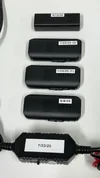
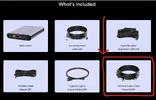
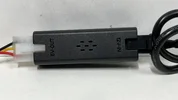
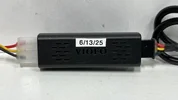
BP100 Hardwire Output Cable is basically a new version of Hardwire Cable like the “old” HK4 & “new” HK6 except it has one job, and one job only.
BP100 Hardwire Output Cable does not have Low Voltage Cut-Off circuity, or a Bluetooth Module.
It’s only purpose is to convert 12V to 5V, (see attached photos).
When using a dash cam battery pack you don’t want any interference of low voltage cut-off because you want to completely drain all available capacity out of the battery pack.
Based on my testing using a hardwire cable with no low voltage cut-off extended parking mode run times by 30 minutes to 2 hours depending on channel configuration.
Using a dash cam battery pack with an HK4 set to 11.8V is like buying a car with a 20 gallon fuel tank but you can only use 18 gallons, (bad example).
This is why I have been asking for a “5th” setting on HK4 & HK6 to completely disable the low voltage cut-off, (5th setting would be OFF)
Instead we have 3 different "public" hardwire cables, and 2 “secret” HK4 & HK6 models where the 12.4V setting has been modified to “OFF” for use with dash cam battery packs, (so confusing).

I did some preliminary testing on BP100 Hardwire Kit in my “HK6 Test & Review” thread here;

Here's a demo comparing power consumption of BP100 Hardwire Cable vs. HK6 during LPID (low power impact detection);


Also, what is the reason for battery packs having 3 wire charging? My cellink batteries just have 2 wires as you just have ACC off/on for charging the battery.
@SafeDriveSolutions can explain this better than I can.
Basically, most “newer” cars do not have a “high amperage” fuse that can be piggy-backed in the fuse box under the dash.
In these “newer” cars installing a dash cam battery pack means running the “high amperage” power wires directly to the starter battery, or power distribution block.
The “3rd” wire on these “new generation” dash cam battery packs gets connected to an ACC / ignition fuse in the fuse box just like a traditional dash cam hardwire kit simply to provide “ignition trigger signal” to tell the battery pack when to charge, (engine running), and when not to charge, (engine off).
There is “zero” amperage / current draw on this 3rd wire.

So basically it’s like a traditional 4-Post Automotive Relay built into the dash cam battery pack.
Another benefit is the 10-Second delay “soft-start”.
As soon as you turn the key / start the engine your Cellink Battery Pack will immediately start drawing max amperage, (around 10 Amps).
Sometimes this can cause weird things to happen with the car’s electrical / computer system because of the additional 10 Amp draw while the engine is cranking over.

The “newer” generation of dash cam battery packs provide pass-through power to immediately bootup the dash cam to start recording just like past generation models, except it waits 10 seconds for the car’s battery / electrical system to stabilize to “running voltage” around 14V after the “engine cranking event” that can drop system voltage as low as 9.6V before it starts charging the battery pack at full beans around 10-11 Amps, or more.
I assume you are going to test cold weather charging (It was -2 degree C this morning which made me think about it)
I did some preliminary cold weather charge protection tests, but now that we have retail version with official public firmware I want to re-perform these tests to provide accurate test data / results;


Attachments

  • BP100 Hardwire Output Cable 4 .webp
    BP100 Hardwire Output Cable 4 .webp
    116.8 KB · Views: 95
  • BP100 Hardwire Output Cable 1 .webp
    BP100 Hardwire Output Cable 1 .webp
    77.7 KB · Views: 87
  • BP100 Hardwire Output Cable 3 .webp
    BP100 Hardwire Output Cable 3 .webp
    164.6 KB · Views: 96
  • BP100 Hardwire Output Cable 2 .webp
    BP100 Hardwire Output Cable 2 .webp
    126.9 KB · Views: 103
Last edited:
I think Viofo sent BP100 to the wrong person.
We need to get a BP100 in your hands for test & review. Lol
So fix this mistake.
Ask the person for the address and send them your copy. 😉
 
...That's interesting, I still assumed the cells were a large percentage of the cost, I guess this has changed somewhat as EV's are starting to use LFP batteries now.

In 2021, I bought a 18Ah battery with BMS for about £120, I'm seeing 100ah batteries for around the same price now. (Obviously it's not quite the same, as I am looking at full batteries with BMS, not individual cells)
For the LFP cell prices, check the link below - a similar cell as used in the BP100 battery costs less than $1 each! (when buying 100 cells)
Although I'm not sure if the cells are new or of what quality.
26700 4000mAh LiFePO4 Rechargeable battery
Assuming the BP100 price is set at 100% margin, their production cost would be around $125, and at $8 for 8 cells, that's only about 6.4% of production cost.

In 2021, I refinanced my home to a 15-year fixed-rate mortgage at 2%.
Life is very different today....... 🙂
 
Well i have only ever acknowledged the use of USB power banks, but i should not have recommended that to anyone.
There is just proper dashcam power packs to me used with 3 wire hard wire kits,,, i even have some issues with the use on portable power packs really meant for something else.
Even if they do seem to work OK for some.

Okay i will also accept a camper style setup with a charge splitter and a AGM battery or two to dedicated power a dashcam for a longer duration, i do think i would do that if i was to get that endurance need.
 
Here is a big ask but can you do a self discharge test similar to the Previous Chuck test ?
It would be even more awesome if it included a test at refrigerator temperatures (40F ish) because I've noticed for some odd reason my PC8 self discharges faster at colder temps.
48 hrs would be enough to see the trend
 
Last edited:
@Chuck McCoy
Have you performed charging time comparison tests on any batteries to determine if heavier gauge wire improves charge time?
I noticed when using my PC8 Cig Adapter cable there is a 1.3V drop (about 10%) when charging at 4.5 Amps which would be 0.28 Ω.
I know you are a big proponent of heavier AWG for safety, but I wonder if faster charge times would motivate battery makers to improve cable heft.

screenshot_1058.webp
screenshot_1059.webp
 
Last edited:
@VIOFO-Support can you please confirm if there will be an import tariff if I order a BP100 to the USA using the Viofo website and how much to expect?
I would not order by express shipment.
 
I see a power button on the BP100. Is this meant to be manually turned on every time I get out of the car and turned off when I get in to drive??
 
That would be terrible. The User Manual does not explicitly mention it but once you power up the BP100 it should remain in the On state until you manually power it off.
 
@SafeDriveSolutions
Do you have a preference where to install a Battery Pack and what is the thinking?
Viofo recommends in their user manual to install their BP100 in the glove box. I installed my Powercell 8 under the Passenger seat but kind of wish it was more accessible.
 
I'm assuming that the BP100 should be installed somewhere in the vehicle where it would be easy to remove it?

Is it ok to charge it to full before plugging it up in the vehicle?
 
I can't really think of a reason you would want to remove it unless you want it to be portable for charging a phone or laptop easier.
Its perfectly fine to charge it fully before plugging into vehicle but unless you have a 13V power supply car charging is probably easiest.
 
Do you have a preference where to install a Battery Pack and what is the thinking?

I installed my front A329TC front Blackvue battery under the passenger dash and below the glove box. There's a panel there in my vehicle (Mazda CX-50) that is perfect--it is easily removable and I have heavy duty adhesive Velcro (excuse me, trademark infringement: hooks and loops 🤣 ) plus Velcro (real ones 😛) straps over that panel and the battery. Because my vehicle is primarily parked in my garage, I turn off my BV batteries even if the geofencing feature works perfectly on the front so as to not lose any battery charge even from sitting there without powering the cams but still on. I think I remember that's ~5-7% per day of the charge. My secondary battery for my rear A329 is against the base of the B-pillar next to the side of the driver's seat. Both are within arm's length to turn on/off as needed but still not immediately obvious. My glovebox is not deep enough to permit flat battery installation--it would have to be set at an angle.
 
I installed my front A329TC front Blackvue battery under the passenger dash and below the glove box. There's a panel there in my vehicle (Mazda CX-50) that is perfect--it is easily removable and I have heavy duty adhesive Velcro (excuse me, trademark infringement: hooks and loops 🤣 ) plus Velcro (real ones 😛) straps over that panel and the battery. Because my vehicle is primarily parked in my garage, I turn off my BV batteries even if the geofencing feature works perfectly on the front so as to not lose any battery charge even from sitting there without powering the cams but still on. I think I remember that's ~5-7% per day of the charge. My secondary battery for my rear A329 is against the base of the B-pillar next to the side of the driver's seat. Both are within arm's length to turn on/off as needed but still not immediately obvious. My glovebox is not deep enough to permit flat battery installation--it would have to be set at an angle.
Are you turning off your battery every time you park at home? That seems like it would get annoying.
Have you confirmed a 5-7% drop per 24 hours when Blackvue battery is turned on but Camera power is off? I've measured 8% loss per day on my Powercell 8 but this was closer to 2% loss during the warm summer months.
Does geofencing have the capability to power off the camera based on location?
 
Are you turning off your battery every time you park at home? That seems like it would get annoying.
Have you confirmed a 5-7% drop per 24 hours when Blackvue battery is turned on but Camera power is off? I've measured 8% loss per day on my Powercell 8 but this was closer to 2% loss during the warm summer months.
Does geofencing have the capability to power off the camera based on location?

Yes, I am, but not at all annoying for me in my setup--both batteries' switches are easily reached from the driver's seat and it is now second nature to flip them on/off. I don't even think about it any longer.

I did not do any measurements myself but stated that based on others' testing of the B130a/x battery packs including here on DCT.

I work from home so my car is not driven daily and sometimes maybe only once during the weekdays for grocery runs, etc. So that is why I'm looking to maximize the battery capacity.

Yes, the geofencing feature for my front setup has worked perfectly so far. Offhand I can't remember my current setting, but it is either 10 or 15m. When I pull into my garage and turn off the vehicle, the front cam shuts down as expected. That doesn't happen when I turn off the vehicle elsewhere, including on the street in front of my home (which is what I want)--it goes into parking mode. I would love it if Viofo added this feature to the A329 (original) firmware, as I'm using that as my rear. I would think it could be supported since both models use the same GPS base and I would assume any hardware differences wouldn't really impact such.
 
You are the only one other than me (I am aware of) concerned with battery self discharge. If you don't drive for a week can you say roughly what percent charge the battery would be at assuming you don't turn off the battery? Were you ever surprised how much the battery discharged on its own?

I was trying to figure out a way to use the Bluetooth remote to do a form of "geofencing". I want to use one remote to trigger the camera off when it sensed the vehicle in the home garage. The problem is Viofo only allows one remote to be paired with the camera so I would lose the remote in the car.
 
You are the only one other than me (I am aware of) concerned with battery self discharge. If you don't drive for a week can you say roughly what percent charge the battery would be at assuming you don't turn off the battery? Were you ever surprised how much the battery discharged on its own?

I haven't done any even informal testing on my own, other than noticing that there is battery level drop over time if I leave it on with no actual power being pulled. I can try to do so in the near future. I will disconnect the HK6 from the front BV battery to ensure there is zero external draw. I will be reliant on the BV battery app, which is known to be not greatly accurate--but it should still provide a general idea.
 
That would be great to get another datapoint. I really should disconnect my HK5 and run the same test but my battery is much harder to access than yours.
 
Back
Top