LTO (Lithium Titanate Oxide) – The Ultimate Battery for Dash-Cam parking mode (DIY)

Well shoot, I did measure that at one point. I need to go and look through my notes.

Update: Found it! The 10 foot, 20ga Viofo cable drops about 0v25. Pretty sure this is why the Viofo USB adapter puts out 5.25, so by the time power gets to the camera, it is still at 5.0v. Some of the other hardwire kits use 22g wire and the voltage drop will be greater.
 
Last edited:
Oh, I meant the 11awg power from car battery to boost controller would be like ~11.xx that would need to be boosted to change the LTO cells.

But yes, I guess the hardwire kit needs to be extended too if the LTO pack is in the trunk and main camera is on front windshield
 
Ha, oops, I didn't measure that one. I imagine that there is some voltage drop, especially at higher current draw, but I haven't measured it. Connecting directly to the car's main battery provides about 12.5v depending on the state of charge for the battery. I can't image the voltage loss is more than 0.1 or so given the wire gauge. But this is the job of the buck/boost converter on the charger board. The input voltage doesn't really matter, you just set the output voltage and let it do the rest. When I purchased the 11g wire, it was advertised as 12g. I chose it because of the three-layer sheathing and the heat resistance. I thought this would help it survive its time in the hot engine compartment. I was pleasantly surprised when it arrived and I saw that it was actually 11g wire. I would definitely not use 14g, it's too thin and will heat up due to current draw.
 
Here is a handy-dandy voltage drop calculator that I used some time ago: https://www.rapidtables.com/calc/wire/voltage-drop-calculator.html

I found it to be pretty accurate. Plugging in a 20ft run of 11g wire with a 10A draw shows a 0.5v drop - a bit more than I expected:

Voltage Drop for 11g wire.webp
 
Last edited:
I finally finished upgrading my LTO battery from 7S to 6S configuration and added Jump Start and Solar charging functionality.

As I mentioned earlier, the efficient 25A charge controller is actually working with solar panel!
At first I thought it wouldn't work for low current solar input based on my bench testing using a power supply.
This is because the charger's constant current, set at 6A, overloaded the power supply if its output current was below 6A.
But when I tested it with a real solar panel, just in case, it actually worked!

I previously posted a video showing how the 6S 20Ah LTO Battery works as a Jump Starter, and now here's a video showing how the battery works with a Solar Panel:


Next I will post a video showing all the changes in the final version of the Battery.
 
I finally finished upgrading my LTO battery from 7S to 6S configuration and added Jump Start and Solar charging functionality.

As I mentioned earlier, the efficient 25A charge controller is actually working with solar panel!
At first I thought it wouldn't work for low current solar input based on my bench testing using a power supply.
This is because the charger's constant current, set at 6A, overloaded the power supply if its output current was below 6A.
But when I tested it with a real solar panel, just in case, it actually worked!

I previously posted a video showing how the 6S 20Ah LTO Battery works as a Jump Starter, and now here's a video showing how the battery works with a Solar Panel:


Next I will post a video showing all the changes in the final version of the Battery.
Are you saying I can add another input and the 25A (more expensive charger board) will auto switch between solar or car input?! I don't know if I want to buy a solar panel, or how much I will loose through tinted (rear) glass, but maybe adding another input wouldn't hurt. 🤔
 
Correct.
The same 5-pin time delay relay, if wired in reverse, will accept two inputs, one at the time (by default from the solar panel when the relay coil is not powered by ACC, and from the car when it is) and send current via single output to battery charger.
Since the switch is mechanical, these two power sources never mix, which is what we need.
25A charger that you ordered will except low current from the solar and will charge the battery!

About using solar panel:
Solar panels are rated for ideal conditions, which rarely happen, so in real life conditions the output power can be significantly lower than rated.
A standard transparent windshield further reduces the output power of the solar panel by about 50%.
In addition, the solar panel becomes very hot to the touch.
I'm not sure about the tinted rear window, I'm afraid it will cut off most if not all of the output.

Finally, the dual input is not just for the solar panel, the second input can work as an additional input for a second battery to increase the overall capacity if needed, just like an extended battery!
 
I'm in the process of building a 5S LTO battery. I just did a mock up in the case, and I realized that my bms is not going to fit.

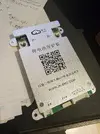
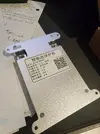
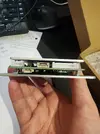
Attached are some photos of my bms, which was ordered from this listing: https://www.aliexpress.com/item/1005007199402037.html

Unlike the BMS seen in the GPak's 5S battery, mine has mounting ears that make it too large to fit on the back cover of the aluminum case. Also, instead of pre-soldered battery cables, this one has holes for screwing down ring terminals.

I'm wondering if this is just a different form factor of the JK-BD4A8S4P, in which case I'm thinking I can just disassemble the case and cut off the ears to make it fit (though I foresee that I might still have some trouble fitting the bms once I attach cables with ring terminals).

Please advise if I should go forward with modifying and running this BMS, or if I should make an attempt at sourcing the exact BMS used by GPak.
 

Attachments

  • 20250626_023456.webp
    20250626_023456.webp
    819.3 KB · Views: 147
  • 20250626_023504.webp
    20250626_023504.webp
    455.1 KB · Views: 149
  • 20250626_023512.webp
    20250626_023512.webp
    135.9 KB · Views: 144
I'm in the process of building a 5S LTO battery. I just did a mock up in the case, and I realized that my bms is not going to fit.

Attached are some photos of my bms, which was ordered from this listing: https://www.aliexpress.com/item/1005007199402037.html

Unlike the BMS seen in the GPak's 5S battery, mine has mounting ears that make it too large to fit on the back cover of the aluminum case. Also, instead of pre-soldered battery cables, this one has holes for screwing down ring terminals.

I'm wondering if this is just a different form factor of the JK-BD4A8S4P, in which case I'm thinking I can just disassemble the case and cut off the ears to make it fit (though I foresee that I might still have some trouble fitting the bms once I attach cables with ring terminals).

Please advise if I should go forward with modifying and running this BMS, or if I should make an attempt at sourcing the exact BMS used by GPak.
I believe mine came in, I'll have to check for the ears - I bought https://www.aliexpress.com/item/1005008971629663.html but from your pictures it seems you can unscrew the base (with ears), have you tried to see what it looks like?

I see you're from Canada too! Where are you planning to get your battery cells from?
 
I'm in the process of building a 5S LTO battery. I just did a mock up in the case, and I realized that my bms is not going to fit.
Attached are some photos of my bms, which was ordered from this listing: https://www.aliexpress.com/item/1005007199402037.html
Unlike the BMS seen in the GPak's 5S battery, mine has mounting ears that make it too large to fit on the back cover of the aluminum case. Also, instead of pre-soldered battery cables, this one has holes for screwing down ring terminals.
I'm wondering if this is just a different form factor of the JK-BD4A8S4P, in which case I'm thinking I can just disassemble the case and cut off the ears to make it fit (though I foresee that I might still have some trouble fitting the bms once I attach cables with ring terminals).
Please advise if I should go forward with modifying and running this BMS, or if I should make an attempt at sourcing the exact BMS used by GPak.
Welcome to DCT!
Your BMS is the same as mine, except probably the latest version.

My BMS also had mounting ears, which I carefully cut off without disassembling the BMS/removing the aluminum plate.
Make sure to blow or vacuum up any shavings to prevent them from causing a short.

If you decide to disassemble the BMS, be sure to use thermal paste or thermally conductive double-sided tape between the MOSFETs and the aluminum plate when you put it back together.
(even though the BMS doesn't actually get hot)

The ring terminals are new, and are easier to install at optimal angles, but if the fasteners are in the way, you can always solder wires to the correct length.

My goal was to fit the battery assembly into as small a case as possible, and it fits really tightly.

In the future I may repackage the 5S in this box to add some features like the 6S:

It is black, 80x160x260, same as for 6S but 40 mm shorter.
Note that the outer height is 2mm shorter, but the inner height is 1-2mm higher due to the lack of ribs.
 
I'm in the process of building a 5S LTO battery.
Welcome to DashCamTalk! Lot's of great people and plenty of knowledge to be shared here!

Yep, just remove the BMS tabs as @GPak indicates. Clean up the cut edges with a fine file or sandpaper to make sure there aren't any burs left behind. My BMS is attached with double sided thermal tape, though it doesn't get very warm at all. The charger board is the primary source of heat during battery charging. You definitely want some thermal paste between the charger board and the metal case that you mount it to.

As for wires that connect the BMS to the charger board and the batteries, make sure to use heavy wire (12g minimum) with properly crimped ring terminals. Watch a few YouTube videos about proper crimping technique. There are more relevant details than you might expect.

Finally, you might get better performance out of a 6S LTO battery than a 5S one. When depleted, the LTO batteries will be in the range of 1.8v to 2.0v. With a 5S configuration, this will result in overall voltage of about 9-10v. Most 12v to 5v regulators for hard wiring a dashcam have voltage cutoff switch to protect your car's main start battery. The lowest setting on these regulators is usually somewhere in the 11.8 to 12.0v range, which means the regulator will turn off your camera before your battery is depleted. Building a 6S battery will give you a voltage of closer to 10.8 to 12v when the battery is depleted. This is 1-2v of additional operational voltage for your camera at the lower end of the charge range.

If you are using a Viofo camera, they have built a special version of their voltage regulator (came from suggestions on DashCamTalk) that does not have the low battery protection feature. This will allow you to use 100% of whatever battery you use.
 
now I'm thinking to add an extra XT60 input and output just in case it can be used later

Ha- this is the hard part: trying to imagine all of the ways you might want to use your battery box in the future. It's MUCH easier to build all of the "extra" goodies into your box the first time around, rather than trying to retro-fit new wiring in later. This is a good reason to make as many of your wire connections as you can at each device, so you can just add a new ring terminal, or clip off an existing ring, strip a new wire and crimp two wires together. Things get messy when you start cutting wires and adding heat shrink to your solder joints, only to have to add something new to the solder joint later on.
 
Thank you all for the kind welcomes and responses.
I believe mine came in, I'll have to check for the ears - I bought https://www.aliexpress.com/item/1005008971629663.html but from your pictures it seems you can unscrew the base (with ears), have you tried to see what it looks like?

I see you're from Canada too! Where are you planning to get your battery cells from?
I got my 5 cells from this listing: https://www.aliexpress.com/item/1005008749632534.html. Unfortunately, that listing seems to now be unavailable. If you're building the 6S battery, this could be an alternative: https://www.aliexpress.com/item/1005008997890546.html.

Welcome to DCT!
Your BMS is the same as mine, except probably the latest version.

My BMS also had mounting ears, which I carefully cut off without disassembling the BMS/removing the aluminum plate.
Make sure to blow or vacuum up any shavings to prevent them from causing a short.

If you decide to disassemble the BMS, be sure to use thermal paste or thermally conductive double-sided tape between the MOSFETs and the aluminum plate when you put it back together.
(even though the BMS doesn't actually get hot)

The ring terminals are new, and are easier to install at optimal angles, but if the fasteners are in the way, you can always solder wires to the correct length.

My goal was to fit the battery assembly into as small a case as possible, and it fits really tightly.

In the future I may repackage the 5S in this box to add some features like the 6S:

It is black, 80x160x260, same as for 6S but 40 mm shorter.
Note that the outer height is 2mm shorter, but the inner height is 1-2mm higher due to the lack of ribs.
I have disassembled the BMS and saw that it already has thermal pads on both the front and back plates in contact with mosfets on both sides of the PCB. Presumably these thermal pads are reusable? I was thinking I should disassemble before cutting to avoid issues with metal shavings or accidentally nicking the pcb.

I actually have that exact enclosure from aliexpress. BMS issues aside, it looks like everything will fit with decent clearance in the same layout as your 5S configuration.

Welcome to DashCamTalk! Lot's of great people and plenty of knowledge to be shared here!

Yep, just remove the BMS tabs as @GPak indicates. Clean up the cut edges with a fine file or sandpaper to make sure there aren't any burs left behind. My BMS is attached with double sided thermal tape, though it doesn't get very warm at all. The charger board is the primary source of heat during battery charging. You definitely want some thermal paste between the charger board and the metal case that you mount it to.

As for wires that connect the BMS to the charger board and the batteries, make sure to use heavy wire (12g minimum) with properly crimped ring terminals. Watch a few YouTube videos about proper crimping technique. There are more relevant details than you might expect.

Finally, you might get better performance out of a 6S LTO battery than a 5S one. When depleted, the LTO batteries will be in the range of 1.8v to 2.0v. With a 5S configuration, this will result in overall voltage of about 9-10v. Most 12v to 5v regulators for hard wiring a dashcam have voltage cutoff switch to protect your car's main start battery. The lowest setting on these regulators is usually somewhere in the 11.8 to 12.0v range, which means the regulator will turn off your camera before your battery is depleted. Building a 6S battery will give you a voltage of closer to 10.8 to 12v when the battery is depleted. This is 1-2v of additional operational voltage for your camera at the lower end of the charge range.

If you are using a Viofo camera, they have built a special version of their voltage regulator (came from suggestions on DashCamTalk) that does not have the low battery protection feature. This will allow you to use 100% of whatever battery you use.
Fortunately I have a viofo camera so I will be able to address the voltage cutoff issue with their special hardwire kit. I primarily decided to go 5S because I like the compactness and sleekness of the extruded aluminum enclosure (I was having difficulty finding an extruded aluminum enclosure that could fit the 6S configuration at a decent price)
 
I think the thermal pads are reusable if they are not damaged, although they are actually very cheap on Amazon.
Thermal Pad, 14.8 W/mK, 20x70mm (0.5mm+0.5mm+1.0mm) Highly Efficient Thermal Conductivity, Heat Resistant Silicone Thermal Pads for Laptop Heatsink CPU GPU SSD IC LED Cooler 3 Pack

Be sure to separate the charge controller from the LTO cell using 4 spacers approximately 0.25" thick (rubber or other not very thermally conductive material).
I assume you are planning to use the same 25A charge controller which produces least amount of heat.
 
Summer number two and still going strong in the heat. Today’s high was near 95F/35c. It was a bit warmer inside the car.
IMG_5685.webp
 
Summer number two and still going strong in the heat. Today’s high was near 95F/35c. It was a bit warmer inside the car.
View attachment 82485
Another advantage of a DIY battery is that, along with other settings, we can set high/low temperature protection separately for charging and discharging, in the range that is most suitable for the battery.
 
When discharging my 6S LTO battery from 100% to 0, I found that the ANT-BMS, which worked fine in 7S configuration, does not work below 13V (2.16V per cell), so it is not suitable for 6S LTO battery.
Therefore I ordered a trusted JK-BMS from Amazon for quick delivery (and a spare from AliExpress).
https://www.amazon.com/gp/B0D17QGQBP

While testing the JK-BMS, I found that the current (A) calibration when discharging is independent of the current (A) calibration when charging, and vice versa.
So I calibrated the discharge current for 0.7A (the minimum allowed by the BMS and close to a dash cam consumption) - must be calibrated while discharging.
And then I calibrated the charge current for 6A (my current charge setting) - must be calibrated while charging.

As a result -
The charge/discharge current (A), remaining capacity (Ah), and battery state of charge (% SOC) are very accurate in the App for the entire range!
 
Isn’t that an interesting bit of insight to learn?!? Details like that should be in a manual somewhere…. I’ll have to measure ans calibrate mine as well, thanks for the tip!
 
The manual mentions current calibration, but they don't differentiate between charge and discharge current.
I guess they think most people use roughly the same charge and discharge current, and I'm sure they have no idea that this BMS would be used for a dash cam battery with such a low current draw. 🙂
 
Back
Top